Psar Nat Market: Battambang’s French Colonial Market and What to Eat Inside
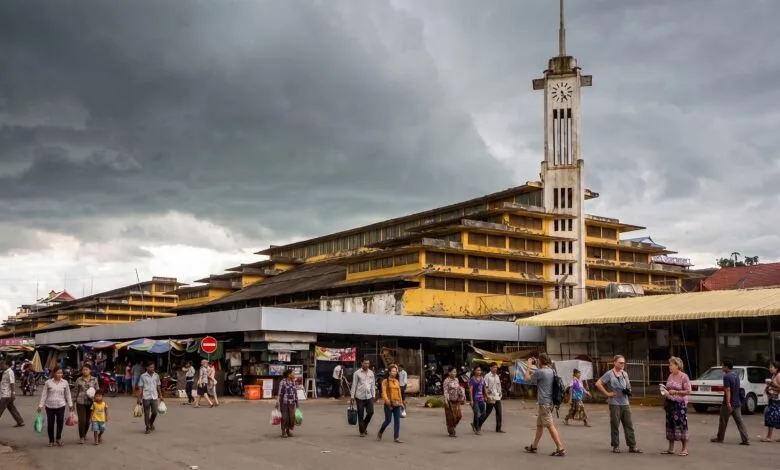
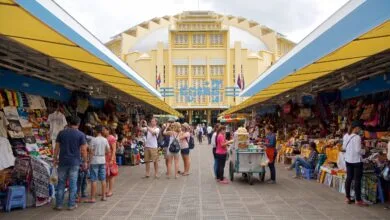
The yellow Art Deco building rises from the center of Battambang like a piece of 1930s Paris dropped into provincial Cambodia. A square clock tower crowns the structure, its hands marking time for a city that moves at its own unhurried pace. This is Psar Nat—Battambang’s central market, known locally as Phsar Nath—and it has been the beating heart of the city for nearly a century.
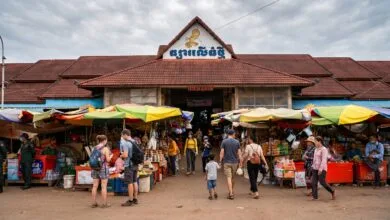
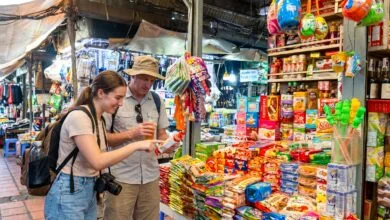
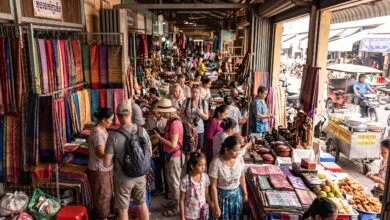
Step through the entrance and the air changes. The smells of fresh fish, tropical fruit, sizzling meat, and spices mingle with the warmth of a tropical morning. Vendors call out to regular customers. Knives chop rhythmically against wooden boards. A monk in saffron robes moves quietly through the aisles collecting alms. This is not a market designed for tourists—it is a market built for Battambang, and that is exactly what makes it worth visiting.
Quick Facts / At a Glance
Why Visit Psar Nat Market?
Psar Nat is not a sanitized tourist attraction. It is a working market where Battambang residents buy their daily groceries, meet friends, and grab breakfast. For travelers, this authenticity is the draw.
You should visit because:
- The architecture is remarkable. Built in 1936 during the French colonial era, Psar Nat is a striking example of Art Deco design. It was designed by French architect Jean Desbois, who also designed Phnom Penh’s Central Market. The pastel-yellow façade and central clock tower make it one of Battambang’s most recognizable landmarks.
- The food is authentic. This is where locals eat. Small stalls and eateries serve classic Khmer dishes like bai sach chrouk (rice with pork), kuy teav (noodle soup), and fish amok. The food is fresh, affordable, and prepared the way Cambodians have been cooking for generations.
- The atmosphere is immersive. Psar Nat offers a glimpse into daily Cambodian life that you simply cannot get from a museum or temple tour. The energy, the noise, the colors, and the interactions between vendors and customers tell the story of Battambang better than any guidebook.
What to See at the Market
Psar Nat is divided into two main sections.
The East Building
Topped with a clock tower, this section sells clothing, jewelry, textiles, and household goods. Look for colorful batik sarongs, which are popular with villagers, and gold jewelry often purchased for dowries. The upper floors are dedicated to non-perishable items, while the ground level transitions into the food market.
The West Building
This is the wet market—the bustling, fragrant heart of Psar Nat. Here you will find:
- Fresh produce: Mangoes, jackfruit, pineapples, and Battambang’s famous green-skinned Pursat oranges
- Meat and seafood: Fresh fish, pork, and chicken displayed on ice or wooden tables
- Spices and dried goods: Cambodian spices, dried fish, and preserved foods
- Prepared food stalls: Small eateries serving hot meals and snacks, especially concentrated along the south side of the market
The Architecture
Before you enter, take a moment to appreciate the building itself. The geometric volumes, layered roofs, and ventilation openings are classic Art Deco colonial design. The clock tower serves as a visual anchor for the entire neighborhood. The market is flanked by French-era shophouses with narrow facades and arcades, creating a cohesive historical streetscape.
What to Eat
Psar Nat is Battambang’s food epicenter. Morning vendors sell fresh produce, noodles, and baguettes, while the evening brings BBQ skewers and grilled corn. Here are some dishes you can realistically expect to find:
1. Kuy Teav (Cambodian Noodle Soup)
A classic Khmer breakfast dish. Vendors serve steaming bowls of rice noodles in a fragrant pork or beef broth, topped with bean sprouts, herbs, and sometimes meatballs or sliced pork. It is a comforting, satisfying way to start the day.
2. Bai Sach Chrouk (Rice with Pork)
Grilled pork served over rice with pickled vegetables and a light broth. The pork is typically marinated in coconut milk or garlic and grilled over charcoal, giving it a smoky flavor. This is one of Cambodia’s most beloved everyday dishes.
3. Fish Amok
A steamed coconut curry fish dish, considered by many to be Cambodia’s national dish. At Psar Nat, small eateries serve it fresh, wrapped in banana leaves or in small bowls. The creamy, fragrant curry is mild and accessible to most palates.
4. Nom (Traditional Cambodian Cakes)
Look for small stalls selling traditional Khmer cakes and sweets. These range from sticky rice cakes to coconut-based desserts. They make excellent snacks to enjoy while exploring the market.
5. Fresh Fruit and Juices
Battambang is known for its Pursat oranges—green-skinned but sweet and juicy inside. You will also find mangoes, pineapples, jackfruit, and dragon fruit. Many vendors sell freshly squeezed sugar cane juice or fruit shakes, perfect for the tropical heat.
6. Baguettes
Cambodia’s French colonial legacy lives on in its baguettes. The best ones in Battambang are sold from mobile carts near Psar Nat, especially between 6:00 and 8:00 AM. They are crusty on the outside, soft inside, and perfect for breakfast.
7. Evening BBQ
If you visit in the late afternoon or evening, look for BBQ skewers of chicken, fish, and pork at the original night market located at the northeast corner of Psar Nat. Grilled corn on the cob is also popular.
What to Buy
Beyond food, Psar Nat offers a range of products that travelers may find interesting:
- Batik sarongs: Colorful, hand-dyed fabrics worn by locals
- Pursat oranges: Battambang’s famous green-skinned oranges—sweet, juicy, and a great snack for the road
- Spices: Cambodian Kampot pepper, dried chili, turmeric, and other local spices
- Handicrafts: Small souvenirs, textiles, and locally made crafts
- Gold jewelry: Often purchased for traditional dowries, though travelers may simply admire the craftsmanship
- Fresh produce: Tropical fruits that may be unfamiliar to international travelers—perfect for trying something new
The Local Food Story
Psar Nat is more than a place to buy ingredients—it is where Battambang’s food culture lives. The market connects farmers, fishermen, and food vendors directly with the people who eat their products every day.
Battambang Province is one of Cambodia’s most important agricultural regions. Rice paddies stretch across the countryside, and the Sangke River provides fish for the city’s tables. The produce you see at Psar Nat—the mangoes, the oranges, the vegetables—comes from farms within a few hours of the city. The fish arrives fresh from the river or from the Tonle Sap Lake, Cambodia’s great inland fishery.
This direct connection between producer and consumer is what makes traditional markets like Psar Nat so important. There are no intermediaries, no packaging, no long supply chains. Just farmers bringing their harvest to the market and selling it directly to the people who will cook it for their families that same day.
For travelers, this is a chance to see Cambodia’s food system at its most basic and authentic level. It is also a chance to eat food that is genuinely local, genuinely fresh, and genuinely Cambodian.
How to Experience the Market
A visit to Psar Nat is straightforward, but a little planning helps you get the most out of it.
- Arrive early. The market is at its most vibrant between 6:00 and 8:00 AM. This is when locals do their shopping, monks collect alms, and the food stalls are busiest.
- Walk the perimeter first. Before diving into the crowded interior, walk around the outside of the building. This gives you a sense of the market’s scale and allows you to appreciate the Art Deco architecture from different angles.
- Enter through the main entrance. Find the clock tower side and step inside. Take a moment to let the atmosphere wash over you—the sounds, the smells, the movement.
- Explore both sections. Visit the wet market (west building) for fresh food and the dry goods section (east building) for textiles, jewelry, and household items.
- Eat something. Find a small stall, point at what looks good, and try it. This is the most authentic way to experience Psar Nat. Many vendors are happy to serve travelers, even if language is a barrier.
- Observe. Watch how locals shop, how they bargain, how they interact. This is a working market, not a performance. Observing respectfully is a way of understanding Cambodian daily life.
- Buy something. Whether it is fruit for the road or a small souvenir, purchasing from local vendors supports the community directly.
Best Time to Visit
Time of day: Early morning, between 6:00 and 8:00 AM, is the best time to visit. The market is at its busiest and most vibrant. The weather is cooler, the produce is freshest, and the food stalls are serving hot breakfast. By mid-morning, the heat builds and some stalls begin to close. The afternoon is quieter, though fruit and food vendors continue trading into the evening.
Season: Cambodia has two main seasons—dry (November to April) and wet (May to October). The market operates year-round, but the dry season offers more comfortable conditions for walking and exploring. During the wet season, the covered market provides shelter from rain, so it remains a viable activity even in poor weather.
Special events: The adjacent night market operates in the evening, offering a different experience with BBQ skewers, grilled corn, and a more relaxed atmosphere.
Practical Tips
Cash: Bring small Cambodian riel notes. While some vendors may accept US dollars, small transactions are easier with riel. ATMs are available in Battambang city center.
Clothing: Dress modestly out of respect for local culture. Lightweight, breathable fabrics are recommended due to the heat.
Footwear: Wear comfortable, closed-toe shoes. The market floor can be wet and slippery, especially in the fresh food section.
Photography: Ask permission before photographing vendors or shoppers. Many are happy to be photographed, but it is polite to ask first.
Bargaining: Bargaining is expected for non-food items like clothing, textiles, and souvenirs. For food, prices are usually fixed and very reasonable.
Food hygiene: Stick to stalls that are busy with local customers—high turnover means fresher food. Avoid raw or uncooked items unless you are confident about their handling.
Weather: Battambang is hot year-round. Bring water, sunscreen, and a hat. The market is covered but can be warm inside.
Language: Most vendors speak limited English. A few words of Khmer— suosdey (hello), aw kun (thank you)—go a long way.
How to Get There
From Phnom Penh: The journey is approximately 290 km and takes about 5–6 hours by road. Buses and minivans run regularly from Phnom Penh to Battambang. Once in Battambang, Psar Nat is in the city center—a short tuk-tuk ride or walk from most accommodations.
From Siem Reap: The distance is approximately 180 km and takes about 3 hours by road. Buses and private taxis connect Siem Reap and Battambang. Psar Nat is centrally located and easy to find.
From within Battambang: Psar Nat is located at the intersection of Streets 1 and 3 on the west bank of the Sangke River. It is walkable from most central hotels and guesthouses. Tuk-tuks are widely available and inexpensive.
Address for reference: Street 113, Krong Battambang, Cambodia.
How Long Should You Spend?
Plan for 1 to 1.5 hours at Psar Nat. This gives you enough time to:
- Walk around the exterior and appreciate the architecture (10–15 minutes)
- Explore both the wet market and dry goods sections (30–40 minutes)
- Stop for a meal or snack at a food stall (20–30 minutes)
- Purchase fruit or small souvenirs (10–15 minutes)
If you want to combine your visit with the adjacent night market, plan for an additional hour in the evening.
Where to Stay
Battambang has a range of accommodations within walking distance of Psar Nat. The city center offers boutique hotels, guesthouses, and budget hostels. Staying near the river or along Streets 1–3 puts you close to the market and other attractions. Psar Nat is a useful landmark for navigation—many hotels and guesthouses are described as being “near Psar Nat”.
Things to Do Nearby
Battambang has more to offer than its central market. Consider combining your visit with:
- The Sangke River: Take a stroll along the riverfront in the evening. The new night market is located on the riverfront.
- French Colonial Architecture Walk: Battambang has the highest density of heritage buildings in Cambodia. Explore the streets around Psar Nat for shophouses, colonial administrative buildings, and art deco cinemas.
- Bamboo Train (Norry): A unique Cambodian experience—a bamboo platform on rails that travels through the countryside. Located a few kilometers outside town.
- Phnom Sampeau: A hill with a pagoda, killing caves, and excellent views of the surrounding countryside. About 12 km from town.
- Wat Banan: An Angkor-era temple ruin on a hilltop, often compared to Angkor Wat on a smaller scale. About 25 km from town.
- Ek Phnom Temple: An 11th-century Angkor-era temple ruin. About 14 km from town.
Responsible Travel
- Support local vendors: Buying directly from market vendors supports Battambang families and the local economy.
- Reduce plastic: Bring your own bag or reuse plastic bags. Cambodia has a significant plastic waste problem, and every small effort helps.
- Respect local customs: Dress modestly, ask before taking photos, and be mindful that this is a working market, not a tourist attraction.
- Responsible photography: Avoid taking photos that feel intrusive. A smile and a nod go a long way in building goodwill.
Frequently Asked Questions
What are Psar Nat Market’s opening hours?
The market is generally open daily from approximately 6:00 AM to 6:00 PM. Hours can vary by vendor and season.
What is the best time to visit Psar Nat?
Early morning, between 6:00 and 8:00 AM, when the market is busiest and most atmospheric.
Is there an entrance fee?
No. Psar Nat Market is free to enter.
What food can I try at Psar Nat?
Look for kuy teav (noodle soup), bai sach chrouk (rice with pork), fish amok, traditional Khmer cakes, fresh fruit, and baguettes.
Can tourists buy fresh produce?
Yes. Many vendors sell fruit, vegetables, and spices that travelers can purchase and enjoy immediately or take with them.
Can I visit with children?
Yes. Psar Nat is a family-friendly environment, though the wet market section can be crowded and slippery. Keep an eye on young children.
How long should I spend at Psar Nat?
Approximately 1 to 1.5 hours.
How do I get to Psar Nat?
The market is in central Battambang, between Streets 1 and 3 on the west bank of the Sangke River. It is walkable from most central accommodations or a short tuk-tuk ride away.
Is bargaining expected?
For clothing, textiles, and souvenirs—yes. For food—prices are usually fixed and very affordable.
What should I bring?
Bring small change (riel), water, sunscreen, comfortable shoes, and a camera (ask permission before photographing people).
Final Thoughts
Psar Nat is not the most beautiful market in Cambodia. It is not the cleanest, the quietest, or the most curated. But it is real. It is where Battambang comes to eat, to shop, to meet, and to live. The yellow Art Deco building has stood for nearly a century, witnessing wars, economic changes, and the daily rhythms of a city that refuses to be hurried.
For travelers willing to slow down, to wander the aisles, to point at a steaming bowl of noodles and say “one please,” Psar Nat offers something increasingly rare in global tourism: an authentic experience of a place as it actually is.
Planning a food-focused trip through Cambodia? Save this Market Trails guide and add Psar Nat Market to your Battambang itinerary.
Have you visited Psar Nat? What was your favorite dish?