Russian Market Phnom Penh: What to Buy, Eat and See
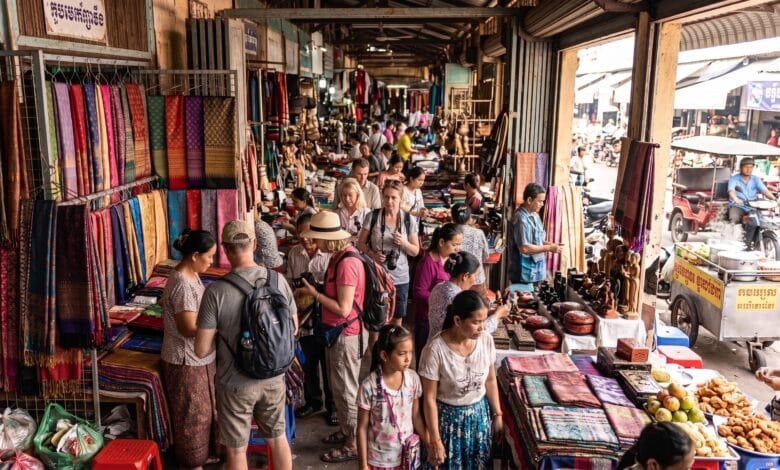
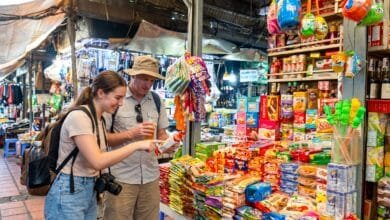
The heat hits you first. Then the noise — vendors calling out prices, the sizzle of something frying, the low hum of bargaining in Khmer and English. Narrow aisles stretch in every direction, packed with stalls piled high with silk scarves, second-hand jeans, Buddha statues, and fresh produce. The air carries the smell of grilled pork, tropical fruit, and the distinct earthy scent of a working market.
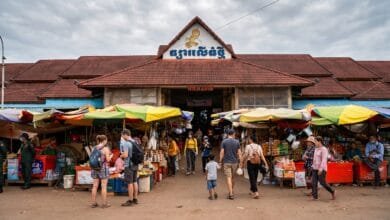
This is Russian Market — known locally as Psar Tuol Tom Poung — one of Phnom Penh’s most famous and energetic markets. It is the market most travelers visit at least once during a trip to the Cambodian capital.
But what exactly makes it worth visiting? What should you buy? What should you eat? And how do you make the most of your time there?
This guide answers all of those questions.
Quick Facts / At a Glance
| Detail | Information |
| Name | Russian Market (Psar Tuol Tom Poung / Toul Tompong Market) |
| Location | Corner of St.163 and St.440, Tuol Tom Poung, Phnom Penh |
| Famous for | Factory seconds, silk, handicrafts, souvenirs, street food |
| Market type | Covered traditional market |
| Opening hours | Approximately 6:00 AM – 5:00 PM daily |
| Entrance fee | Free |
| Best time to visit | 8:00 – 10:00 AM (cooler, less crowded) |
| Recommended visit time | 1–2 hours |
| Distance from city center | Approximately 3 km south of the Royal Palace |
| Transportation | Tuk-tuk (10–15 minutes, $2–3 from riverside) |
Why Visit Russian Market?
Russian Market is not a polished shopping mall or a carefully curated tourist attraction. It is a working market where locals shop for everyday goods alongside travelers hunting for bargains.
What makes it interesting:
- Unbeatable prices on brand-name clothing — factory seconds and overruns from international brands at a fraction of retail prices
- Authentic Cambodian handicrafts — silk scarves, wood carvings, silver jewelry, and stone sculptures
- Excellent street food — some of the best Khmer noodle soups and grilled pork in Phnom Penh
- A real local atmosphere — narrow aisles, crowded stalls, and the energy of daily Cambodian commerce
Unlike the more spacious Central Market, Russian Market feels like a labyrinth. Each turn reveals something new — a stall selling motorcycle parts next to one offering antique coins, a fresh juice stand beside a pile of used textbooks. It is chaotic, hot, and can feel overwhelming. But that is exactly why travelers love it.
Why Is It Called Russian Market?
The name surprises many first-time visitors. Why is a market in Phnom Penh named after Russia?
The answer goes back to the 1980s. During that decade, Cambodia had close diplomatic ties with the Soviet Union. A large community of Russian diplomats, advisors, and aid workers lived in Phnom Penh, and many of them regularly shopped at Tuol Tom Poung for everyday goods.
Local vendors began calling it the Russian Market, and the name stuck — long after the Russian community moved on. Today, locals still call it Psar Tuol Tom Poung in daily conversation. The Khmer name refers to the surrounding neighborhood rather than the market itself.
What to Buy at Russian Market
Russian Market is divided into sections, each specializing in different types of goods. Here is what to look for.
Factory Seconds and Brand-Name Clothing
Phnom Penh is home to garment factories that produce clothing for international brands including Levi’s, Calvin Klein, Gap, and Ralph Lauren. Items that do not meet export quality standards — known as factory seconds or overruns — are sold at the Russian Market.
A pair of jeans that might cost $60 or more abroad can sell for $5 to $10 USD. T-shirts can be found for around $2, dresses for around $5, and sportswear for $5–15.
Shopping tips for clothing:
- Check items carefully for defects or imperfections
- Inspect stitching quality before buying
- Try items on when possible
- On-site tailors can make quick alterations
The eastern side of the market is the best area for clothing.
Handicrafts, Silk and Souvenirs
The western and central aisles are dedicated to traditional Cambodian crafts. Here you will find:
- Hand-woven krama scarves — the traditional Cambodian checkered scarf
- Silk textiles in rich jewel tones
- Hand-carved wooden Buddha figures
- Stone sculptures inspired by Angkor-era motifs
- Silverwork and lacquerware
- Traditional Khmer paintings on canvas
- Miniature temple replicas
The back section of the market has some of the best handicrafts.
Jewelry and Gemstones
Numerous stalls offer silver jewelry, decorative gemstones, and traditional Khmer accessories. Prices are negotiable.
Antiques and Collectibles
Collectors will enjoy browsing vintage banknotes and coins, old French colonial postcards, bronze figurines, traditional musical instruments, and retro Cambodian movie posters. The market is one of the best places in Cambodia to find these curiosities.
Important: Cambodia prohibits the export of genuine cultural artifacts. Verify authenticity before purchasing and be aware of export restrictions.
What to Eat at Russian Market
The food court area at Russian Market is legendary among both locals and travelers. Dozens of stalls serve freshly prepared Khmer dishes at remarkably low prices — typically $1 to $3 USD per meal.
Must-Try Dishes
Nom Banh Chok (Khmer Noodle Soup)
This is a signature Cambodian breakfast dish — rice noodles topped with a light, fragrant fish-based curry sauce and fresh herbs. The version at Russian Market is considered exceptional. The broth is light and fragrant with fresh herbs.
Bai Sach Chrouk (Grilled Pork with Rice)
A classic Cambodian breakfast of charcoal-grilled pork served over rice, with a seasoned egg, pickles, and a mild soup. It is simple, surprisingly delicious, and costs just over $1.
Kuy Teav (Noodle Soup)
A rich noodle soup considered some of the best in Phnom Penh, served with beef, pork, or seafood.
Chicken Rice Soup (Porridge)
A popular Cambodian street food — flavorful chicken, pork, or fish porridge. The chicken version is highly recommended and costs under $2.
Fresh Fruit and Juice
Freshly cut fruit — including jackfruit, mango, and dragon fruit — is available from vendors throughout the market. Fresh fruit shakes are perfect for cooling down during a hot market visit.
Khmer Coffee
Strong, sweet, and served over ice — Khmer coffee is a market staple and a great way to recharge.
How to Experience the Market
Step 1: Arrive early.
The market opens around 6:00 AM. Morning is the best time to visit — it is cooler, less crowded, and the food stalls are at their most active.
Step 2: Start with breakfast.
Begin your visit with a bowl of nom banh chok or bai sach chrouk from one of the food stalls. This gives you energy for exploring and lets you experience the market at its liveliest.
Step 3: Explore the sections.
Work your way through the market’s different zones. Start with the clothing section (eastern side), move through the handicrafts area (western and central aisles), and finish with the household goods and miscellaneous stalls.
Step 4: Browse before buying.
Prices vary from stall to stall. Take a full walk through the market before committing to purchases. This helps you compare quality and prices.
Step 5: Bargain politely.
Bargaining is common and expected. A good rule of thumb is to start at roughly 50 percent of the asking price and aim for a friendly compromise.
Step 6: Take a break.
The market can be hot and overwhelming. Take a break at one of the nearby cafes — Brown Coffee, The Shop, or Connecting Hands are popular options.
Best Time to Visit
Time of day: Early morning (8:00 – 10:00 AM) is the best time. The market is cooler, less crowded, and the food stalls are fully operational. Afternoons can become very hot — the market is partly open-air and temperatures rise significantly.
Day of week: Weekday mornings are generally quieter than weekends.
Season: Phnom Penh is hot year-round. The dry season (November to April) is more comfortable for exploring, but the market operates daily regardless of weather.
What to avoid: Some shops begin closing around 4:00 PM. Plan to finish your visit by mid-afternoon to see the full market.
Practical Tips
Cash is essential. Cards are rarely accepted. Bring cash in small denominations — vendors often struggle to break large bills.
Wear comfortable shoes. The market is crowded, the aisles are narrow, and the floors can be uneven.
Stay hydrated. The market can be hot and humid. Buy fresh juice or water from vendors inside.
Dress modestly. Cambodia is a conservative country. Cover shoulders and knees when possible, especially if visiting nearby temples.
Bring a bag. You will likely buy more than you expect. A reusable shopping bag is useful.
Check clothing carefully. Factory seconds have defects. Check stitching, zippers, and fabric quality before buying.
Be aware of counterfeit goods. Be cautious about counterfeit products, particularly in electronics.
Bargain respectfully. Bargaining is part of the experience, but keep it friendly. A smile goes a long way.
Ask permission before photographing vendors. Some vendors do not want their photo taken. Ask first or take photos from a distance.
How to Get There
Address: Corner of St.163 and St.440, Tuol Tom Poung, Phnom Penh
By tuk-tuk: This is the most common and convenient option. A tuk-tuk from the riverside or city center takes approximately 10–15 minutes and costs around $2–3 USD. Tell the driver “Psar Tuol Tom Poung”.
By bus: Local buses serve the area. Bus Line 2 and Line 3 can get you close to the market. Fares are inexpensive (around 1,000 riel / $0.25 USD).
By taxi or Grab: Ride-hailing apps like Grab are widely available in Phnom Penh and provide a convenient way to reach the market.
On foot: The market is approximately 3 km south of the Royal Palace. Walking takes around 35–40 minutes, though the heat makes this less appealing for most travelers.
How Long Should You Spend?
Plan for 1 to 2 hours at the market.
- 1 hour: Enough time for a quick walk-through, some souvenir shopping, and a snack.
- 2 hours: Allows for a proper exploration of the different sections, a full breakfast or lunch, and some comparison shopping.
Some travelers spend half a day here, especially if they are serious shoppers or food lovers. But for most visitors, 1–2 hours is sufficient to experience the market’s highlights.
Where to Stay
The Tuol Tom Poung area has a growing number of accommodation options. However, most travelers stay closer to the riverfront or in the BKK area and visit Russian Market as a day trip.
If you prefer to stay nearby, look for hotels and guesthouses around the market itself. The Starbridge Hotel near the crossroads is a recognizable landmark.
Things to Do Nearby
Tuol Sleng Genocide Museum (S-21)
This former prison turned museum is approximately a 5-minute walk from Russian Market. It is one of Phnom Penh’s most important historical sites.
Street 450 Cafe Strip
The area around Street 450 has a growing number of cafes and restaurants popular with both locals and expats.
BKK1 Neighborhood
The nearby BKK1 area (Boeung Keng Kang 1) is known for its restaurants, cafes, and boutique shops.
Wat Tuol Tompong
A local pagoda near the market that offers a quieter contrast to the market’s chaos.
Responsible Travel
Support local vendors. Buying directly from market vendors supports Cambodian families and small businesses.
Reduce plastic. Bring a reusable shopping bag and water bottle.
Bargain fairly. Bargaining is expected, but the goal is a fair price for both parties — not squeezing every last dollar.
Respect local customs. Dress modestly and ask permission before photographing people.
Be mindful of cultural artifacts. Do not purchase items that may be illegally exported cultural artifacts.
Frequently Asked Questions
What are the Russian Market opening hours?
The market is open daily from approximately 6:00 AM to 5:00 PM. Some food stalls open as early as 6:00 AM.
What is the best time to visit Russian Market?
Early morning between 8:00 and 10:00 AM is the best time — cooler temperatures, fewer crowds, and the best food selection.
Is there an entrance fee?
No, entry to Russian Market is free.
What food can I try at Russian Market?
Must-try dishes include nom banh chok (Khmer noodle soup), bai sach chrouk (grilled pork with rice), kuy teav (noodle soup), and fresh fruit shakes.
Can tourists buy fresh seafood at Russian Market?
Yes, there are fresh produce and seafood sections, though the market is better known for its clothing, handicrafts, and prepared food.
Can I visit with children?
Yes, but be prepared for crowded aisles and heat. Early morning visits are more comfortable for children.
How long should I spend at Russian Market?
Plan for 1 to 2 hours.
How do I get to Russian Market?
Take a tuk-tuk from the city center (10–15 minutes, $2–3 USD). Tell the driver “Psar Tuol Tom Poung”.
Is bargaining expected at Russian Market?
Yes, bargaining is common and expected. Start at about 50% of the asking price.
What should I bring to Russian Market?
Bring cash in small denominations, comfortable shoes, a reusable bag, and a water bottle.
Final Thoughts
Russian Market is not a polished tourist attraction. It is hot, crowded, and chaotic. The aisles are narrow, the ceilings are low, and you will probably get lost at least once.
But that is exactly what makes it memorable.
It is a place where you can eat breakfast for $1, buy a silk scarf for $5, and watch everyday Cambodian life unfold around you. It is one of those travel experiences that feels real — unscripted, unpolished, and genuinely local.
Planning a trip to Phnom Penh? Add Russian Market to your itinerary. Arrive early, bring cash, and come hungry.
Have you visited Russian Market? What was your favorite find? Share your experience in the comments below.