How to Visit Phnom Kulen National Park from Siem Reap
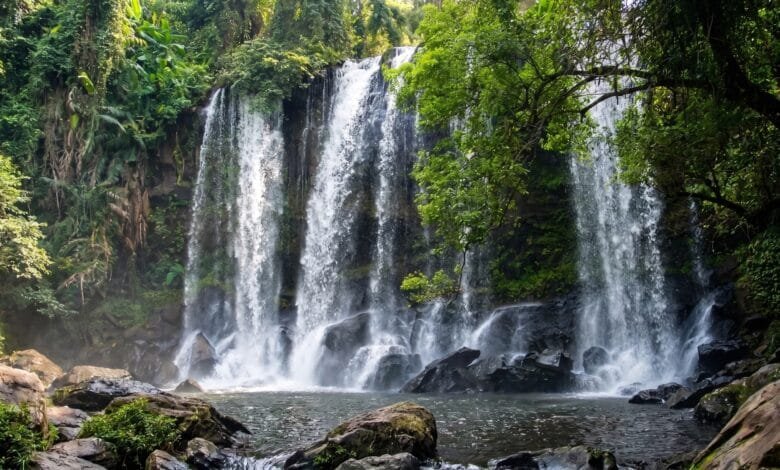
Phnom Kulen National Park is not a typical temple stop. It is a forested mountain plateau about 50 kilometers north of Siem Reap, where a river runs over carvings made more than a thousand years ago and a two-tier waterfall drops into swimmable pools. The park sits on the mountain where King Jayavarman II declared independence from Java in 802 AD, an event considered the founding moment of the Khmer Empire.
For travelers who have spent days among the temples of Angkor, Phnom Kulen offers something different: cooler air, jungle trails, and a chance to swim in water that Khmer people consider sacred. The park is popular with Cambodian families on weekends and holidays, so timing your visit matters. This guide covers what you can see and do, how to get there from Siem Reap, and what to expect on arrival.
Quick Travel Information
Location: Svay Leu District, Siem Reap Province, Cambodia
Province: Siem Reap
Type: National park, protected area, sacred mountain
Protected Area Status: National park; officially named Preah Jayavarman-Norodom Kulen National Park. Established by Royal Decree in 1993, covering approximately 373 km²
Main Access Point: Svay Leu District, reached from Siem Reap city
How to Get There: By private car, taxi, or organized day tour from Siem Reap. Some travelers take a tuk-tuk to the base and switch to a motorbike taxi for the ascent. The road is paved but steep in sections
Typical Travel Time: Approximately 1–1.5 hours each way from Siem Reap
Best Time to Visit: November through March (cooler, drier conditions). The waterfall is fullest from September to November, just after the rainy season
Recommended Stay: One full day trip from Siem Reap is enough for the main highlights. Travelers wanting to explore the plateau forest or take longer hikes may want more time
Main Activities: Walking to the waterfalls, swimming, seeing the River of a Thousand Lingas, visiting the reclining Buddha, light hiking on the plateau
Accommodation: Most visitors base in Siem Reap and visit as a day trip. Accommodation inside the park is limited
Entrance Fee: $20 per foreign visitor. This is separate from the Angkor Pass and is not covered by it
Useful to Know: The park operates a one-way traffic system on the access road. Vehicles ascend before noon and descend after noon
Where Is Phnom Kulen National Park?
Phnom Kulen National Park is in Svay Leu District, Siem Reap Province, about 48–50 kilometers (roughly 30 miles) north of Siem Reap city. The park covers a mountain massif with a plateau at its top, reaching around 487 meters at its highest point.
The mountain is visible from parts of the Angkor plain on clear days. It sits northeast of the main Angkor temple complex. The drive from Siem Reap passes through rural villages, rice fields, and gradually rising terrain before reaching the park entrance and the steep road up to the plateau.
The park is also close to Kbal Spean, another site with riverbed carvings that some travelers visit on the same day. However, Kbal Spean is technically a separate archaeological site, not inside Phnom Kulen National Park itself.
What Makes Phnom Kulen Special?
Three things make Phnom Kulen stand out among Cambodia’s natural destinations.
First, the water. A river flows across the plateau and drops into two waterfalls. The water is considered holy by Khmer people, and some visitors bottle it to take home. The falls are not the tallest in Southeast Asia, but swimming in them is a memorable experience, especially after a hot morning of temple exploring.
Second, the carvings. At a site called Kbal Spean—sometimes called the River of a Thousand Lingas—the riverbed itself is carved with hundreds of linga symbols and other Hindu imagery. These carvings date to the Angkorian period and are still visible under shallow water.
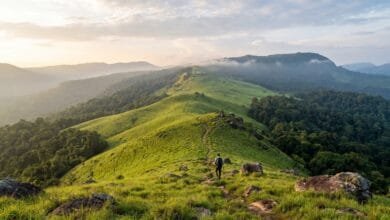
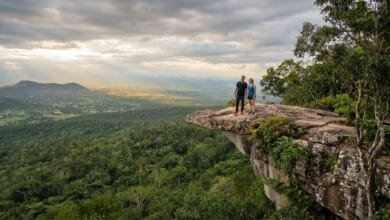
Third, the forest. The plateau is covered with dense tropical forest, and the park supports a range of wildlife including macaques, various bird species, butterflies, and reptiles. Wildlife sightings are never guaranteed, but the forest itself is part of the experience.
What to See
The Waterfalls
There are two main waterfalls in the park. The first is about 4–5 meters tall and roughly 20–25 meters wide. The second is taller, around 15–20 meters, and drops into a pool where swimming is allowed. Water volume changes with the seasons. From September to November, the falls are at their fullest. In the hot months from March to May, flow can be noticeably lower.
The Reclining Buddha
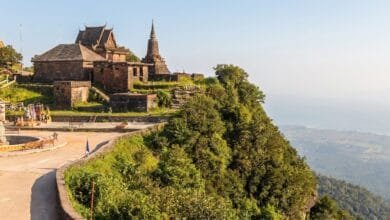
At the top of the plateau, a Buddhist pagoda called Preah Ang Thom houses a large reclining Buddha carved into a sandstone boulder. The statue is approximately 8–9 meters long and dates to the 16th century. It remains an active pilgrimage site for Cambodian Buddhists.
The River of a Thousand Lingas
This is one of the most unusual archaeological sites in Cambodia. Hundreds of linga carvings—phallic symbols associated with the Hindu god Shiva—were cut into the riverbed centuries ago. The carvings are divided into sections representing the Hindu trinity. The site is best seen when water levels are low enough to reveal the details clearly.
Prasat Krau Romeas and Other Temple Remains
Several small Angkorian-era temple ruins are scattered across the plateau. Most are in poor condition, with only foundations and some brick or stone elements remaining. They are not the main reason most travelers visit, but they add historical context to a nature-focused trip.
Things to Do
Swimming in the Waterfall Pools
Swimming is allowed in the pool at the base of the main waterfall. The water is generally cool and clear, especially in the dry season. Be aware that rocks around the pools can be slippery.
Walking and Light Hiking
The main visitor route connects the waterfall, the reclining Buddha, and the River of a Thousand Lingas. This walk takes about 2–3 hours and covers roughly 2 kilometers, with some steps and uneven paths. A longer plateau forest walk of about 5 kilometers is possible for those wanting to explore beyond the main attractions.
Photography
The waterfalls, the jungle canopy, and the carved riverbed all offer strong photo opportunities. Morning light is generally better for the waterfalls, and arriving early also helps avoid crowds.
Seeing Local Life
On weekends and Cambodian holidays, the park fills with local families who come for picnics and swimming. This can be a highlight for travelers interested in seeing how Cambodians enjoy their own natural spaces.
Wildlife and Nature
The park’s forests provide habitat for a range of species. Macaques are among the more visible mammals. Bird species, butterflies, and reptiles are also present. The forest itself is part of the watershed that feeds rivers flowing down to Tonle Sap Lake, making the park ecologically important for the wider Angkor region.
It is important to set realistic expectations. Phnom Kulen is not a zoo or a wildlife park. Animals are wild and move freely. You may see macaques near the waterfall area, but most wildlife stays away from busy visitor areas. Do not feed any animals, and keep a respectful distance if you encounter them.
How to Get There
The most straightforward way to visit Phnom Kulen from Siem Reap is by private car, taxi, or an organized day tour. The drive takes around 1 to 1.5 hours depending on road conditions and traffic.
Tuk-tuks can reach the base of the mountain, but many cannot handle the steep access road to the plateau. A common approach is to hire a tuk-tuk to the base and then take a motorbike taxi for the climb. Some travelers prefer to book a car or SUV for the full journey.
Public transportation to the park is limited. Organized tours from Siem Reap typically include hotel pickup and drop-off, and many include an English-speaking guide. If you are visiting independently, arrange your transport in advance.
The park operates a one-way traffic system on the mountain road: vehicles go up before noon and come down after noon. This affects how you plan your arrival time.
When to Visit
The dry season from November to March is the most comfortable time to visit. Temperatures are lower, roads are generally in better condition, and the waterfall is still flowing. This is also peak tourist season, so expect more visitors, especially on weekends.
The rainy season from June to October brings the most dramatic waterfall flow, but trails can be muddy and the mountain road may be more challenging. September to November is often mentioned as the best window for seeing the waterfall at full strength.
The hot season from March to May can be very warm, and waterfall flow may be reduced. The trade-off is fewer crowds.
How Long to Stay
A half-day to full-day trip from Siem Reap is enough for most travelers. The main highlights—waterfall, reclining Buddha, and River of a Thousand Lingas—can be seen in 3 to 5 hours at the park. Adding travel time from Siem Reap, a full day is realistic.
If you want to explore the plateau forest trails or spend more time swimming and relaxing, you could easily fill a full day. There is not enough verified accommodation or infrastructure in the park itself to support a multi-day stay for most visitors.
Where to Stay
Most travelers stay in Siem Reap and visit Phnom Kulen as a day trip. Siem Reap has a wide range of accommodation from budget guesthouses to luxury hotels. There is no verified, established accommodation inside the national park that can be recommended for foreign travelers. If you prefer to stay closer to the park, you would need to arrange this independently and verify current options before traveling.
What to Pack
- Comfortable walking shoes with good grip (paths can be uneven and slippery)
- Swimwear and a quick-dry towel if you plan to swim
- Plenty of drinking water (it gets hot, especially on the stairs and trails)
- Sun protection (hat, sunscreen, sunglasses)
- Insect repellent
- Rain protection during the rainy season
- Cash for the entrance fee and any snacks or drinks
- A dry bag or waterproof case for phone and camera near the waterfall
Travel Tips
Arrive early. The park opens at 8:00 AM, and arriving close to opening gives you cooler temperatures and fewer people at the waterfall. Remember the one-way traffic system—you need to be on the mountain before noon.
Bring cash. The entrance fee is collected in cash, and ATMs are not available in the park area.
Wear shoes with grip. The rocks around the waterfall and the carved riverbed can be slick. Flip-flops are not ideal.
Expect crowds on weekends. Phnom Kulen is a popular domestic tourism destination. If you want a quieter experience, visit on a weekday.
Check the waterfall flow. If seeing the waterfall at full power is important to you, visit during or shortly after the rainy season. If you prefer clearer water for swimming, the dry season is better.
Responsible Travel
Phnom Kulen is a sacred site for Cambodians and a protected national park. A few simple practices help keep it that way:
- Stay on marked paths. Some areas off the main trails may have unexploded ordnance (UXO) risk from Cambodia’s past conflict. This is a serious safety concern, not just an environmental guideline.
- Do not litter. Carry out what you carry in.
- Do not feed or disturb wildlife. Macaques may approach visitors, but feeding them causes problems for both animals and people.
- Respect the reclining Buddha and pagoda areas. These are active religious sites. Dress modestly and keep noise low.
- Do not remove rocks, plants, or anything else from the park.
- Swim only where others are swimming. Do not climb on the waterfalls or jump from ledges.
Is Phnom Kulen Right for You?
Phnom Kulen appeals to several types of travelers. Nature lovers will appreciate the forest, waterfalls, and the chance to swim in a natural setting. Photographers will find good material at the falls and the carved riverbed. Travelers looking for something beyond temples will find the combination of nature and history unusual. Families with children often enjoy the waterfall swimming area.
It is less suited to travelers seeking solitude and quiet. The main sites can be busy, especially on weekends and holidays. Travelers with limited mobility may find the uneven paths and stairs challenging. And anyone expecting a pristine, untouched wilderness experience should adjust expectations—this is a popular park with infrastructure, not a remote jungle expedition.
Frequently Asked Questions
Where is Phnom Kulen National Park?
It is in Svay Leu District, Siem Reap Province, about 50 kilometers north of Siem Reap city.
How do I get to Phnom Kulen from Siem Reap?
By private car, taxi, or organized tour. The drive takes around 1 to 1.5 hours. Tuk-tuks can reach the base, but the steep access road to the plateau may require a motorbike taxi or a vehicle with more power.
Is the entrance fee covered by the Angkor Pass?
No. Phnom Kulen has its own separate entrance fee of $20 for foreign visitors. The Angkor Pass is not valid here.
Can I swim at the waterfall?
Yes, swimming is allowed in the pool at the base of the main waterfall. Rocks can be slippery, so enter the water carefully.
What is the best time to visit?
November through March offers cooler, drier conditions. If you want to see the waterfall at its fullest, visit from September to November.
Do I need a guide?
Not strictly, but a guide can help with transportation logistics, explain the historical and religious significance of the sites, and point out details you might miss on your own.
Is it safe to explore off the main trails?
Stay on marked paths. Some areas off the main trails may have UXO risk, and the forest can be disorienting. Stick to the main visitor routes unless you are with a knowledgeable local guide.
Conclusion
Phnom Kulen National Park offers a side of Cambodia that many travelers miss: a forested mountain where nature and ancient history sit side by side. The waterfalls, the carved riverbed, and the reclining Buddha are the main draws, but the experience of driving up into cooler air and walking through jungle is part of what makes the trip worthwhile.
It is best suited to travelers who want a break from temple-hopping and are comfortable with a somewhat busy, popular destination. The main practical considerations are the separate $20 entrance fee, the one-way traffic system that requires arriving before noon, and the fact that it works best as a day trip from Siem Reap. Go early, bring cash, wear shoes with grip, and you will get the most out of a visit to one of Cambodia’s most culturally and naturally significant mountains.