Exploring Kirirom National Park: Cambodia’s Pine Forest Highlands, Waterfalls & Wildlife
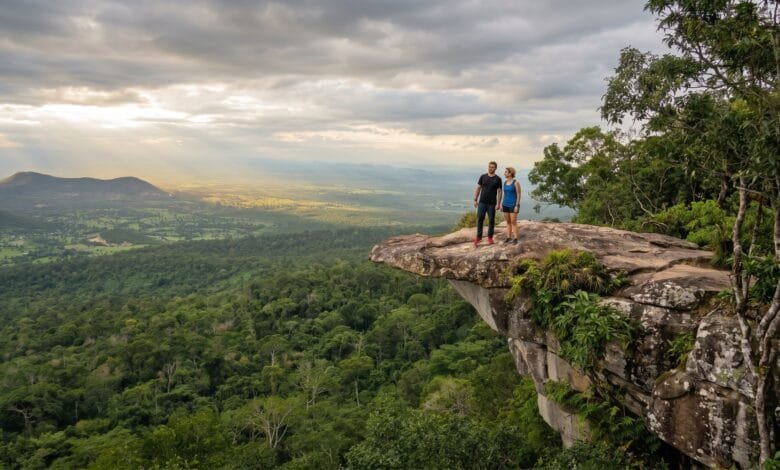
Kirirom National Park is Cambodia’s oldest national park and its most accessible highland escape. Located about 112 kilometers southwest of Phnom Penh, it offers something rare in this part of Southeast Asia: cool mountain air, open pine forests, and a landscape that feels noticeably different from the tropical lowlands most visitors know.
Officially known as Preah Suramarit-Kossamak Kirirom National Park, the area sits on a forested plateau at the eastern edge of the Cardamom Mountains. The Khmer name “Kirirom” means “joyful mountain,” and the park has served as a retreat from the heat of the plains for decades—first as a royal recreation area, later as Cambodia’s first designated national park in 1993.
If you are based in Phnom Penh and looking for a nature-focused day trip or a quiet weekend, Kirirom is one of the most practical options in the country. It is not a wildlife safari destination or a wilderness expedition. It is a place for pine-shaded walks, waterfall swims during the wet season, and genuinely cool nights under the stars.
Quick Travel Information
Where Is Kirirom National Park?
Kirirom National Park lies primarily in Kampong Speu Province, about 112 kilometers southwest of Phnom Penh along National Road 4, which continues toward Sihanoukville. Parts of the protected area extend into Koh Kong Province to the west.
The park sits on the eastern edge of the Cardamom Mountains, a range that forms one of Cambodia’s largest remaining forest landscapes. From Phnom Penh, the drive follows a major highway before turning onto a smaller road that climbs onto the plateau. The transition from flat, hot lowlands to pine-covered hills is one of the more striking shifts in Cambodian geography.
Nearby, just outside the park boundary, the Chambok community-based ecotourism site offers a locally run alternative for waterfall treks and homestays.
What Makes Kirirom National Park Special?
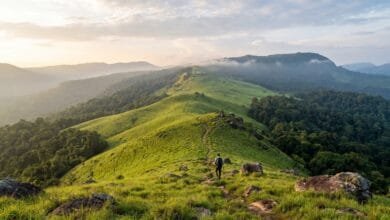
The park’s defining feature is its pine forest. Cambodia is a tropical country, and most of its forests are evergreen or deciduous broadleaf jungle. Kirirom is different. Its plateau supports open stands of Cambodian pine (Pinus kesiya var. langbianensis), creating a landscape that feels more like a temperate highland forest than a Southeast Asian jungle.
That pine forest exists because of a combination of altitude and seasonal burning. The plateau’s iron-rich lateritic soils are relatively infertile, which limits the growth of broadleaf trees and allows pines to dominate. The result is a rare ecosystem in Cambodia—open, park-like woodland with grass clearings, shaded trails, and a noticeably cooler climate.
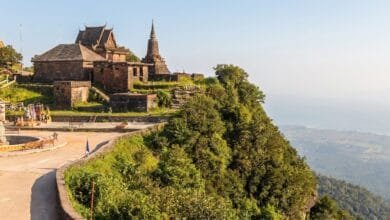
The name “Kirirom” comes from Pali, the liturgical language of Theravada Buddhism, and means “joyful mountain.” Before it became a national park, the area was known as Phnom Vorvong Sorvong, named after two princes from a traditional Khmer tale. King Sisowath Monivong renamed the site in the 1930s, and it was developed as a resort area from 1945 onward.
What to See
Pine Forests and Plateau Landscapes
The pine plantations and natural pine stands are the park’s signature scenery. Tree-lined roads wind through the plateau, and the open understory makes walking pleasant and shaded. The light filtering through pine needles, especially in the early morning, gives the park a calm, almost meditative atmosphere.
Waterfalls
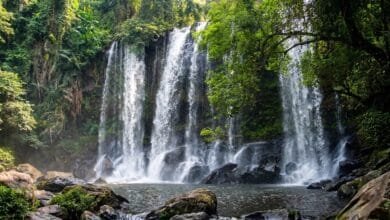
Several waterfalls are located within or near the park. Chambok Waterfall, accessed via the community ecotourism site, is one of the more established waterfall destinations. Other falls, including those near the Ou-Trasek area, require more effort to reach and are best visited with a local guide who knows the unmarked access routes.
Water volume varies dramatically with the season. During the dry months, some waterfalls slow to a trickle. The rainy season, roughly May through October, brings stronger flow and makes the falls more impressive, but it also makes secondary trails and access roads more difficult.
O’Tasek Lake
O’Tasek Lake is a quiet picnic spot surrounded by pines, offering a peaceful place to sit and enjoy the highland setting. It is one of the more accessible natural features within the park.
The Cave
A cave known for the warmth felt inside is among the park’s curiosities. Access is poorly marked, and visitors typically need a local guide to find it.
Things to Do
Hiking and Nature Walks
The park has trails ranging from short, easy walks to moderate climbs through pine groves, fern-covered slopes, and shaded streams. The open pine forest and relatively gentle plateau terrain make this a comfortable place to walk, even for travelers who are not experienced hikers.
Waterfall Swimming
During and shortly after the rainy season, swimming is possible in some of the pools below waterfalls. Water levels and safety conditions vary, so check locally before entering the water.
Camping
Camping is available in designated areas. At least one resort near the park offers campsites with a perimeter fence and security, as well as equipment rental. If you plan to camp, confirm current arrangements and regulations directly with the park or your accommodation provider, as facilities and rules can change.
Picnicking
The plateau’s clearings and lake areas are well suited to picnics. Local stalls near the main entrances sell snacks and drinks, which makes it possible to visit without carrying a full day’s supplies.
Birdwatching
The park’s birdlife is notable. Around 196 bird species have been recorded, including woodpeckers, hornbills, and other highland species. The pure pine forest is particularly interesting for birders because it hosts species that are uncommon in Cambodia’s lowland forests. However, wildlife sightings are never guaranteed, and the dense forest can make observation challenging.
Mountain Biking
The park’s internal roads and trails are suitable for mountain biking, and bikes can be rented from some accommodation providers.
Wildlife and Nature
Kirirom’s highland forest supports a range of wildlife adapted to the cooler plateau environment. Pileated gibbons have been recorded in the park and are among its most notable species. Long-tailed and pig-tailed macaques are also present. Sambar deer graze the grassland clearings, and the park’s streams support freshwater fish and freshwater crab species.
The park is also home to leopards and Asian wild dogs (dholes), though these are elusive and rarely seen. Tigers were historically present in the area but may now be locally extinct.
For birdwatchers, the park is significant: the Kirirom Important Bird Area is the only site in Cambodia with records of the Brown Hornbill. Eight woodpecker species and two nuthatch species have been found together in the pine forest.
Around 105 plant species have been identified in the park, including orchids, pitcher plants, and other highland flora.
A note on expectations: wildlife sightings are never guaranteed. Kirirom is more rewarding for its landscape, atmosphere, and birdlife than for predictable large-animal encounters. Bring patience and binoculars, and treat any sighting as a bonus.
How to Get There
The most straightforward route is by road from Phnom Penh via National Road 4, heading toward Sihanoukville. The journey is roughly 112 kilometers and takes about two hours by private vehicle.
Private car or taxi: This is the most flexible option. You can arrange a driver for a day trip or an overnight stay. Several tour operators in Phnom Penh offer Kirirom day trips that include hotel pickup.
Long-distance bus: Some buses traveling along National Road 4 stop at the Kirirom junction. From there, you will need local transport—such as a motorbike taxi or a pre-arranged pickup—to reach the park entrance, which is still some distance uphill.
Motorcycle: Independent travelers with motorcycle experience sometimes ride to Kirirom from Phnom Penh. The highway portion is straightforward, but the road up to the park becomes rougher and should be approached with caution, especially in wet conditions.
The final stretch of road up to the park entrance is paved, but side roads and access tracks within the park may be unpaved and uneven.
Travel times and transport availability can change. Check current conditions with your hotel, a local operator, or the relevant authorities before setting out.
When to Visit
Dry season (November to April): This is the most comfortable period for hiking and driving on internal park roads. Daytime temperatures on the plateau are mild, and nights can drop to 15–18°C in December and January—cold enough for a light jacket.
Rainy season (May to October): Waterfalls are more dramatic, and the forest is greener. However, rain can make secondary trails slippery and some access routes difficult. The park also draws more local visitors on extended weekends, so if you prefer quiet, avoid Cambodian public holidays.
Cool season nuance: The park’s highland location means it is always cooler than Phnom Penh, but the contrast is most welcome during the hot dry months of March and April, when the lowlands become uncomfortable.
How Long to Stay
A short visit (half day): You can drive up from Phnom Penh, visit O’Tasek Lake, walk a short pine trail, and have a picnic before returning. This works if you are short on time and mainly want to experience the highland atmosphere.
One full day: This allows time for a proper hike, a waterfall visit (season permitting), and a relaxed lunch. A day trip from Phnom Penh is feasible if you leave early.
One or two nights: Staying overnight gives you access to cooler evenings, early-morning birdwatching, and a slower pace. It also makes it easier to visit more than one waterfall or trail without rushing. Camping or staying in a park-area lodge makes this practical.
Where to Stay
Accommodation options exist both inside and near the park. vKirirom Pine Resort is a well-known option in the area, offering bungalows, tents, and camping facilities. Other accommodation names that appear in travel listings include Kirirom Hillside Resort and several smaller resorts near the park.
Camping is possible in designated areas, and at least one resort provides campsites with security and equipment rental.
Accommodation availability and quality can change. Confirm details directly with the property before booking. If you prefer a homestay experience, the Chambok community ecotourism site near the park boundary offers community-run accommodation and is worth considering as an alternative.
What to Pack
- Comfortable walking shoes or trail shoes
- A light jacket or fleece for evenings and early mornings, especially from December to February
- Plenty of drinking water
- Sun protection (hat, sunscreen, sunglasses)
- Rain protection if visiting during the wet season
- Insect repellent
- Binoculars for birdwatching
- A camera
- A reusable water bottle
- Snacks, especially if you plan to hike away from the main areas
Travel Tips
- Bring cash. Entrance fees and small purchases are typically handled in cash. Do not assume card payment is available.
- Fuel up before the climb. There are limited services on the road up to the park. Fill your vehicle or motorbike in a town along National Road 4.
- Start early. Morning light in the pine forest is beautiful, and starting early gives you more time before afternoon heat or rain.
- Mobile coverage may be inconsistent in the park’s more remote areas. Do not rely on your phone for navigation or emergencies.
- Check road conditions in the wet season. The main road up is paved, but side tracks can become muddy and difficult.
Responsible Travel
Kirirom is a protected national park, and visiting responsibly helps ensure it remains worth visiting.
- Stay on established trails where they exist. Off-trail walking can damage fragile highland vegetation.
- Do not litter. Carry out everything you bring in.
- Do not feed or disturb wildlife. Keep a respectful distance from any animals you encounter.
- Do not remove plants, rocks, or other natural objects.
- Follow park rules and any instructions from rangers or local guides.
- If you visit the Chambok community ecotourism site, respect the community’s rules and support local guides and homestays.
- Use designated camping areas if camping. Do not build fires outside permitted areas.
Is This Place Right for You?
Kirirom is a good fit for:
- Nature lovers who want to experience a rare Cambodian pine forest ecosystem
- Hikers looking for easy to moderate walking in a cool, shaded environment
- Birdwatchers interested in highland species and the park’s record of Brown Hornbill
- Photographers drawn to pine forest light, waterfalls, and plateau landscapes
- Travelers based in Phnom Penh who want a nature escape without a long journey
- Campers who enjoy simple outdoor stays
It may be less suitable for:
- Travelers seeking guaranteed large-wildlife sightings. Kirirom is not a safari park.
- Visitors expecting extensive tourist infrastructure. Facilities are limited and basic.
- Those without their own transport or a pre-arranged tour. Public transport to the park entrance is limited.
- Travelers visiting in the wet season who are not prepared for rain and rough side roads.
Frequently Asked Questions
Where is Kirirom National Park?
It is in Kampong Speu Province, southwestern Cambodia, about 112 kilometers from Phnom Penh along National Road 4. Parts of the park extend into Koh Kong Province.
How do I get to Kirirom National Park?
Most visitors travel by private car or taxi from Phnom Penh (roughly two hours). Some buses stop at the Kirirom junction on National Road 4, but you will need local transport to reach the park entrance from there.
Is Kirirom National Park worth visiting?
If you are interested in nature, cool mountain air, pine forests, and a break from Cambodia’s heat, yes. It is not a wildlife safari, but it offers a genuinely different landscape and a peaceful outdoor experience.
How much time do I need?
A half-day is enough for a short visit. One full day allows for a hike and waterfall visit. One or two nights give you a more relaxed experience with cooler evenings and early-morning birdwatching.
What can I do there?
Hiking, nature walks, waterfall visits, picnicking, camping, birdwatching, and mountain biking are the main activities.
Can I visit without a guide?
Yes, for the main accessible areas. However, some secondary waterfalls and the cave have unmarked access and are best visited with a local guide.
What is the best season to visit?
The dry season, November to April, offers the most comfortable conditions. The rainy season makes waterfalls more impressive but can complicate trail and road access.
Conclusion
Kirirom National Park offers something unusual in Cambodia: a cool, pine-covered highland where you can walk, swim in waterfalls during the wet season, and sleep under genuinely chilly night skies. It is Cambodia’s oldest national park and its most accessible mountain escape from Phnom Penh.
The park is best suited to travelers who value landscape, atmosphere, and quiet nature experiences over guaranteed wildlife encounters or polished tourist facilities. Its closeness to the capital makes it an easy addition to a Cambodia itinerary, whether as a day trip or a short overnight stay.
The main practical consideration is transport: without your own vehicle or a pre-arranged tour, reaching the park entrance can be inconvenient. Plan accordingly, check current conditions before you go, and treat Kirirom as what it is—a rare piece of Cambodian highland forest worth protecting and enjoying.