Samlor Korko: Cambodia’s Traditional Stirring Soup Explained for Travelers
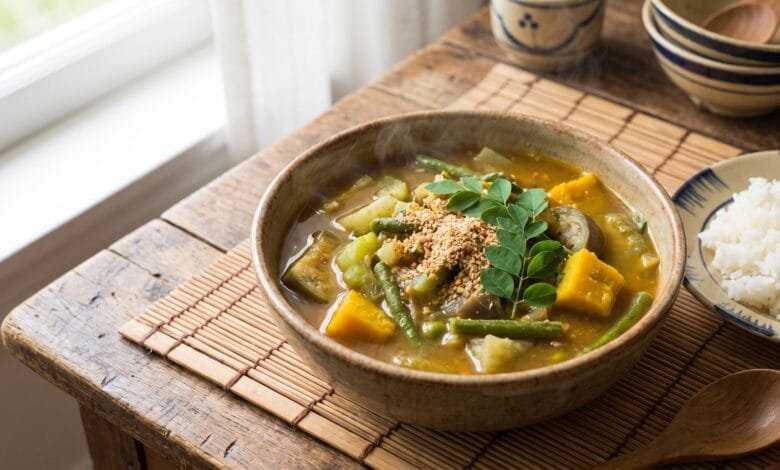
Walk through almost any Cambodian neighborhood around lunchtime, and you may notice a distinct aroma drifting from open kitchen windows — turmeric, lemongrass, and something deeper, almost earthy. That scent often comes from a pot of Samlor Korko, one of Cambodia’s most beloved traditional soups. For foreign travelers, this dish offers a genuine taste of everyday Khmer home cooking. It is not typically found on tourist menus, which makes encountering it all the more rewarding. This guide explains what Samlor Korko is, what it tastes like, and what you should know before trying it.
What Is Samlor Korko?
Samlor Korko (សម្លកកូរ) is a traditional Cambodian soup made with a wide variety of vegetables, a aromatic spice paste called kroeung, fermented fish paste known as prahok, and roasted rice powder. In Khmer, samlor means “soup,” and korko means “to stir” or “to mix” — a name that reflects the constant stirring required during cooking to blend the ingredients into a harmonious whole.
The dish is sometimes called “Cambodian stirring soup” in English. It has also been compared to French ratatouille because of its vegetable-forward composition, though the flavor profile is distinctly Southeast Asian. Samlor Korko is considered by many Cambodians to be one of the country’s national dishes, particularly among older generations who grew up eating it at family tables.
It is normally served hot with steamed jasmine rice and is eaten as part of a shared family meal.
What Does Samlor Korko Taste Like?
Samlor Korko offers a layered and balanced flavor experience. The first thing you notice is the aroma — fragrant and herbal, with prominent notes of lemongrass, galangal, and turmeric from the kroeung paste.
On the palate, the soup is gently sour, slightly sweet, and deeply savory. The sourness comes from ingredients like tamarind or unripe fruit, while the sweetness is often contributed by palm sugar or naturally sweet vegetables like pumpkin. The prahok adds a rich, fermented umami depth that is characteristic of Cambodian cooking, and the roasted rice powder gives the broth a subtle nuttiness and a slightly thickened body.
Despite often being described as a “spicy” soup, Samlor Korko is typically mild to medium in heat. The spiciness comes mainly from the kroeung paste, which may include fresh chilies, but the overall effect is aromatic rather than fiery. If you are sensitive to spice, you can usually ask for it to be prepared milder.
The texture is thick and hearty, closer to a stew than a thin broth. Each spoonful contains tender vegetables with a slight bite, and the soup coats the rice beautifully.
The Ingredients Behind the Flavor
What makes Samlor Korko special is its remarkable flexibility. There is no single fixed recipe — instead, Cambodian cooks use whatever seasonal vegetables are available, often incorporating ten or more varieties in a single pot.
Kroeung is the aromatic backbone of the dish. This Cambodian spice paste is made by pounding together lemongrass, galangal, garlic, turmeric, kaffir lime leaves, and sometimes chilies. It gives Samlor Korko its distinctive fragrance and golden color.
Prahok is fermented fish paste, a staple of Khmer cuisine. It provides the soup’s savory, umami foundation. A little goes a long way — just one tablespoon can transform the entire pot.
Roasted rice powder is another signature ingredient. Toasted rice grains are ground into a coarse powder and stirred into the soup, adding body and a gentle nutty flavor.
Common vegetables include green papaya, long beans, eggplant, bitter eggplant, winter melon, banana flower, morning glory, and butternut squash. Unripe fruit such as green banana or young jackfruit may also be added. Protein options range from fish (traditionally catfish) to pork bones, chicken, or even just vegetables for a meatless version.
How Is Samlor Korko Traditionally Prepared?
Traditional preparation begins with making the kroeung paste. Ingredients are pounded together in a stone mortar and pestle until they form a smooth, fragrant paste. This step is considered essential — the physical pounding releases oils and aromas that a blender cannot fully replicate.
The kroeung is then fried in hot oil until fragrant, often with a bit of palm sugar to create a subtle caramelized base. Prahok is added next, followed by the protein of choice. Once the protein is coated in the aromatic paste, water or broth is poured in.
Vegetables are added in stages, with harder vegetables like pumpkin and green papaya going in first, followed by softer ones like eggplant and morning glory. The soup simmers gently, and the cook stirs frequently — the “korko” motion — to ensure everything melds together.
Near the end of cooking, roasted rice powder is stirred in to thicken the broth. The soup is seasoned with fish sauce and sometimes a little sugar, then finished with fresh herbs like moringa leaves. The entire process takes about 40 to 60 minutes and is typically done in a single pot.
The Story and History of Samlor Korko
The exact origins of Samlor Korko are not clearly documented, but the dish is widely regarded as a traditional Khmer soup with deep roots in Cambodian home cooking. One popular legend describes a woman who attempted to poison her unfaithful husband by mixing hundreds of ingredients into a soup. Instead of harming him, the concoction transformed him into a devoted husband, and the dish — known ever after as “samlor korko,” the stirring soup — spread throughout the country.
Another folk legend, recorded in Khmer oral tradition, connects the soup to a story about a young prince and a magical love charm. These stories are part of Cambodian cultural heritage rather than documented history, and they should be understood as folklore rather than factual accounts.
What is certain is that Samlor Korko has been part of Cambodian cuisine for generations. Some sources suggest it may have origins in royal cuisine, with versions containing up to 100 ingredients prepared for the king. However, this claim is difficult to verify historically. What is clear is that the dish has long been a staple of everyday Cambodian family cooking, passed down through generations of home cooks, particularly women, who are the primary custodians of this culinary tradition.
Why Samlor Korko Matters in Cambodian Food Culture
In Cambodia, Samlor Korko represents more than just a meal. It embodies the Cambodian approach to cooking — resourceful, communal, and deeply connected to the seasons. The soup is a daily presence in many Cambodian homes. Its scent drifting through neighborhoods at lunchtime is a familiar sensory experience for locals.
The dish reflects the Khmer philosophy of balance. Sour, sweet, salty, and aromatic elements are carefully combined to create harmony. It also demonstrates the Cambodian talent for making something extraordinary from humble ingredients — a handful of vegetables, a spoonful of fermented fish paste, and a fragrant spice paste.
Samlor Korko is also celebrated for its nutritional value. Because it contains so many vegetables, it is rich in vitamins, minerals, and fiber. The World Food Programme has highlighted samlor korko as an example of a nutritious dish used in school meal programs in Cambodia. For many Cambodians, it is the ultimate comfort food — nourishing, familiar, and deeply satisfying.
Regional and Family Variations
There is no single “correct” way to make Samlor Korko. Every family has its own version, shaped by what grows nearby, what is in season, and personal preference.
In some regions, cooks favor a sour profile, adding tamarind or unripe fruit. In others, the emphasis is on sweetness from pumpkin or palm sugar. Some families use fish as the main protein, while others prefer pork bones or chicken. Vegetarian versions are common, especially during religious observances.
The kroeung paste itself can vary from cook to cook. Some like it with more turmeric for color, others with extra lemongrass for fragrance. The amount of prahok also varies widely — some cooks use it sparingly for subtle depth, while others let its fermented character shine.
This variability is not a flaw but a defining feature of the dish. It is a living recipe that adapts to its surroundings.
Where Can Travelers Experience Samlor Korko?
Samlor Korko is primarily a home-style dish, so you are most likely to encounter it in everyday Cambodian restaurants rather than high-end tourist establishments. Local market stalls and family-run eateries often serve it as part of their daily lunch offerings.
In Phnom Penh, you can look for it at local restaurants around Orussey Market or Kandal Market. In Siem Reap, the back lanes off Pub Street and the Old Market area have authentic stalls where the dish may be available. Smaller towns and rural areas are often where you will find the most traditional versions.
Because the dish is made with whatever vegetables are fresh that day, availability can vary. If you see it on a menu or in a display case, it is worth trying. You can also ask your guesthouse or hotel staff for recommendations — locals usually know which nearby eateries serve the best home-style soups.
When ordering, you can simply say “samlor korko” (pronounced roughly sam-law kor-kor). Pointing at the dish if there is a display is also perfectly acceptable.
How to Order and Eat Samlor Korko
Samlor Korko is served hot, usually in a shared bowl for the table. Each diner takes a portion and eats it with steamed jasmine rice. The soup is not typically eaten alone as a starter — it is part of the main meal.
In Cambodian dining culture, food is shared. You may find yourself reaching into a communal bowl with your spoon, which is completely normal. Use the serving spoon provided to take soup into your own bowl or over your rice.
If you are dining at a local restaurant, the soup may arrive already portioned. If you are at a family-style eatery, it may come in a large pot for the table. Either way, enjoy it with rice and perhaps a side of fresh herbs or pickled vegetables.
If you want to adjust the flavor, you can ask for extra roasted rice powder on the side — it adds a lovely nutty texture. If you prefer less spice, mention ot cheh (not spicy) when ordering.
What Travelers Should Know Before Trying It
Samlor Korko is generally mild, but the kroeung paste may contain chilies. If you are sensitive to spice, ask for a milder version.
The dish contains prahok, fermented fish paste, which gives it a distinctive savory depth. If you are not accustomed to fermented flavors, the taste may be unfamiliar at first, but it is not overpowering — it blends into the overall balance of the soup.
Because the soup often includes fish or pork, vegetarians should specifically ask for a vegetable-only version. Many local cooks are happy to accommodate this, but you should confirm that no fish sauce or prahok is used.
The soup may contain bones if made with pork or fish. Chew carefully.
Common allergens include fish and shellfish (from prahok and fish sauce). If you have seafood allergies, you should avoid this dish unless you can confirm the ingredients.
The vegetables used vary daily, so if you have specific dietary restrictions or allergies, it is best to ask about the ingredients before ordering.
Frequently Asked Questions
What is Samlor Korko in English?
It is often translated as “Cambodian stirring soup” or “Cambodian mixing soup.” The name comes from the stirring action required during cooking.
Is Samlor Korko spicy?
It is typically mild to medium. The spice comes mainly from the kroeung paste, which may include fresh chilies, but the soup is aromatic rather than fiery.
What does Samlor Korko taste like?
It has a balanced flavor profile — gently sour, slightly sweet, and deeply savory. The aroma is herbal and fragrant, with notes of lemongrass and turmeric.
What are the main ingredients in Samlor Korko?
The key ingredients are kroeung (Cambodian spice paste), prahok (fermented fish paste), roasted rice powder, and a mix of seasonal vegetables such as green papaya, long beans, eggplant, and pumpkin. Protein may include fish, pork, or chicken.
Where can I try Samlor Korko in Cambodia?
Look for it in local Khmer restaurants, market food stalls, and family-run eateries. It is less common in tourist-focused restaurants. In Phnom Penh, try areas around Orussey Market. In Siem Reap, explore the back lanes near the Old Market.
Is Samlor Korko vegetarian?
Traditional versions usually contain prahok and may include fish or meat. However, vegetarian versions are possible if you ask specifically and confirm that no fish sauce or prahok is used.
Conclusion
Samlor Korko is more than just a soup — it is a window into Cambodian home cooking and the Khmer approach to balance and resourcefulness. For travelers, encountering this dish is a chance to taste something authentic and deeply rooted in everyday life. Its fragrant broth, tender vegetables, and complex umami depth make it a memorable experience, whether you try it at a humble market stall or a local family restaurant. Understanding what Samlor Korko is and how it is enjoyed will help you appreciate Cambodian cuisine on a deeper level. If you see it on a menu during your travels, do not hesitate — order a bowl, add some rice, and taste a piece of Cambodia’s culinary soul.