Inside Phnom Penh’s Central Market: What to See, Eat and Buy Under the Art Deco Dome
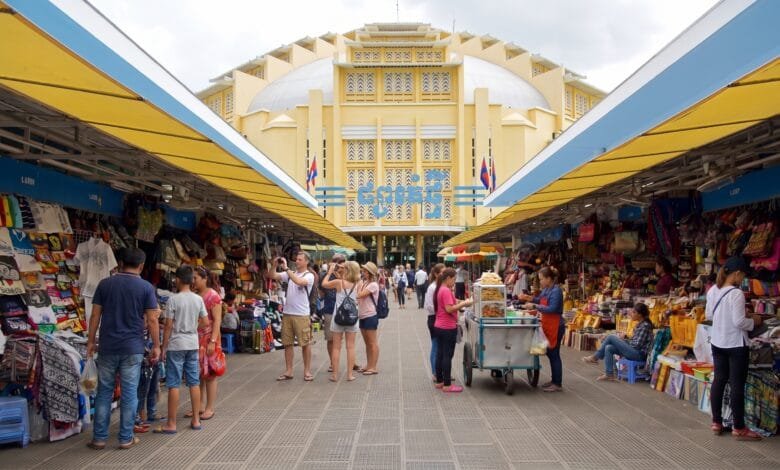
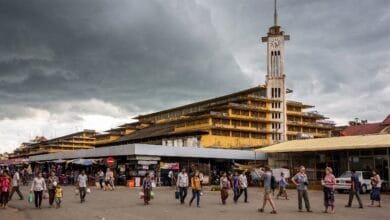
The bright yellow dome rises above the surrounding streets like nothing else in Phnom Penh. From a distance, it looks almost like a spacecraft that landed in the middle of the city—a giant Art Deco structure with four arms stretching out in a perfect cross. This is Central Market, known locally as Psar Thmei (New Market), and it has been the beating heart of Phnom Penh’s commerce since 1937.
Walk closer and the sounds begin to reach you: vendors calling out prices, the clatter of metal from jewelry stalls, the sizzle of food cooking, and the constant hum of bargaining. The air carries the smell of fresh fruit, fried snacks, and the distinctive sweetness of tropical flowers. Step inside the towering central dome, and you’re surrounded by a dazzling display of gold jewelry, watches, fabrics, and endless rows of goods.
For travelers, Central Market isn’t just a place to shop. It’s a living piece of Cambodian history, a food destination, a photographer’s playground, and one of the best windows into daily life in Phnom Penh.
Quick Facts / At a Glance
| Detail | Information |
| Location | Street 130 (Kampuchea Krom Street), Daun Penh District, Phnom Penh |
| Famous for | Art Deco architecture, gold jewelry, souvenirs, local food |
| Market type | Traditional covered market |
| Opening hours | Daily, approximately 6:00 AM – 5:00 PM (hours can vary) |
| Entrance fee | Free |
| Best time to visit | Morning (cooler temperatures, market at its busiest) |
| Recommended visit time | 1–2 hours |
| Distance from Riverside | Approximately 1.5 km |
| Transportation | Tuk-tuk from Riverside: $1–2 |
Why Visit Central Market?
Central Market is one of Phnom Penh’s most recognizable landmarks, and for good reason. Built in 1937 during the French colonial period, this Art Deco masterpiece was designed by architect Jean Desbois and supervised by Louis Chauchon. When it opened, it was said to be the largest market in Asia. Today, its 26-meter-high central dome remains one of the largest of its kind in the world.
But the architecture is only part of the story. Central Market is a working market where Phnom Penh residents shop for everything from gold jewelry to fresh produce. For travelers, it offers an authentic glimpse into Cambodian daily life—the energy, the colors, the smells, and the friendly chaos of a Southeast Asian bazaar.
Whether you’re looking for souvenirs, curious about local food, or simply want to see one of Phnom Penh’s most photogenic buildings, Central Market delivers an experience that’s both cultural and practical.
What to See at the Market
Central Market’s cross-shaped layout makes it easy to navigate once you understand the sections. The building has a central dome with four long arms extending outward, each filled with stalls selling different types of goods.
Under the Central Dome
The heart of the market is where you’ll find the most dazzling displays. This section is famous for gold and silver jewelry, gemstones, watches, and timepieces. The jewelry here is known for its quality and design, and many locals buy their gold from Central Market.
The Four Wings
Each arm of the market offers something different:
- Electronics and gadgets – Phones, cameras, and accessories
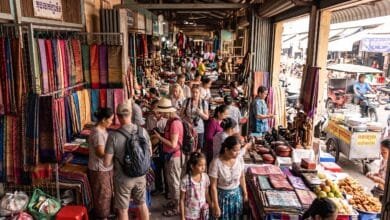
- Clothing and textiles – Local fashion, fabrics, tailoring services, and second-hand clothes from Europe and the US
- Souvenirs and handicrafts – T-shirts, bags, postcards, silver curios, and kramas (the traditional Cambodian checked scarf)
- Household items – Cosmetics, stationery, flowers, and everyday goods
The Fresh Food Section
On the outer edges of the market, particularly on the western side facing Monivong Boulevard, you’ll find the fresh food section. This is where local shoppers buy fruits, vegetables, flowers, and seafood. For photographers, this area is a visual feast—vibrant piles of mangoes, papayas, dragon fruit, and exotic vegetables create a riot of color.
What to Eat
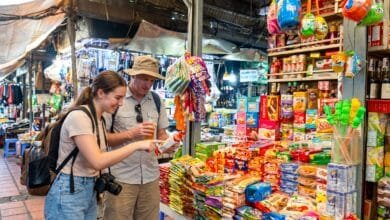
Central Market is an excellent place to try Cambodian street food without venturing far from the city center. Food stalls are scattered around the market’s perimeter, particularly on the western side. Here’s what travelers can expect to find:
Local Snacks and Meals
- Fried spring rolls – Crispy and filled with vegetables or meat
- Sticky rice – Often served with mango or coconut
- Iced coffee – Strong, sweet, and refreshing—a Cambodian favorite
- Noodle soups – Various Khmer-style noodle dishes are commonly available
Fresh Fruit
The produce section offers an opportunity to try tropical fruits that may be unfamiliar to international travelers. Look for:
- Mango – Sweet and juicy, in season
- Papaya – Often eaten green in salads or ripe as a fruit
- Dragon fruit – Vibrant pink skin with white flesh
- Rambutan – Hairy red exterior with sweet, translucent flesh
Food Bargaining Note
Unlike other goods at the market, food prices are generally fixed. Don’t bargain for food—just pay the listed price.
What to Buy
Central Market is a shopper’s paradise, but knowing what to look for can make the experience more rewarding.
Gold and Jewelry
Central Market is widely regarded as the best place in Phnom Penh to buy gold jewelry. The quality is generally good, and the selection is enormous. If you’re in the market for gold, silver, or jade, this is the place.
Kramas
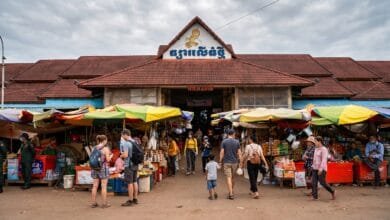
The traditional Cambodian checked scarf is a versatile souvenir. You’ll find them in countless colors and patterns around the market’s entrance.
Silk and Textiles
Cambodian silk is beautiful and makes an excellent gift. Look for scarves, table runners, and fabric by the meter.
Souvenirs and Handicrafts
From small wooden carvings to silver curios, the souvenir selection is vast. Take your time browsing—prices vary widely between stalls.
Electronics and Watches
The market has a large selection of electronics and watches. Be aware that some items may be counterfeit, so inspect carefully before purchasing.
The Local Food Story
Central Market’s location tells a remarkable story. Before 1935, the area where the market now stands was a swamp that collected runoff water during the rainy season. The French colonial administration drained the marshland to create space for a modern market, and construction began in 1935. The market opened in 1937.
The market’s fresh food section connects directly to Cambodia’s agricultural traditions. The fruits and vegetables sold here come from farms across the country, many within a few hours of Phnom Penh. The seafood arrives from the Mekong River and the Gulf of Thailand. For travelers interested in Cambodian cuisine, Central Market offers a snapshot of the ingredients that define Khmer cooking—from the tropical fruits to the aromatic herbs and spices.
The food stalls around the market represent another layer of Cambodian food culture: street food that’s quick, affordable, and deeply flavored. These are the dishes that Phnom Penh residents eat for lunch, the snacks that fuel a day of shopping and working.
How to Experience the Market
A visit to Central Market is straightforward, but a little planning helps you make the most of it.
Step 1: Arrive in the morning. The market opens early, and mornings are cooler and less crowded. You’ll see the market at its most active, with vendors setting up and locals doing their daily shopping.
Step 2: Walk the perimeter first. Before diving into the covered sections, walk around the outside of the building. This is where you’ll find the fresh food, flowers, and many of the food stalls. It’s also the best place to appreciate the full scale of the Art Deco architecture.
Step 3: Explore under the dome. Head inside to see the gold and jewelry section. The dome interior is impressive—naturally cool and filled with soft light filtering through the high windows.
Step 4: Browse the wings. Work your way through the four arms of the market. Each offers different goods, and you never know what you might find.
Step 5: Try some food. Stop at one of the food stalls for a snack or a drink. It’s a great way to recharge and experience local flavors.
Step 6: Bargain for souvenirs. If you’re buying souvenirs or clothing, bargaining is expected. Start at about 50% of the asking price and negotiate from there. Keep it friendly—a smile goes a long way.
Best Time to Visit
Time of Day: Early morning (around 7:00–9:00 AM) is generally the best time to visit. Temperatures are cooler, the market is fully active, and you’ll see local life at its most vibrant. Late afternoon is also pleasant.
Season: The dry season (November to April) offers more comfortable weather for exploring. During the rainy season (May to October), the market can be prone to flooding in the surrounding streets—a remnant of its swampy origins.
Crowds: The market is busy throughout the day, but weekends tend to be more crowded with local shoppers.
Practical Tips
Cash is king. Most vendors at Central Market do not accept credit cards. Bring small denominations of US dollars or Cambodian Riel. US dollars are widely accepted, but smaller bills are easier for bargaining.
Dress comfortably. Phnom Penh is hot and humid. Wear light, breathable clothing and comfortable walking shoes.
Bring a camera. The market is visually stunning, but be respectful when photographing vendors—ask permission if you’re taking close-up shots of people.
Bargain politely. Bargaining is expected for most goods except food. Start at about half the asking price and negotiate with a smile. If you can’t agree on a price, it’s acceptable to walk away.
Stay hydrated. The market can be hot, especially in the middle of the day. Buy a cold drink from one of the food stalls.
Watch your belongings. Like any busy market, Central Market has pickpockets. Keep your valuables secure.
How to Get There
Central Market is located in the heart of Phnom Penh at the intersection of Kampuchea Krom Street (Street 130) and Street 63 in Daun Penh District.
From the Riverside area: The market is approximately 1.5 km from Wat Phnom and the riverfront. A tuk-tuk ride typically costs $1–2. It’s also walkable in about 20–25 minutes.
By tuk-tuk: Tuk-tuks are the most convenient way to reach the market from most parts of Phnom Penh. Agree on a price before you start your journey.
By bus: There is a bus station at the southwest corner of the market.
By taxi: A taxi stand is located at the northwest corner of the market.
How Long Should You Spend?
Plan to spend 1–2 hours at Central Market. This gives you enough time to:
- Walk through the main sections
- Browse the jewelry under the dome
- Explore the fresh food section
- Try a snack at a food stall
- Buy souvenirs if you wish
If you’re a serious shopper or photographer, you could easily spend 2–3 hours here.
Where to Stay
Central Market is in the Daun Penh district, close to many of Phnom Penh’s best hotels. The Riverside area, Royal Palace area, and central Daun Penh all offer convenient access to the market.
Hotels near Central Market include:
- Palace Gate Hotel & Resort
- Sun & Moon Riverside Hotel
- Okay Boutique Hotel
- Frangipani Royal Palace Hotel
- HM Grand Central Hotel
Things to Do Nearby
Central Market’s central location makes it easy to combine with other Phnom Penh attractions:
| Attraction | Distance | Why visit |
| Wat Phnom | ~1.5 km | Phnom Penh’s namesake temple, a peaceful hilltop pagoda |
| Royal Palace | ~2 km | The King’s official residence, with stunning Khmer architecture |
| Silver Pagoda | ~2 km | Inside the Royal Palace grounds, famous for its silver-tiled floor |
| National Museum of Cambodia | ~2 km | The country’s premier museum of Khmer art and artifacts |
| Riverside Park | ~1.5 km | A pleasant walk along the Tonle Sap and Mekong rivers |
| Independence Monument | ~3 km | A striking monument commemorating Cambodia’s independence from France |
Many travelers visit Central Market as part of a half-day tour that includes the Royal Palace and National Museum.
Responsible Travel
Support local vendors. By shopping at Central Market, you’re supporting local businesses and families directly.
Reduce plastic. Bring a reusable bag for your purchases and say no to plastic bags when possible.
Respect local customs. Dress modestly when visiting markets and temples. Cambodia is a conservative country, and covering shoulders and knees is appreciated.
Bargain fairly. Bargaining is expected, but remember that the prices you’re negotiating represent real income for vendors. A fair price benefits everyone.
Ask before photographing. Always ask permission before taking photos of vendors or shoppers up close.
Frequently Asked Questions
What are Central Market’s opening hours?
Central Market is open daily, typically from around 6:00 AM to 5:00 PM. Hours can vary by vendor.
Is there an entrance fee?
No, entrance to Central Market is free.
What is Central Market famous for?
Central Market is famous for its 1937 Art Deco architecture, its massive yellow dome, and its wide selection of gold jewelry, souvenirs, electronics, and fresh food.
What food can I try at Central Market?
Food stalls around the market sell local snacks like fried spring rolls, sticky rice, iced coffee, and noodle soups.
Is bargaining expected at Central Market?
Yes, bargaining is expected for most goods except food. Start at about 50% of the asking price.
Can I visit Central Market with children?
Yes, Central Market is family-friendly. Keep an eye on children in the busy sections.
How long should I spend at Central Market?
Plan for 1–2 hours to see the main sections, browse, and try some food.
How do I get to Central Market?
The market is centrally located. Take a tuk-tuk from most parts of Phnom Penh for $1–3, or walk from the Riverside area in about 20–25 minutes.
What should I bring to Central Market?
Bring cash in small denominations, comfortable shoes, a camera, and a reusable bag.
Final Thoughts
Central Market is more than a shopping destination—it’s a journey into Phnom Penh’s past and present. Under that extraordinary yellow dome, you’ll find gold that has passed through generations, food that connects to Cambodia’s agricultural heart, and the energy of a city that never stops moving.
Whether you’re here for the architecture, the food, the shopping, or simply to experience local life, Central Market delivers. It’s one of those places that stays with you—the heat, the noise, the colors, and the feeling of being part of something that has been alive for nearly a century.
Planning a food-focused trip through Cambodia? Save this Market Trails guide and add Central Market to your Phnom Penh itinerary.
Have you visited Central Market? What was your favorite find under the dome?