Takeo Crayfish: Cambodia’s Most Expensive Freshwater Delicacy
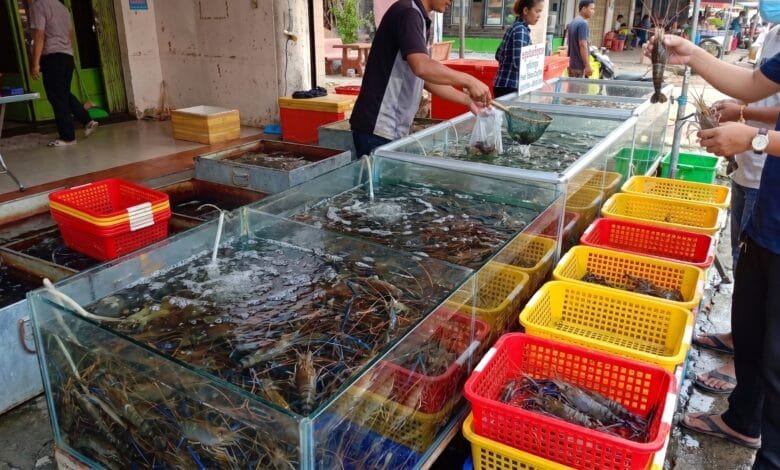
In Cambodia, a single kilogram of freshwater crayfish can cost more than a night in a Phnom Penh hotel. Welcome to the world of the Takeo crayfish — the country’s most expensive freshwater delicacy.
Deep in the floodplains of Takeo province, where rice paddies stretch to the horizon and ancient temples rise from the plains, lives a crustacean that has become Cambodia’s most valuable freshwater catch. At nearly $50 per kilogram, the Takeo crayfish commands a price that rivals premium seafood from the ocean — yet this delicacy comes not from the sea, but from the rivers, streams, and ponds of southern Cambodia.
So what makes this freshwater crustacean worth its weight in — well, almost silver? The answer lies in a story of scarcity, seasonality, geography, and the hard work of farmers who have turned a seasonal wild catch into a thriving aquaculture industry.
Quick Regional Food Facts
| Detail | Information |
|---|---|
| Region | Takeo Province, southern Cambodia |
| Province | Takeo (capital: Takeo town) |
| Main Food Identity | Freshwater crayfish (Cherax quadricarinatus) |
| Key Ingredients | Takeo crayfish, palm sugar, sausages |
| Signature Foods | Boiled/grilled/steamed crayfish, samlor machou puos ko |
| Main Food Season | Wild: Nov–Dec (3–4 weeks); Farmed: year-round (2 harvests/year) |
| Best Travel Season | November–January (cooler dry season) |
| Food Experiences | Crayfish tasting, market visits, Tonle Bati lakeside dining |
What Makes Takeo Crayfish So Expensive?
The Takeo crayfish (Cherax quadricarinatus) — an Australian red-claw species that has made its home in the waterways of eastern Takeo — is not your average freshwater catch.
First, there’s the scarcity. Wild Takeo crayfish are only available for three to four weeks each year, from November to early December. During this brief window, when floodwaters rise and the rivers swell, the crayfish become abundant — but only if the floods are big enough. If the floods don’t come, neither do the crayfish.
Annual wild production is just 60 tonnes — a tiny fraction of Cambodia’s overall freshwater catch. With demand far outstripping supply, prices soar. Wild-caught crayfish sell for $40–50 per kilogram.
Then there’s the quality. Takeo crayfish are significantly larger than other crayfish varieties, averaging 10–12 centimetres in length. Their flesh is white, sweet, and delicate with a nutty undertone — less fatty and more refined than other crustaceans. This is not a commodity food; it’s a specialty ingredient for those who appreciate the finer things.
Finally, there’s the status. In 2023, Takeo crayfish was officially registered as a Cambodian Geographical Indication (GI) product — joining the ranks of Kampot pepper, Kampot-Kep salt, and Mondulkiri honey. GI status recognizes that the crayfish’s unique qualities are intrinsically linked to the place where it’s produced: the water, soil, and climate of Takeo province.
The Landscape Behind the Food
Takeo province is often called the “rice bowl of Cambodia” — and for good reason. The province is the third-largest rice producer in the country, with over 220,000 hectares of arable land. But rice is only part of the story.
The province’s landscape is a patchwork of rice paddies, floodplains, rivers, and lakes. Tonle Bati Lake, just 30 kilometers south of Phnom Penh, is a popular fishing spot where locals and visitors alike cast their lines. The Takeo River connects the province to Vietnam, providing transportation routes for goods and people.
This water-rich environment — fed by monsoon rains that dump over 1,000 millimeters of rainfall annually — creates the perfect habitat for freshwater species. The crayfish thrive in the rivers and streams of eastern Takeo’s Angkor Borei and Borei Cholsar districts, where the floodplains expand during the rainy season.
But the crayfish isn’t just a product of the landscape — it’s also transforming it. Farmers are increasingly converting rice paddies into aquaculture ponds, creating a new kind of agriculture that combines rice cultivation with crayfish farming.
The Ingredients That Define the Region
Takeo Crayfish (បង្កងទឹកសាបតាកែវ)
The undisputed star of Takeo’s food identity. This Australian red-claw species grows larger than other crayfish, with sweet, delicate white flesh and a nutty flavor. It’s served boiled, grilled, or steamed with dipping sauce, and can also feature in soups, stir-fries, and salads.
Takeo Palm Sugar (ស្ករត្នោតតាកែវ)
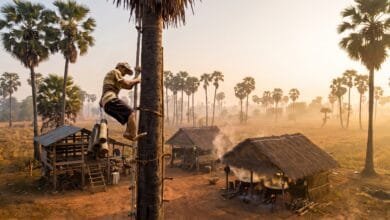
Takeo province produces some of Cambodia’s finest palm sugar, harvested from the sap of sugar palm trees. Tappers climb the trees at dawn to collect the sweet sap, which is boiled for hours until it crystallizes into golden sugar with a complex caramel-butterscotch flavor.
Takeo Sausages (សាច់ក្រកតាកែវ)
These iconic sausages are made with finely minced beef and local spices including Kampot pepper, garlic, and lemongrass. They’re a beloved specialty found throughout the province.
Regional Foods and Dishes to Know
Boiled, Grilled, or Steamed Crayfish
The simplest way to enjoy Takeo crayfish is also the best: boiled, grilled, or steamed, served with a dipping sauce of lime, salt, and Kampot pepper. This preparation lets the sweet, delicate flesh shine without distraction.
Samlor Machou Puos Ko (សម្លរម្ជូរពោះគោ)
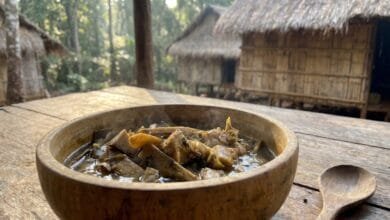
This “cow gut sour soup” is a favorite lunch for travelers passing by Phnom Chiso Mountain. For just $1.50, you can enjoy this tangy, hearty soup with rice — a taste of Takeo’s rural food culture.
Bai Cha (បាយឆា)
A simple yet satisfying fried rice dish popular in Takeo’s street food scene.
The People Behind the Food
The story of Takeo crayfish is also the story of the farmers who cultivate it.
Sap Sarun, president of the Takeo Freshwater Crayfish Traders Association, began farming crayfish in 2021. In his first year, he raised 10,000 crayfish and harvested half a tonne. The following year, he harvested over a tonne from 30,000 crayfish. Now he’s preparing to grow 300,000 crayfish in six ponds.
“I want to harvest many tonnes,” he told the Phnom Penh Post.
Sem Savary, 28, started small-scale aquaculture in 2021 with help from the provincial agriculture department. He received 10,000 baby crayfish as a donation from the Fisheries Administration and later invested his own capital to expand. Today, he raises over 20,000 crayfish alongside coconuts and geese.
These farmers represent a new generation of Cambodian agricultural entrepreneurs — people who have transformed traditional rice farming into diversified aquaculture operations.
And they’re not alone. According to the Fisheries Administration, over 20 crayfish aquaculture farms now operate in Takeo province, including 8 medium-sized operations. Farmed crayfish can be harvested twice a year, with average production of 1.2 to 1.4 tonnes per hectare. While farmed crayfish sell for less than wild-caught ($20–25/kg vs $40–50/kg), they provide a more reliable income stream for farmers.
How Local Food Traditions Developed
Takeo’s food traditions are deeply rooted in its geography and history.
The province is known as the “Cradle of Cambodian civilization”, home to pre-Angkorian sites dating back to between 500 B.C. and A.D. 500. Angkor Borei, in eastern Takeo, may have been the capital of the Funan Empire — one of Southeast Asia’s earliest states.
For centuries, the people of Takeo have lived in harmony with the water. The rivers, lakes, and floodplains have provided fish and other aquatic foods. Rice has been cultivated in the fertile lowlands. Palm sugar has been harvested from the sugar palm trees that dot the landscape.
The crayfish, however, is a more recent addition to Takeo’s food identity. The Australian red-claw species was introduced to Cambodia relatively recently — but it has thrived in Takeo’s waterways to such an extent that it’s now considered a native specialty.
What makes this story remarkable is how quickly the crayfish has become inseparable from Takeo’s identity. In just a few decades, it has gone from an introduced species to a Geographical Indication product — a symbol of regional pride and economic opportunity.
Food Through the Seasons
Wild Crayfish Season: November–December
The wild Takeo crayfish harvest is one of the shortest food seasons in Cambodia — just 3–4 weeks from November to early December. The crayfish become abundant when floodwaters rise; if the floods don’t come, the harvest is poor.
Farmed Crayfish: Year-Round
Farm-raised crayfish can be harvested twice a year, providing a more consistent supply. This has helped stabilize prices and meet growing demand, though wild-caught crayfish still command a premium.
Rice Harvest: November–January
The main rice harvest coincides with the crayfish season, creating a festive atmosphere in rural Takeo. Fresh rice noodles (nom banh chok) are made from newly harvested rice in a tradition said to date back to pre-Angkor times.
Palm Sugar: Dry Season
Palm sugar production peaks during the dry season when the sap flows most freely.
Where Travelers Can Experience the Food
Takeo Central Market
The main market in Takeo town is a bustling hub where locals shop for fresh produce, fish, meats, and daily essentials. Look for crayfish during the wild season, and palm sugar year-round.
Khmer Products Market (Weekend Market)
Held at Takeo Lakeside Park on weekends, this market showcases Cambodian agricultural products, local food, and traditional handicrafts. It’s an excellent place to discover Takeo’s food culture.
Tonle Bati Lake
Just 30 kilometers south of Phnom Penh, Tonle Bati is a popular weekend destination with local food stalls selling grilled fish, fried chicken, and other Khmer favorites. The lake is also a fishing spot where you can see local anglers at work.
Phnom Chiso Area
Near Phnom Chiso Mountain, you can find roadside restaurants serving samlor machou puos ko (cow gut sour soup) for just $1.50.
Local Restaurants
Takeo town has a decent selection of eateries, including local-style restaurants and coffee shops. Ask for crayfish dishes when they’re in season.
What to Eat and Look For
A Food-Focused Way to Explore the Region
Morning:
Start at Takeo Central Market to see the local produce, fish, and crayfish (if in season). Buy some palm sugar as a souvenir.
Late Morning:
Drive to Angkor Borei to explore the pre-Angkorian archaeological sites and see the landscape where wild crayfish are harvested.
Lunch:
Stop at a roadside restaurant near Phnom Chiso for samlor machou puos ko — the famous cow gut sour soup.
Afternoon:
Visit a crayfish aquaculture farm in Traing district to see how farmers are cultivating this valuable crustacean.
Evening:
Enjoy a crayfish dinner at a local restaurant in Takeo town — boiled, grilled, or steamed with dipping sauce.
Best Time to Visit
Best Food Season: November–December for wild crayfish; year-round for farmed crayfish and other local specialties.
Best Travel Season: November–January, when the weather is cooler and drier. This coincides with the wild crayfish season and the rice harvest.
Note: The wild crayfish season is incredibly short — just 3–4 weeks. If you want to experience wild Takeo crayfish, plan your visit for late November to early December.
How to Get There
From Phnom Penh: Takeo is approximately 80 km south of Phnom Penh — about 1.5 hours by car or bus. National Road 2 is the main route.
From Sihanoukville: Approximately 2.5 hours by car.
From Vietnam: The international border crossing at Phnom Den is about 45 minutes from Takeo town.
Local transportation: Motorbike taxis and tuk-tuks are available in Takeo town for getting around.
Responsible Food Travel
- Ask before photographing people — especially farmers, fishers, and market vendors.
- Ask before entering private areas — farms and aquaculture operations are workplaces.
- Don’t interfere with food production — observe from a respectful distance.
- Support local producers — buy directly from markets and roadside stalls.
- Don’t waste food — Takeo crayfish is precious; order what you can eat.
- Respect local food traditions — try foods the way locals prepare them.
Nearby Culinary Trails
- Kampot Pepper and Seafood — Just west of Takeo, Kampot province offers Kampot pepper, crab, and salt.
- Kandal Province — North of Takeo, Kandal shares the Mekong floodplain with similar freshwater traditions.
- Phnom Penh Food Experiences — Cambodia’s capital is just 1.5 hours away and offers access to regional specialties.
Frequently Asked Questions
Why is Takeo crayfish so expensive?
What does Takeo crayfish taste like?
When is Takeo crayfish in season?
Where can I eat Takeo crayfish?
During the wild season, look for crayfish at Takeo Central Market and local restaurants. Farmed crayfish are available more consistently. Tonle Bati Lake also has food stalls with local fish dishes.
Is Takeo crayfish a Geographical Indication product?
What other foods is Takeo known for?
Final Thoughts
The Takeo crayfish is more than just expensive seafood. It’s a story about a place — the floodplains, rivers, and rice paddies of southern Cambodia. It’s a story about people — farmers who have transformed their livelihoods through aquaculture. And it’s a story about value — why scarcity, quality, and geography can make a simple freshwater crustacean worth $50 a kilogram.
When you taste a Takeo crayfish — boiled, grilled, or steamed with a squeeze of lime — you’re tasting more than just sweet, delicate flesh. You’re tasting the waters of Takeo, the skill of its farmers, and a food tradition that has earned its place among Cambodia’s most prized regional specialties.
Whether you visit during the brief wild season or enjoy farm-raised crayfish year-round, the Takeo crayfish offers a taste of Cambodia that you won’t find anywhere else — and a reminder that the most expensive foods are often the ones most deeply connected to the land and water that produce them.