Koh Rong Travel Guide: Beaches, Things to Do & How to Get There
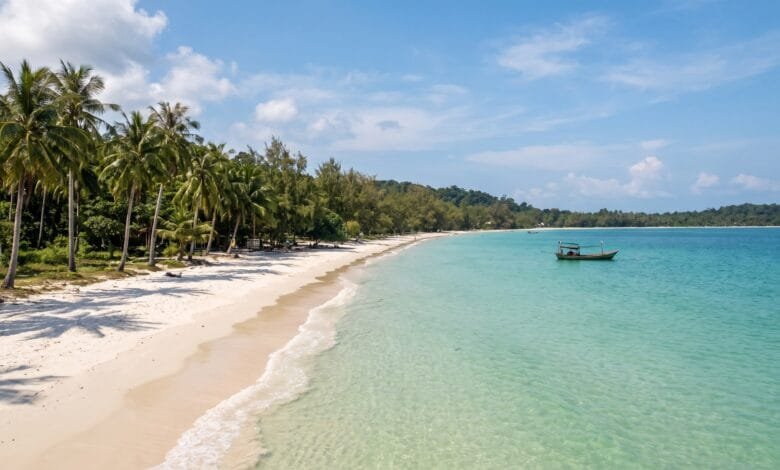
Koh Rong is the island many travelers picture when they imagine Cambodia’s coast — long stretches of pale sand, warm water, and a pace that slows down the moment the ferry pulls away from the mainland. It is Cambodia’s second-largest island, sitting in the Gulf of Thailand off the coast of Preah Sihanouk province, and it has become one of the country’s most popular island destinations for travelers who want a beach stop alongside Cambodia’s temples and cities.
What makes Koh Rong worth considering is not just the beaches themselves, but the range of experiences available on a single island. You can stay in a lively village with beach bars and cheap bungalows, or walk twenty minutes and find quiet sand with almost no one around. The island is large enough to hold both, and that variety is part of its appeal.
QUICK TRAVEL INFORMATION
Location: Gulf of Thailand, approximately 25 km (16 mi) off the coast of Sihanoukville, Preah Sihanouk province, Cambodia
Province: Preah Sihanouk (also spelled Sihanoukville province)
Type: Island
Main Access Point: Sihanoukville (ferry port area)
How to Get There: Fast ferry services connect Sihanoukville with Koh Rong. Ferries depart from Sihanoukville port and arrive at different beaches on the island, including Koh Touch and Long Set. Several operators run this route. Check the latest schedule and departure point with your ferry operator before traveling, as services and docking locations can change.
Typical Travel Time: Ferry crossings are commonly listed in the range of 45 minutes to about 1 hour 15 minutes, depending on the operator and the specific beach arrival point. Crossing time can vary with sea conditions and the route, so treat any specific duration as approximate and confirm with your operator.
Best Time to Visit: The drier months from November to April are generally preferred for beach travel, with calmer seas and clearer skies. December to March is often described as the clearest window. The wet season from roughly May to October brings rougher seas and some resorts may close. Conditions can vary, so check the forecast and sea conditions before departure.
Recommended Stay: 2–3 nights is a practical starting point for travelers who want time to enjoy the beaches, try a boat trip, and experience the island without rushing. A longer stay allows for exploring more remote beaches and the jungle interior.
Main Activities: Swimming, snorkeling, scuba diving (including courses), kayaking, boat trips, bioluminescent plankton viewing, beach relaxation, jungle hiking, motorbike exploration.
Accommodation: Options range from basic guesthouses and bungalows to mid-range resorts. The main areas are Koh Touch (lively, with bars and budget options), Long Set / 4K Beach (quieter, still accessible on foot from Koh Touch), and Sok San Beach on the western side (the island’s longest and quietest beach).
Useful to Know: Bring enough cash. ATMs on the island are unreliable, and many places operate on generator power with electricity off for part of the day. US dollars are widely accepted, and small bills are useful for local purchases and boat transfers.
Where Is Koh Rong?
Koh Rong sits in the Gulf of Thailand, roughly 25 kilometers off the coast of Sihanoukville, which is the main mainland gateway to Cambodia’s southern islands. The island is part of Preah Sihanouk province and falls within the Koh Rong Marine National Park, Cambodia’s first marine national park, established in 2018.
The island covers approximately 78 square kilometers, with a coastline of about 61 kilometers. Roughly 43 kilometers of that coastline is beach, which gives Koh Rong a sense of space that smaller islands cannot match.
Sihanoukville is the practical starting point for almost all travelers heading to Koh Rong. It is reachable by road from Phnom Penh and by air through Sihanoukville International Airport. From there, ferries cross to the island.
Why Visit Koh Rong?
Koh Rong offers something that is increasingly hard to find in Southeast Asia: an island that is developed enough to be comfortable but still large and varied enough to feel unhurried. You are not choosing between a single resort experience and nothing else.
The island’s size means you can move between different atmospheres. Koh Touch, where many ferries arrive, is the social hub — beach bars, guesthouses, and a backpacker-friendly energy. Long Set Beach, a short walk east, quiets down almost immediately. On the far western side, Sok San Beach stretches for several kilometers with only a scattering of resorts and very little foot traffic.
For travelers coming from Siem Reap or Phnom Penh, Koh Rong works as a natural coastal counterpoint to Cambodia’s temples and cities. It is a place to slow down after the intensity of Angkor or the bustle of the capital.
What Is Koh Rong Like?
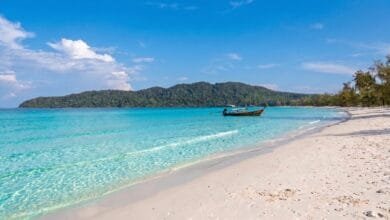
Koh Rong is a large island with a mix of developed beaches and wilder interior. The water is warm year-round, and the sand on the main beaches is pale and fine. The island’s geography includes hills covered in dense forest, mangrove areas, and a coastline that alternates between long beaches and rocky points.
Development is concentrated in a few areas, primarily Koh Touch and the nearby Long Set Beach, with a smaller cluster around Sok San on the west coast. Between these areas, the island remains largely forested and undeveloped, with a network of dirt roads and trails that are slowly being improved.
The island has a population of around 4,000 people across four villages: Koh Touch, Doeum D’keuw, Prek Svay, and Sok San. This means that even in the busier areas, you are sharing the island with a working local community, not just other travelers.
Best Things to Do on Koh Rong
Beach Days
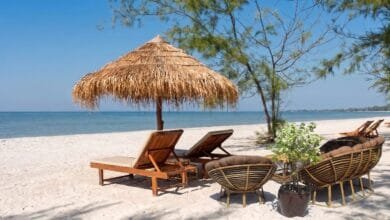
The simplest and often best thing to do on Koh Rong is spend time on the beach. The main beaches — Koh Touch, Long Set, and Sok San — all offer swimming and space to relax. Long Set Beach is walkable from Koh Touch along the shore, which makes it easy to move between the livelier village and a quieter stretch of sand without arranging transport.
Snorkeling and Diving
Coral reefs around Koh Rong support snorkeling and scuba diving. Snorkeling can be done from some points near Koh Touch and Long Set Beach, but the better reef areas are often reached by boat. Day tours that include snorkeling, a boat trip, a guide, and lunch are a popular way to access these spots.
Scuba diving is also available, with dive operators based mainly around Koh Touch and Long Set Beach. Options range from introductory “discovery dives” to full Open Water certification courses for those who want to learn properly. Certified divers can also join fun dive trips.
Bioluminescent Plankton
One of Koh Rong’s most distinctive experiences is swimming or kayaking at night when bioluminescent plankton glow in the water. The plankton light up when the water is agitated, so moving your hands and feet creates a trail of blue-white light. They are best seen on moonless nights and away from bright lights. Tours are available from Koh Touch and Long Set Beach, or you can swim after dark at either end of Koh Touch beach, away from the village lights.
Kayaking
Kayaks are available for rent at several beaches, and paddling along the coastline is a good way to see parts of the island that are not accessible by road. Some accommodation providers offer kayaks to guests, and independent rental is also possible in the main beach areas.
Jungle Hiking
A trail crosses the island from Koh Touch to Sok San Beach, passing through forest and over hills. It is a hot, muddy, and rewarding walk that takes a few hours. The trail offers a different perspective on the island — one that is mostly forest rather than beach — and ends at the long, quiet expanse of Sok San Beach.
Motorbike Exploration
Renting a motorbike is one way to see more of Koh Rong’s interior and reach beaches that are not within walking distance. Not all roads are paved, and conditions can be rough, especially after rain. The loop around the island takes a couple of hours, with stops at beaches along the way.
Boat Trips and Island Hopping
Day trips by boat are a common way to snorkel, fish, visit other beaches, and see Koh Rong Sanloem, the smaller neighboring island. These tours typically depart from Koh Touch or Long Set Beach and can be booked through accommodation or local tour operators.
Best Beaches on Koh Rong
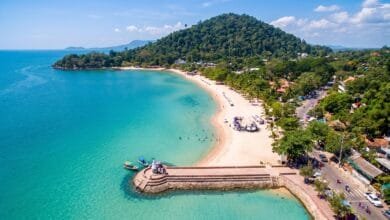
Koh Touch Beach is the main arrival point for many ferries and the island’s social center. The beach is lined with guesthouses, bars, and restaurants. It is convenient but not quiet — expect music, activity, and other travelers.
Long Set Beach (4K Beach) is a short walk east of Koh Touch and offers a noticeably calmer atmosphere. The beach is long enough that you can find space even when the island is busy. It is a good compromise between accessibility and quiet.
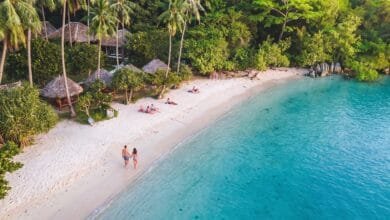
Sok San Beach (Long Beach) is on the western side of the island and is Koh Rong’s longest beach — a broad arc of sand that feels far removed from the busier eastern side. It is reachable by boat, by the jungle trail from Koh Touch, or by motorbike. The beach has a small number of resorts and very little else, making it the quietest of the main options.
In 2026, Long Beach (Sok San) received international recognition when it was ranked among the top 10 beaches in the world by The World’s 50 Best Beaches.
How to Get to Koh Rong
Almost all travelers reach Koh Rong by ferry from Sihanoukville. Ferries depart from the Sihanoukville port area and arrive at different beaches on the island, including Koh Touch and Long Set. Multiple operators serve the route, and crossing times are commonly listed between 45 minutes and about 1 hour 15 minutes, depending on the operator and the specific beach arrival point.
Ferry tickets are generally purchased in Sihanoukville before departure or booked in advance through operators or booking platforms. Prices vary by operator, but recent listings show fares starting around US$14 one way for some services and around US$17 for others. Exact fares and schedules change, so confirm current pricing and departure times directly with the operator.
A practical tip that appears across multiple sources: book your return ferry when you arrive on the island. Boats can fill up, especially during busy periods, and having a return ticket confirmed removes uncertainty.
To reach Sihanoukville from elsewhere in Cambodia, travelers typically take a bus or private transfer from Phnom Penh (roughly 4–5 hours by road) or fly into Sihanoukville International Airport. From Siem Reap, most travelers fly to Sihanoukville or return to Phnom Penh first and then travel overland.
When Is the Best Time to Visit Koh Rong?
The drier months from November to April are generally considered the best window for a beach trip to Koh Rong. During this period, seas are calmer, skies are clearer, and conditions are more predictable. December to March is often highlighted as the clearest stretch.
The wet season runs roughly from May to October. During these months, crossings can be rougher, and some resorts close for the low season. Rain is not constant — it often comes in short, heavy bursts — but sea conditions can be less comfortable for boat travel and water activities.
That said, some travelers prefer the wet season for lower prices, fewer people, and a greener landscape. If you are flexible about weather and willing to accept rougher seas, the wet season can still work. But for most first-time visitors, the dry season offers the more reliable experience.
How Long Should You Stay on Koh Rong?
Two to three nights is a practical starting point. That gives you a full day for beach time or a boat trip, another day for exploring a different part of the island, and enough buffer to not feel rushed. One night is possible but tight — you arrive, settle in, and leave the next day without much time to experience the island.
A longer stay of four or five nights suits travelers who want to slow down, try diving or a course, hike across the island, and spend time at more than one beach. Koh Rong’s size rewards longer stays — the more time you have, the more you can move between its different atmospheres.
Where to Stay on Koh Rong
Accommodation on Koh Rong is concentrated in a few main areas, each with a different character.
Koh Touch is the most developed area, with the widest range of guesthouses, bungalows, and budget options. It is where many ferries arrive and where the island’s nightlife is focused. If you want convenience and social energy, this is the place to stay. Accommodation here is generally basic but affordable.
Long Set (4K) Beach is quieter than Koh Touch but still within walking distance of the village. It appeals to travelers who want a calmer base without being isolated. Accommodation options here tend to be mid-range bungalows and small resorts.
Sok San Beach on the western side is the quietest option, with a smaller number of resorts and very little development. It is best suited to travelers who prioritize peace and long walks on the beach over convenience and nightlife.
Across all areas, accommodation ranges from very basic guesthouses to more comfortable resorts. Many places are generator-powered with limited electricity hours, and some “beachfront” properties may actually be a short boat transfer from the main pier. It is worth asking before you book.
Food and Local Dining
Food on Koh Rong is part of the island experience. The main beach areas have a range of restaurants and bars serving Cambodian dishes, seafood, and Western traveler food. Fresh seafood is a highlight — grilled fish, squid, and shrimp are commonly available, often at prices that reflect the island’s remote location.
Local Khmer dishes such as amok (a coconut-based curry), lok lak (stir-fried beef), and various noodle soups are typically available at guesthouses and small restaurants. In Koh Touch and Long Set, you will also find pizza, burgers, and other international options aimed at the traveler crowd.
Because the island relies on supplies brought from the mainland, food prices are generally higher than in Phnom Penh or Siem Reap, and availability can vary. Simple local meals are often the best value.
What Should Travelers Pack?
Cash in US dollars. ATMs on Koh Rong are unreliable, and many places do not accept cards. Bring enough cash for your entire stay, plus a buffer. Small bills are useful for local purchases, boat transfers, and tips.
Reef-safe sunscreen. If you plan to swim or snorkel, choose sunscreen that does not contain ingredients known to harm coral.
Insect repellent. The island has mosquitoes, especially in the evenings and in forested areas. A reliable repellent is worth packing.
A waterproof bag or dry sack. Boat transfers, rain showers, and beach days all make waterproofing useful.
Comfortable footwear for walking and hiking. The jungle trail to Sok San and the dirt roads around the island are best tackled in shoes with grip.
A headlamp or small flashlight. Power can be limited, and paths between beaches and guesthouses may be unlit at night.
Basic medicine. Pharmacies on the island are limited. Bring any medication you might need, plus basics for minor stomach issues or headaches.
Lightweight, quick-drying clothing. The climate is warm and humid. Cotton can stay damp; synthetic or quick-dry fabrics are more comfortable.
Travel Tips for First-Time Visitors
Bring enough cash. This is the single most important practical tip for Koh Rong. ATMs are unreliable, and card acceptance is limited. Plan to bring all the cash you will need for your stay, plus extra for unexpected costs.
Confirm your ferry details. Ferry schedules, departure points, and arrival beaches can change. Check with your operator before travel day, and book your return journey when you arrive on the island.
Expect limited infrastructure. Electricity may be off during parts of the day at some properties. Wi-Fi can be slow or intermittent. This is part of the island’s character, but it helps to arrive with the right expectations.
Ask about your accommodation’s location relative to the pier. Some properties described as “beachfront” may require a boat transfer from the main arrival point. Confirm before booking.
Swim with awareness. Currents can be stronger in exposed spots, and tide changes can affect swimming conditions. Swim within sight of others and ask local operators about conditions before snorkeling or taking a boat trip.
Respect the local community. Koh Rong is home to four villages and a resident population. Dress respectfully away from the beach, ask before photographing people, and support locally owned businesses where possible.
Responsible Beach and Island Travel
Koh Rong’s beaches and marine environment are valuable, and they face real pressures from tourism and development. Travelers can make a difference through simple choices.
Minimize single-use plastic. Bring a reusable water bottle and refuse plastic bags and straws when possible. Waste management on the island is limited, and litter is a documented issue.
Use reef-safe sunscreen. Ingredients in some sunscreens can damage coral. Choose products labeled as reef-safe or covering up with a rash guard.
Do not touch coral or marine life. Snorkeling and diving are best enjoyed by observing without contact. Standing on coral or chasing marine animals causes damage.
Take your rubbish with you. If you bring something to the beach, take it back. Even biodegradable items can take a long time to break down in a marine environment.
Follow local guidance. Koh Rong is part of a Marine National Park, and there are regulations in place to protect marine resources. Respect restricted areas and follow instructions from local operators and authorities.
Is Koh Rong Right for You?
Koh Rong suits travelers who want a beach destination with a range of options — some social energy if you want it, quiet beaches if you do not, and enough size to explore. It is a good fit for:
Couples who want a mix of beach time and activities, with the option to stay in a quieter area like Long Set or Sok San.
Solo travelers and backpackers who will find Koh Touch convenient and social, with budget accommodation and easy access to tours.
Independent travelers who are comfortable with limited infrastructure and want to explore beyond the main beach.
Travelers combining Angkor with the coast — Koh Rong is a natural complement to Siem Reap and Phnom Penh, offering a slower pace after the temples and cities.
It is less suited to travelers who need reliable Wi-Fi, consistent electricity, a wide choice of restaurants, or a high level of resort comfort. The island is developing, but it is not yet a polished resort destination, and some travelers find the basic infrastructure and limited services challenging.
Frequently Asked Questions
What is the best time to visit Koh Rong?
The drier months from November to April are generally preferred, with December to March offering the clearest conditions. The wet season from May to October brings rougher seas and some closures, but also lower prices and fewer people.
How do you get to Koh Rong?
Take a ferry from Sihanoukville. Multiple operators run the route, and crossings typically take between 45 minutes and about 1 hour 15 minutes depending on the service and arrival beach. Book your return trip when you arrive on the island.
Is Koh Rong good for families?
It can be, especially if you stay at a quieter beach like Long Set or Sok San and choose accommodation suited to families. The island is not heavily developed, so families should be prepared for basic infrastructure and limited medical facilities.
How many days should I spend on Koh Rong?
Two to three nights is a good starting point. That allows time for the beach, a boat trip or activity, and exploring a different part of the island. Four or five nights suits travelers who want a slower pace.
Are there ATMs on Koh Rong?
ATMs on the island are unreliable, and many businesses do not accept cards. Bring enough US dollars in cash for your entire stay, including small bills for local purchases.
What is there to do on Koh Rong besides the beach?
Snorkeling, scuba diving, kayaking, boat trips, jungle hiking to Sok San Beach, motorbike exploration, and night swimming with bioluminescent plankton are among the main activities.
Is Koh Rong safe for swimming?
Swimming is generally safe in calm conditions, but currents can be stronger in exposed spots and tide changes can affect conditions. Swim within sight of others, avoid going out alone beyond where you can comfortably stand, and ask local operators about conditions before snorkeling or boat trips.
Conclusion
Koh Rong is not a single experience — it is an island large enough to hold several. You can spend your days on a busy beach with bars and other travelers, or walk twenty minutes and find quiet sand. You can hike through the jungle to a beach that feels like the end of the road, or stay close to the village and never leave the main strip.
What makes it worth the ferry ride is that combination of accessibility and space. It is easy to reach from Sihanoukville, but once you are there, the island has enough room to feel like you have gotten away. For travelers building a Cambodia trip around temples and cities, Koh Rong is a natural place to slow down and let the coast do the rest.