How to Say Hello in Khmer: The Right Greeting for Every Situation
You step into a small family-run restaurant in Siem Reap. The grandmother behind the counter looks up and smiles. You want to greet her properly, but which word do you use? The friendly “susadei” you heard at your hostel? Or something more respectful?
In Khmer, the answer depends on who you’re talking to. Get it right, and you’ll see a warm reaction. Get it wrong, and you might come across as accidentally casual with someone who deserves more respect.
This guide covers both Khmer greetings, when to use each one, how to pronounce them, and the cultural gesture that traditionally accompanies them.
Quick Answer
The two main ways to say hello in Khmer are:
| English | Khmer | Romanization | When to Use |
|---|---|---|---|
| Hello (formal) | ជំរាបសួរ | chum reap suor | Elders, officials, teachers, first meetings, people of higher status |
| Hello (informal) | សួស្តី | susadei | Friends, peers, people your own age, casual settings |
If you remember only one, learn chum reap suor. It’s the safer choice in most travel situations.
What Does “Susadei” Mean?
Susadei (សួស្តី) is the everyday, casual way to say hello in Khmer. It’s equivalent to the English word “Hello” and is reserved for informal situations. You’ll hear it between friends, among coworkers who know each other well, and from older people addressing younger ones.
It’s also the greeting most tourists pick up first, because it’s short, easy to remember, and widely used in casual tourism contexts.
But here’s the catch: susadei is not the right choice when you’re greeting someone older, someone in a position of authority, or someone you’re meeting for the first time in a formal setting.
What Does “Chum Reap Suor” Mean?
Chum reap suor (ជំរាបសួរ) is the formal, respectful greeting. The word chum reap carries a sense of reverence or respectful greeting. It’s used when you meet someone for the first time, when greeting elders, teachers, or officials, and when addressing someone of higher social standing.
This is the greeting you’ll want to use when you check into a hotel and meet the manager, when you speak with a temple guide, or when you’re introduced to a Cambodian family.
If you’re unsure which greeting to use, chum reap suor is almost always the safer option. Using the formal greeting in a casual situation is far less awkward than using the informal greeting in a formal one.
How Do You Pronounce Them?
Susadei
Think of it as three syllables: soo-sah-day.
- soo — like the “soo” in “soon”
- sah — like the “sa” in “saw”
- day — like the English word “day”
Some sources render it as sue-saw-day or soos-a-day, but the rhythm is similar: three quick syllables with the stress on the final one. Khmer is not a tonal language, so you don’t need to worry about pitch changes — just stress the last syllable.
Chum Reap Suor
This is longer and takes a little more practice: chom-ree-up soo-uh.
- chom — rhymes with “mom”
- ree-up — two syllables, with a slight upward glide
- soo-uh — similar to “sure” but with a softer ending
You’ll also see it romanized as jom-riab-sua or chum rieb sue. These are variations of the same phrase, and Cambodians will understand you regardless of which transliteration you use as a guide.
A note on pronunciation: no English spelling perfectly captures Khmer sounds. If you say it with confidence and a smile, people will appreciate the effort.
The Sampeah Gesture
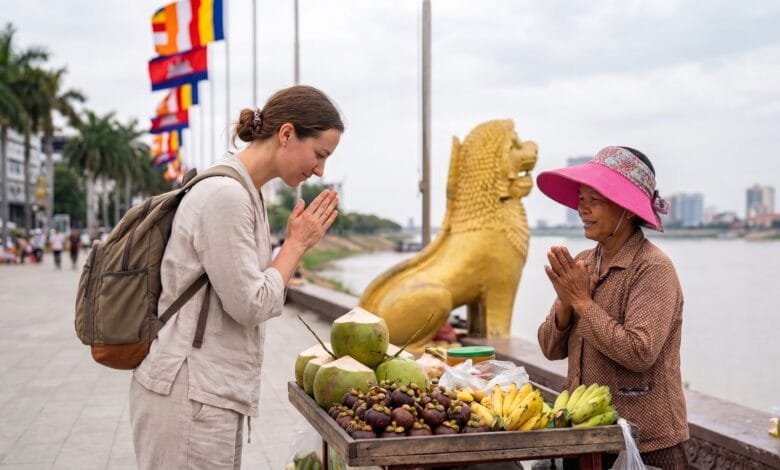
Traditionally, Khmer greetings are accompanied by a gesture called the sampeah (សំពះ). You bring your palms together in front of your chest — like a prayer position — and bow your head slightly.
The height of your hands and the depth of your bow indicate the level of respect. For everyday greetings, palms at chest level and a slight bow are sufficient. For elders or monks, hands may be raised higher, closer to the face.
Foreign visitors are not expected to perform the sampeah perfectly. But if you offer it — even imperfectly — Cambodians will notice and appreciate the gesture. A smile and a chum reap suor will carry you a long way.
When Might Travelers Hear or Use These Greetings?
At a hotel or guesthouse. Staff will likely greet you with a smile and a sampeah. Responding with chum reap suor is appropriate, especially with older staff members.
At a market. Vendors may greet you casually. A simple susadei with a smile works here, especially with younger sellers.
At a temple. When you meet a monk or a temple guide, use chum reap suor. The formal greeting shows respect for the sacred setting.
In a tuk-tuk or taxi. Your driver will probably greet you informally. Susadei is fine here.
Meeting a Cambodian family. If you’re invited to someone’s home, use chum reap suor when greeting parents or grandparents. The informal susadei is for people your own age or younger.
At a restaurant or café. A friendly susadei works with servers your age. If the owner is an older person, chum reap suor is the better choice.
Common Mistakes to Avoid
Using susadei with elders. This is the most common mistake tourists make. Susadei is casual, and using it with an older person or someone in authority can unintentionally sound disrespectful. When in doubt, use chum reap suor.
Shaking hands instead of offering a sampeah. While handshakes are becoming more acceptable in some business contexts, the traditional Khmer greeting is the sampeah. Offering a handshake to an older woman, in particular, may feel awkward. Wait to see if a hand is offered to you.
Worrying too much about pronunciation. Cambodians are generally forgiving of foreign accents. The effort matters more than perfect tones or vowels.
Forgetting the smile. In Khmer culture, smiling is itself a form of greeting. A smile paired with your words is more important than flawless pronunciation.
Other Useful Khmer Greetings
| English | Khmer | Romanization | Usage |
|---|---|---|---|
| Goodbye (formal) | ជំរាបលា | chum reap lea | Formal farewells |
| How are you? | សុខសប្បាយទេ? | sok sabay tee? | Asking about someone’s well-being |
| Thank you | អរគុណ | aw kun | Expressing gratitude |
| Yes (male speaker) | បាទ | baht | Polite affirmation |
| Yes (female speaker) | ចាស | jah | Polite affirmation |
| Sorry / Excuse me | សុំទោស | som toh | Apologizing |
Frequently Asked Questions
What is the easiest way to say hello in Khmer?
Susadei is the easiest to remember and pronounce. But if you want to be safe in most situations, learn chum reap suor — it’s more versatile.
Is susadei rude?
Not exactly. It’s informal, not rude. But using it with an elder or someone in authority can come across as too casual, which may feel disrespectful in Khmer culture.
Do I have to bow when saying hello in Khmer?
You don’t have to, but offering a slight bow with your palms together (the sampeah) is a respectful gesture that Cambodians appreciate.
What does chum reap suor literally mean?
The phrase carries a sense of respectful greeting. The word chum reap relates to reverence or respectful address
Can I just say “hello” in English?
Many Cambodians, especially younger people in cities, understand and use English greetings. But using Khmer — even imperfectly — shows respect and often leads to warmer interactions.
What should I say when leaving?
The formal goodbye is chum reap lea (ជំរាបលា). In casual settings, you can simply repeat susadei or smile and wave.
Conclusion
Learning to say hello in Khmer is one of the simplest and most rewarding things you can do as a visitor to Cambodia. The two greetings — chum reap suor for formal situations and susadei for casual ones — give you a way to connect with people at every level of Cambodian society.
If you remember nothing else, remember this: when in doubt, use chum reap suor. It’s the safer, more respectful choice, and it will open doors that a casual susadei might not.
And when you pair your words with a smile and a slight sampeah, you’re not just saying hello — you’re showing that you’ve taken the time to understand a little bit of Cambodian culture. That effort is almost always met with warmth and generosity in return.