Special Traditional Pad Thai
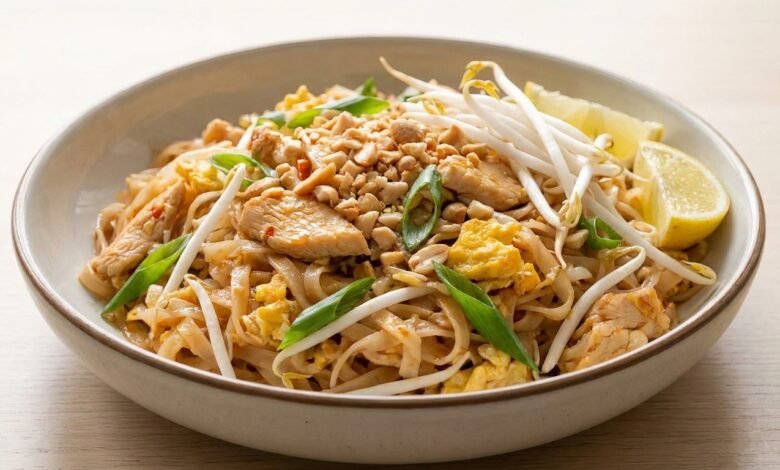
Pad Thai is one of those noodle dishes that feels familiar the moment you smell it: tangy, savory, and a little sweet, with the gentle crunch of peanuts and fresh bean sprouts. This version keeps things simple and traditional, using chicken, eggs, and a straightforward sauce made from fish sauce, vinegar, and sugar.
It is a practical weeknight noodle stir-fry, but the balance of sour, salty, and sweet is what makes it work. Soak the noodles ahead, have your ingredients ready by the wok, and the cooking goes quickly.
What You Need
The recipe uses dried rice noodles, boneless chicken breast, eggs, and fresh bean sprouts. Fish sauce and white wine vinegar build the savory-tangy sauce, while sugar rounds it out. Crushed peanuts, green onions, and lemon wedges go on top at the end.
Butter and vegetable oil are both used in the wok: butter for the chicken and oil for the eggs and noodles. Keep them separate as you cook so the chicken browns without steaming.
Equipment
- Wok or large heavy skillet: To sauté the chicken, cook the eggs, and stir-fry the noodles over medium-high heat.
- Chef’s knife: To cut the chicken breast into bite-sized pieces and chop the green onions.
- Cutting board: To prepare the chicken and green onions safely.
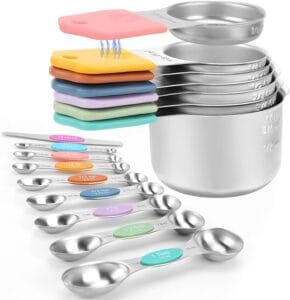
- Measuring cups: To measure the bean sprouts, crushed peanuts, and vegetable oil.
- Measuring spoons: To measure the vinegar, fish sauce, sugar, and crushed red pepper.
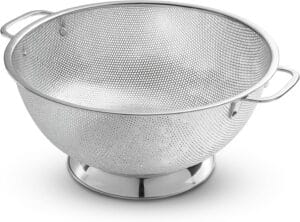
- Colander: To drain the soaked rice noodles.
- Wooden spoon or spatula: To stir the chicken, eggs, and noodles in the wok.
- Small bowl: To hold the cooked chicken while you cook the eggs.
- Serving plate or shallow bowl: To serve the finished Pad Thai with garnishes.
How to Make Special Traditional Pad Thai
Step 1: Soak the Rice Noodles
Put the rice noodles in a large bowl and cover them with cold water. Soak for 30 to 50 minutes, or until the noodles are soft. Drain them in a colander and set aside.
Step 2: Cook the Chicken in Butter
Heat the butter in a wok or large heavy skillet over medium heat. Add the chicken pieces and sauté until they are browned on the outside. Remove the chicken from the wok and set it aside in a small bowl.
Step 3: Cook the Eggs in Oil
Add the vegetable oil to the same wok and heat over medium-high heat. Crack the eggs directly into the hot oil and cook until they are firm. Break the eggs up slightly as they cook.
Step 4: Combine the Chicken and Noodles
Stir the cooked chicken back into the wok and cook for 5 minutes. Add the softened noodles, white wine vinegar, fish sauce, sugar, and crushed red pepper. Mix everything together while cooking.
Taste and adjust the seasonings if needed. Keep mixing until the noodles are tender and coated in the sauce.
Step 5: Add the Bean Sprouts and Finish
Add the bean sprouts to the wok and mix for 3 minutes. The sprouts should soften slightly but still keep a little crunch.
Step 6: Garnish and Serve
Transfer the Pad Thai to a serving plate or shallow bowls. Top with crushed peanuts and chopped green onions, and serve with lemon wedges on the side.
Cooking Tips
Soak the noodles until they are soft but not mushy. They will finish cooking in the wok, so slightly firm noodles are better than oversoaked ones.
Have the sauce ingredients measured and close to the wok before you start cooking. The stir-fry moves quickly once the eggs go in.
If you are sensitive to heat, start with the smaller amount of crushed red pepper and add more at the table. The recipe uses a small amount, but chili flakes can vary in strength.
How to Serve
Serve the Pad Thai hot, with the peanuts, green onions, and lemon wedges on top or on the side. A squeeze of lemon at the table adds fresh tang and lifts the sweet-savory sauce.
For a complete meal, pair it with a simple cucumber salad or a light soup. If you want another noodle recipe to explore, this Thai rice noodle with peanut sauce uses a creamy peanut sauce and a similar noodle base.
Recipe Notes
The recipe uses both butter and vegetable oil. The butter browns the chicken and adds richness; the oil is used for the eggs and noodles because it handles higher heat.
White wine vinegar is the sour element in the sauce. If you are used to Pad Thai with tamarind, this version is more straightforward but still balanced.
Frequently Asked Questions
Can I make this Pad Thai ahead of time?
The noodles are best served right after cooking. If you need to prepare parts ahead, soak and drain the noodles, cut the chicken, and measure the sauce ingredients, then store them separately in the refrigerator until cooking.
How should I store leftovers?
Store leftovers in a covered container in the refrigerator. For food safety, keep cooked poultry and noodle dishes refrigerated and use them within a few days. Reheat thoroughly before eating.
Is this recipe gluten-free?
Rice noodles are naturally gluten-free, but fish sauce and other packaged ingredients can vary by brand. Check the labels on your fish sauce and any other packaged products if you need a strictly gluten-free dish.
What kind of rice noodles should I use?
Use dried rice noodles labeled for Pad Thai or stir-fries. They are flat, medium-width rice noodles that soften in cold water and finish cooking in the wok. If you use a different width, adjust the soaking time and check for softness.
Final Thoughts
This Pad Thai is a good reminder that a simple sauce and a hot wok can turn everyday ingredients into something satisfying. The chicken browns in butter, the eggs cook in oil, and the noodles pick up the tangy-savory sauce. Finish with peanuts and lemon, and serve it while the noodles are hot. For another quick noodle stir-fry, try this stir-fry fresh rice noodle with broccoli. And if you want to understand the savory backbone of the sauce, this guide to fish sauce in Cambodian cuisine explains how fermented fish sauce is used across the region.
For safe cooking, chicken should reach an internal temperature of 165°F (73.9°C) as measured with a food thermometer, according to the USDA Food Safety and Inspection Service. Because this recipe includes peanuts and eggs, check the FDA’s list of major food allergens if you are cooking for someone with allergies. Pad Thai’s exact origins are still discussed by food historians, and the BBC’s Witness History looks at the competing theories.
Special Traditional Pad Thai
4
servings45
minutes20
minutes532
kcal1
hour5
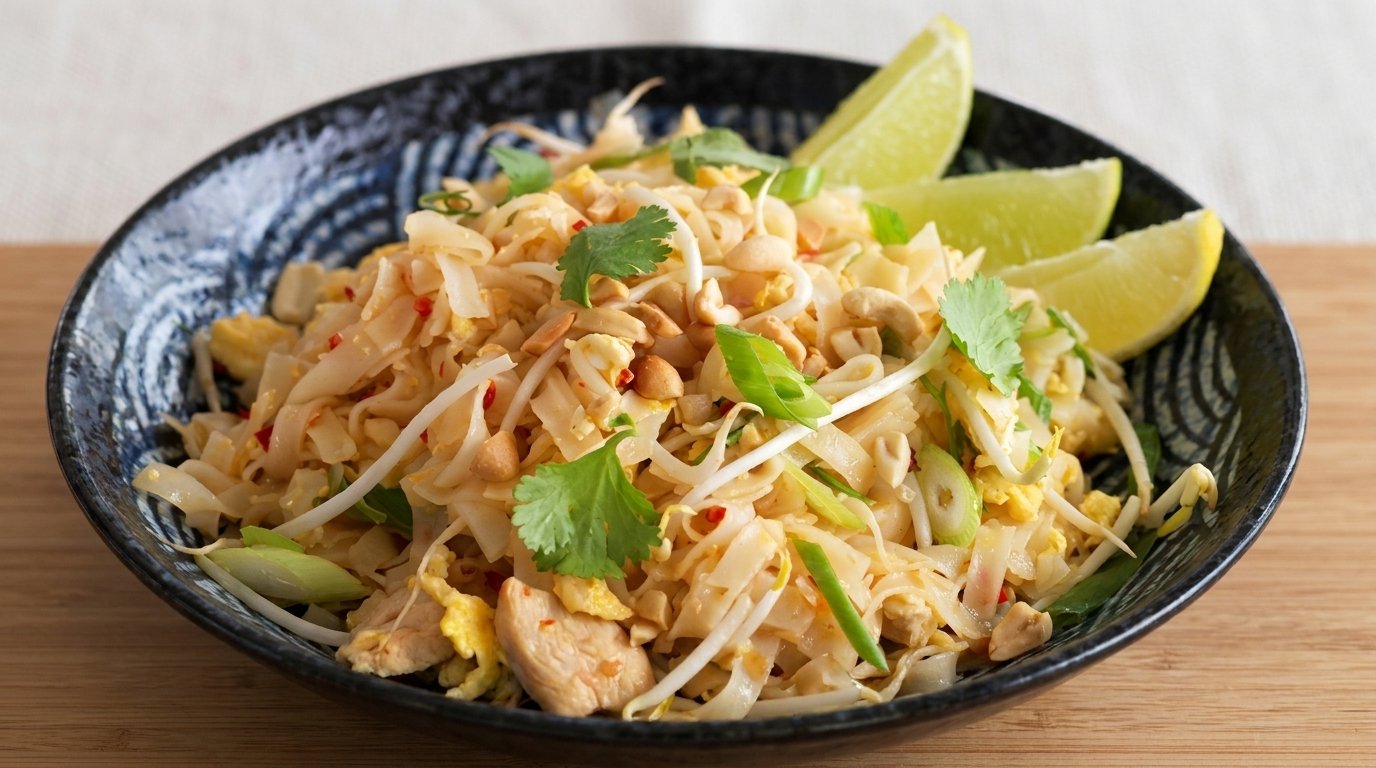
minutesThis Pad Thai uses dried rice noodles soaked in cold water, chicken browned in butter, eggs cooked in oil, and a simple sauce of white wine vinegar, fish sauce, sugar, and crushed red pepper. Bean sprouts add crunch, and crushed peanuts and lemon finish the dish.
Ingredients
340 g (12 oz) dried rice noodles
2 tbsp butter
450 g (1 lb) boneless, skinless chicken breast, cut into bite-sized pieces
4 tbsp (1/4 cup) vegetable oil
4 eggs
1 tbsp white wine vinegar
2 tbsp fish sauce
3 tbsp white sugar
1/8 tbsp crushed red pepper
2 cups bean sprouts
1/4 cup crushed peanuts
3 green onions, chopped
1 lemon, cut into wedges
Directions
- Soak the rice noodles in cold water for 30 to 50 minutes, or until soft. Drain and set aside.
- Heat the butter in a wok or large heavy skillet. Sauté the chicken until browned. Remove the chicken and set aside.
- Heat the oil in the wok over medium-high heat. Crack the eggs into the hot oil and cook until firm.
- Stir in the chicken and cook for 5 minutes. Add the softened noodles, vinegar, fish sauce, sugar, and crushed red pepper. Adjust the seasonings to taste. Mix while cooking until the noodles are tender.
- Add the bean sprouts and mix for 3 minutes.
- Garnish with crushed peanuts, chopped green onions, and lemon wedges when serving.
Equipment
 Cutting boardCheck product details
 Dinner PlatesCheck product details
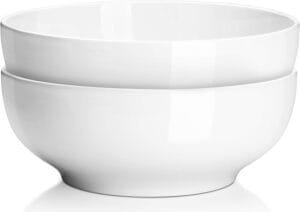
 Large bowlCheck product details
 Measuring Spoons & CupsCheck product details
 Sharp Kitchen KnifeCheck product details
 SpatulaCheck product details
 StrainerCheck product details

 Wooden SpoonCheck product details




Recipe Video
Recipe Notes
- The recipe uses butter for the chicken and vegetable oil for the eggs and noodles. White wine vinegar provides the sour element. Start with the listed amount of crushed red pepper and adjust at the table if you want more heat.
Nutrition Facts
- Serving Size: 4 g
- Calories: 532kcal
- Fat: 27g
- Saturated Fat: 8g
- Cholesterol: 245mg
- Sodium: 905mg
- Carbohydrates: 37g
- Net Carbs: 35g
- Fiber: 2g
- Sugar: 11g
- Protein: 38g
Did you make this recipe?
Tag @cambodiarecipe on Instagram and hashtag it
Like this recipe?
Follow us @cambodiarecipe on Pinterest
Did you make this recipe?
Follow us on Facebook