Fish Sauce in Cambodian Cuisine: More Than Just Salt
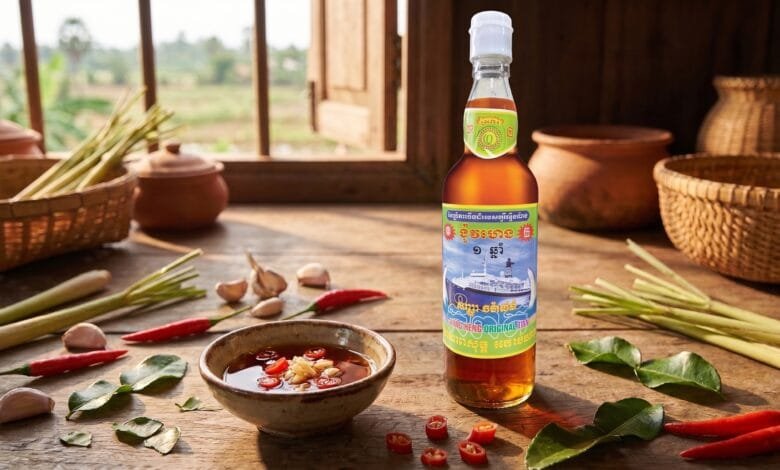
The first time you smell good Cambodian fish sauce, you might hesitate. It is pungent. It is bold. It demands attention. But the first time you taste what it does to a bowl of samlor or a plate of bok lahong, you understand: this is not just salt. This is flavor with history.
In Cambodia, fish sauce in Cambodian cuisine is not merely a seasoning you add at the end of cooking. It is a foundation. It is a tradition. It is, for many families, the invisible thread that connects everyday meals to centuries of Khmer food culture.
What Is Fish Sauce in Cambodian Cuisine?
Fish sauce — known in Khmer as ទឹកត្រី (tœ̆k trei), which literally means “fish water” — is the liquid byproduct of fermenting fish with salt. It is a clear, amber-to-dark-brown liquid with a powerful aroma and a deep, savory flavor that Cambodian cooks call umami.
Unlike plain salt, which simply adds saltiness, fish sauce brings complexity. It carries the essence of the fish, the minerals from the sea or river, and the depth that only time and fermentation can create. In Cambodia, it is used in countless dishes — from stir-fries to soups, from salads to dipping sauces.
Fish sauce is one of the essential seasonings in Cambodian cooking, alongside prahok (fermented fish paste), soy sauce, and oyster sauce. But while soy sauce and oyster sauce arrived in Cambodia through Chinese influence, fish sauce is deeply indigenous to the region, with roots that stretch back to the Angkorian period.
Why Is Fish Sauce Important in Cambodian Cuisine?
The importance of fish sauce in Cambodian cuisine goes far beyond flavor. It is practical, cultural, and historical.
Practically, fish sauce was — and still is — a way to preserve fish. In a tropical climate where fresh fish spoils quickly, fermentation allowed communities to store protein for months. The salt in fish sauce also helped people stay hydrated and maintain electrolyte balance in Cambodia’s hot climate.
Culturally, fish sauce represents resourcefulness. Cambodians have traditionally lived close to water — the Mekong River, the Tonle Sap Lake, and the coastal waters of the Gulf of Thailand. Fish has always been abundant, and fish sauce is how that abundance was transformed into something that could be enjoyed all year round.
Historically, fish sauce has been part of Khmer cuisine for over a thousand years. The first mention of fermented fish products in Cambodia dates to the Angkorian period (9th–15th centuries). This means that when you use fish sauce in a Cambodian dish today, you are connecting to a culinary tradition that has survived empires, wars, and generations of change.
The Flavors Behind Fish Sauce
Fish sauce in Cambodian cuisine plays a specific role in the flavor balance that defines Khmer cooking. Cambodian food is known for its harmony of four main tastes: salty, sour, sweet, and bitter. Fish sauce provides the salty and umami elements.
But it does more than that. Good fish sauce has a depth that salt alone cannot provide. It has:
- Saltiness — the foundation, but rounder and less sharp than table salt
- Umami — the savory, meaty quality that makes food satisfying
- Complexity — subtle notes that range from slightly sweet to deeply savory
- Aroma — a pungent quality that, when cooked, transforms into something rich and inviting
In Cambodian cooking, fish sauce is often balanced with:
- Sour — from lime juice, tamarind, or green fruits
- Sweet — from palm sugar
- Aromatics — from lemongrass, galangal, garlic, and shallots
This balance is what makes Cambodian food distinctive. Thai food leans heavier on chili heat. Vietnamese food often uses fish sauce more delicately. Cambodian cooking sits somewhere in between — using fish sauce boldly but balancing it with herbs, sourness, and a gentle sweetness that comes from palm sugar.
Key Ingredients That Work With Fish Sauce
Fish Sauce vs. Prahok: Understanding the Difference
Many people confuse fish sauce with prahok, but they are different products with different uses.
Fish sauce (ទឹកត្រី) is a liquid — the clear or amber-colored runoff from fermented fish. It is used as a seasoning, much like salt or soy sauce. You add it to dishes during cooking or use it as a base for dipping sauces.
Prahok (ប្រហុក) is a paste — the solid fermented fish remains. It is thicker, chunkier, and more intensely flavored. Prahok is used as a main ingredient in some dishes (like prahok ktiss) or as a powerful seasoning in others.
In Cambodian cooking, you will find both. Fish sauce is the everyday workhorse — the bottle sitting next to the stove. Prahok is for when you want that unmistakable, bold Cambodian flavor that has no substitute.
How Cambodians Traditionally Prepare and Use Fish Sauce
In Cambodia, fish sauce is not just an ingredient — it is a way of cooking.
In the kitchen, Cambodian cooks add fish sauce early in the cooking process, allowing it to cook into the dish rather than just splashing it on at the end. This cooking process mellows the pungent aroma and releases the deep savory flavors.
At the table, fish sauce appears in multiple forms:
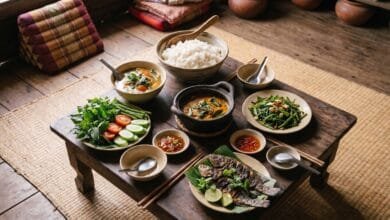
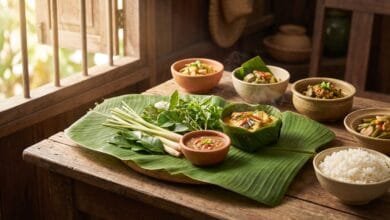
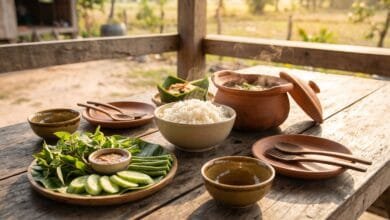
- As a cooking liquid — added to stir-fries (cha), soups (samlor), and curries
- As a dipping sauce base — mixed with sugar, lime, chili, and sometimes garlic or peanuts to create tuk trei meuk (sweet fish sauce), the most popular dipping sauce in Cambodia
- As a marinade — combined with garlic, pepper, and palm sugar to flavor meats and seafood before grilling
One Cambodian cook described fish sauce this way: “In Cambodia most households have a jar of this fish sauce in the refrigerator. It is the base of all our dishes; it is like a magic sauce. If the dish does not taste right you can add this sauce and it becomes tastier.”
Regional and Family Variations
Fish sauce in Cambodian cuisine varies by region and by family.
Kampot fish sauce is perhaps the most famous. Produced in Kampot Province, it is made from saltwater fish fermented with Kampot sea salt in traditional wooden containers for up to two years. Kampot fish sauce has been produced since at least the 1960s, though production was disrupted during the Khmer Rouge era and revived in 1995. Today, there are efforts to register Kampot fish sauce as a Geographical Indication (GI) product.
Battambang also has a tradition of fish sauce production, with community fishers like Mak Srey learning sustainable methods to produce fish sauce from their surplus catch.
Family recipes vary too. Some families prefer a lighter fish sauce; others go for something deeper and more fermented. Some add sugar or other flavorings directly to their fish sauce. As with many things in Cambodian food, there is no single “correct” version — only what tastes right to the family making it.
The History Behind Fish Sauce in Cambodia
The history of fish sauce in Cambodia is the history of Cambodian resourcefulness.
Fish sauce and other fermented fish products have been made in Cambodia for over a thousand years. In the Angkorian period (9th–15th centuries), fermentation was essential for preserving fish through times when fresh catch was scarce.
The tradition continued through the French colonial period, survived the upheavals of the 20th century, and was revived after the Khmer Rouge era. Today, fish sauce production is both a traditional craft and a growing industry, with companies like Ngov Heng producing thousands of liters daily while still honoring traditional methods.
This continuity — from ancient Khmer fishermen to modern Cambodian families — is what makes fish sauce more than just an ingredient. It is a living connection to Cambodia’s past.
When Cambodians Eat Fish Sauce
The answer is simple: all the time.
Fish sauce appears at nearly every Cambodian meal. It is in:
- Breakfast — in nom banh chok (Khmer noodles) and rice porridge
- Lunch — in stir-fries, soups, and salads
- Dinner — in curries, grilled fish, and family-style dishes
- Snacks — as a dipping sauce for fresh vegetables, fruits, and street food
During festivals and celebrations, fish sauce is there too. It is in the dips served at weddings, in the soups prepared for Pchum Ben, and in the dishes shared during Khmer New Year. It is one of those ingredients that does not announce itself but is always present — the quiet foundation of Cambodian taste.
How to Experience Fish Sauce in Cambodia
If you visit Cambodia, you will encounter fish sauce everywhere.
In markets, you will see bottles and jars of fish sauce alongside fresh produce. Some vendors sell their own homemade versions.
In restaurants, fish sauce is in the food before it reaches your table — in the amok, in the samlor, in the cha.
On the street, you will find tuk trei meuk (sweet fish sauce) served with grilled meats, fresh spring rolls, and green mango salad. It comes in small dipping bowls, waiting for you to taste the balance of salty, sweet, sour, and spicy that defines so much of Cambodian street food.
And in Cambodian homes, you will see the bottle of fish sauce on the table or next to the stove — a quiet reminder that this humble liquid is the backbone of a cuisine.
How to Experience Fish Sauce at Home
Cooking with fish sauce at home is simpler than you might think.
Start with a good quality fish sauce. Look for one from Cambodia if you can find it — Kampot fish sauce is excellent. If not, look for a fish sauce that lists only fish, salt, and water as ingredients. Avoid those with added sugar or preservatives.
Use it in place of salt in Southeast Asian-style dishes. Add it to stir-fries, soups, and marinades.
Make a simple dipping sauce: Mix fish sauce with palm sugar (or brown sugar), lime juice, chopped chili, and minced garlic. Adjust until you find the balance you like.
Remember: a little goes a long way. Start with less and add more to taste.
For a full recipe using fish sauce, see our Cambodian Green Papaya Salad recipe or Fish Amok recipe.
What Makes Fish Sauce Cambodian?
What makes fish sauce distinctly Cambodian is not the ingredient itself — fish sauce exists throughout Southeast Asia — but how Cambodians use it.
It is the balance: fish sauce with palm sugar, with lime, with herbs. It is the context: fish sauce in samlor, in bok lahong, in dipping sauces shared among family. It is the history: a tradition stretching back to Angkor, surviving through centuries of change.
Fish sauce in Cambodian cuisine is not just a seasoning. It is a taste of Cambodia itself — salty, savory, complex, and deeply connected to the water and land that have sustained Khmer people for generations.
Frequently Asked Questions
What is fish sauce called in Cambodia?
In Cambodia, fish sauce is called ទឹកត្រី (tœ̆k trei), which literally means “fish water”.
Is fish sauce the same as prahok?
No. Fish sauce (ទឹកត្រី) is a liquid seasoning, while prahok (ប្រហុក) is a thick, fermented fish paste. Both are made from fermented fish but have different textures, flavors, and uses
What is the most popular fish sauce in Cambodia?
Kampot fish sauce is one of the most famous and highly regarded. It is made from saltwater fish fermented with Kampot sea salt and has been produced in Kampot Province since at least the 1960s
How is fish sauce used in Cambodian cooking?
Is Cambodian fish sauce different from Thai or Vietnamese fish sauce?
Yes. While all are made from fermented fish, each country’s fish sauce has distinct characteristics. Cambodian fish sauce is often used more boldly than Vietnamese fish sauce but is balanced with palm sugar and herbs in a way that differs from Thai cooking
What does fish sauce taste like?
Fish sauce tastes salty and savory (umami) with complex depth. It has a pungent aroma that mellows when cooked. Good fish sauce is not just salty — it has layers of flavor that salt alone cannot provide
Can I substitute salt for fish sauce in Cambodian recipes?
You can, but the dish will not taste the same. Salt provides only saltiness, while fish sauce adds umami, complexity, and depth. If you must substitute, use a combination of salt and a small amount of soy sauce or anchovy paste.
Where can I buy Cambodian fish sauce?
Cambodian fish sauce is available in some Asian grocery stores and online. Look for brands from Kampot or other Cambodian producers. If you cannot find Cambodian fish sauce, a good quality Thai or Vietnamese fish sauce can work as a substitute.
Conclusion
Fish sauce in Cambodian cuisine is far more than just a salty liquid. It is a preservation technique born of necessity, a flavor foundation that defines a cuisine, and a cultural thread connecting modern Cambodians to their ancestors.
From the ancient Angkorian period to today’s family kitchens, from the fishing communities of the Tonle Sap to the growing fish sauce industry in Kampot, this humble ingredient tells the story of Cambodia itself — a story of resourcefulness, balance, and the deep connection between people, water, and food.
The next time you taste a Cambodian dish, pay attention to that savory depth, that subtle complexity that makes you want another bite. That is fish sauce at work — not just salt, but the taste of Cambodia.