What Makes Cambodian Cuisine Unique? Understanding Khmer Food
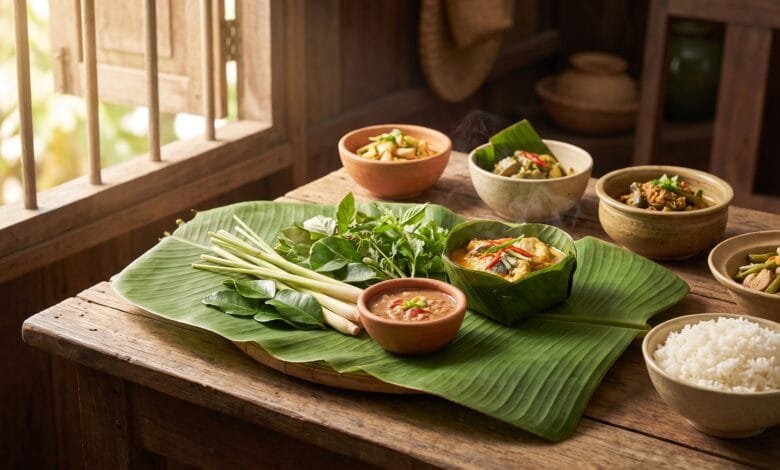
Most people have never tried Cambodian food — and yet, it is one of the oldest living cuisines in Southeast Asia, with roots stretching back nearly two thousand years. While Thai and Vietnamese cuisines have become global favorites, Cambodian cuisine remains relatively unknown beyond the country’s borders. But for those who discover it, Khmer food offers something genuinely different: a cuisine built on balance, fermentation, and a deep connection to the land and water of Cambodia.
So what makes Cambodian cuisine unique? The answer lies in its ingredients, its flavors, its history, and the way Cambodians eat every single day.
What Is Cambodian Cuisine?
Cambodian cuisine — also known as Khmer cuisine — is the traditional food of the Khmer people, the majority ethnic group of Cambodia. It is one of the world’s oldest living culinary traditions, with evidence of rice cultivation and fishing communities along the Mekong and Tonle Sap dating back to the 1st and 2nd centuries.
Over the centuries, Cambodian cuisine has absorbed influences from India, China, Portugal, and France. Indian traders introduced spices like cardamom, cloves, and cinnamon. Chinese merchants brought noodles and stir-frying techniques. The French left behind the baguette, which Cambodians now eat with pâté, sardines, or eggs for breakfast.
Yet despite these outside influences, Cambodian cuisine has maintained a distinct identity. It is not simply a mixture of its neighbors’ foods. It is its own tradition, shaped by the Mekong River, the Tonle Sap Lake, the tropical climate, and the resourcefulness of the Cambodian people.
What Makes Cambodian Cuisine Different from Other Southeast Asian Food?
The most common question people ask is: how is Cambodian cuisine different from Thai or Vietnamese food?
The answer starts with heat. Thai cuisine is known for its fiery chili heat; Vietnamese food often features fresh herbs and clear, sour broths. Cambodian cuisine, by contrast, is milder. It does not rely on chili to define its character. In fact, Khmer cuisine was established before chili was introduced to Southeast Asia. Chili is usually served on the side, allowing each person to add as much or as little as they like.
Instead of heat, Cambodian cuisine focuses on balance. The flavors are layered carefully so that no single element overpowers the others. Each dish tends to emphasize one primary flavor — sweet, sour, salty, or bitter — and these exist side by side in harmony across the meal.
Cambodian cuisine also uses less sugar and less coconut cream than Thai food, and it relies more heavily on fermented ingredients to create depth of flavor. The result is a cuisine that feels both subtle and profound — complex without being overwhelming.
The Two Essential Ingredients of Cambodian Cuisine
If you want to understand Cambodian cuisine, you need to know about two ingredients: prahok and kroeung.
Prahok — The Soul of Khmer Food
Prahok is a fermented fish paste made from small freshwater fish called trey riel (Henicorhynchus siamensis). It is grey or brown in color, has a strong odor, and delivers an intense, salty, umami-rich flavor. It might be an acquired taste for some, but for Cambodians, prahok is the cornerstone of their cuisine. It is so important that the national currency, the riel, is named after the fish used to make it.
Prahok is used in many ways in Cambodian cuisine — as a condiment, as a flavoring agent in soups and stir-fries, and even as a dipping sauce. It provides protein and essential nutrition, especially during the dry season when fresh fish is less available. Many Cambodians consider prahok “the Spirit of Khmer cuisine”.
Kroeung — The Aromatic Foundation
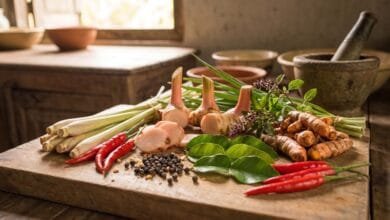
Kroeung is the term for the aromatic spice pastes that form the foundation of many dishes in Cambodian cuisine. The most common version is a yellow curry paste made from lemongrass, galangal, turmeric, garlic, shallots, and kaffir lime leaves.
Cambodians perfected the art of blending these spice pastes using ingredients like cloves, cinnamon, star anise, nutmeg, cardamom, ginger, and turmeric, combined with native aromatics like galangal, garlic, shallots, lemongrass, cilantro, and kaffir lime leaves. The result is a complex, fragrant paste that gives Cambodian curries, soups, and stir-fries their distinctive character.
Kroeung is traditionally pounded by hand in a mortar and pestle, a labor-intensive process that releases the essential oils of the herbs and spices. This is the kind of cooking knowledge that has been passed down from mother to daughter for generations in Cambodian kitchens.
The Flavors of Cambodian Cuisine
Cambodian cuisine is built around a simple but profound flavor philosophy. Each individual dish will be primarily sweet, sour, salty, or bitter. These flavors exist side by side in harmony across the meal, and sometimes even within a single dish.
- Sweet: Palm sugar is the traditional sweetener, giving dishes a caramel-like depth that refined sugar cannot replicate.
- Sour: Tamarind, lime, and occasionally pineapple provide the sour notes that brighten many Cambodian soups and salads.
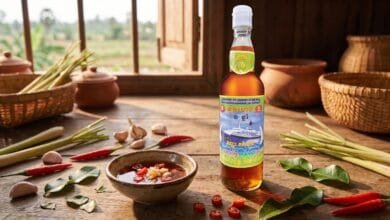
- Salty: Fish sauce and prahok are the primary sources of saltiness, adding umami depth along with salt.
- Bitter: Certain herbs and vegetables contribute a gentle bitterness that balances the other flavors.
- Umami: Fermented fish products give Cambodian cuisine a rich, savory quality that is uniquely satisfying.
What makes Cambodian cuisine distinctive is not any single flavor, but the way these tastes are balanced. The goal is harmony, not intensity. Chili, when used, is an accent, not the main event.
How Cambodians Eat
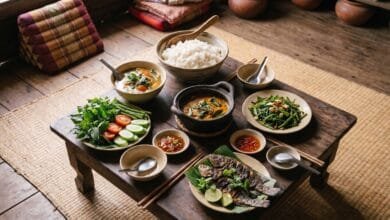
Understanding Cambodian cuisine also means understanding how Cambodians eat. A typical Cambodian meal is served with rice and at least three other dishes. It usually includes a soup, or samlor, served alongside the main courses. The meal is served family-style, with everyone sharing from common dishes.
Rice is the centerpiece of almost every meal in Cambodian cuisine. Cambodia produces many rice varieties, including aromatic jasmine rice and various types of glutinous rice used in desserts and salads. The importance of rice in Cambodian life cannot be overstated — it is the foundation upon which every meal is built.
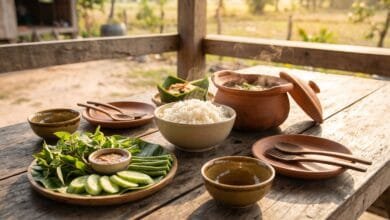
Traditionally, Cambodians eat with their fingers, though spoons, forks, and chopsticks are also used depending on the dish and the family tradition. In rural areas, food is often served on a platter placed on a floor mat, with the family sitting around it. Dinner is viewed as a time for family bonding.
Cambodian culinary secrets are rarely written down. Instead, recipes and techniques are handed down from mother to daughter, from grandmother to granddaughter, through direct teaching and shared cooking experiences. This oral tradition means that recipes vary from family to family and from province to province — a diversity that is part of the cuisine’s richness.
A Brief History of Cambodian Cuisine
Cambodian cuisine has a long and fascinating history. At the peak of the Khmer Empire, from the 9th to the 15th centuries, the palace kitchens at Angkor produced a sophisticated royal cuisine. Royal chefs combined local ingredients with exotic spices brought in by traders from India, China, and beyond.
The Khmer Empire’s culinary influence spread far beyond Cambodia’s modern borders. Between the 9th and 15th centuries, Khmer culinary traditions influenced what is now Thailand, Laos, Vietnam, and Indonesia. When the Khmer Empire was defeated by the Ayutthaya Kingdom in 1353 and 1430, Khmer royal cooks were brought to Ayutthayan palace kitchens, where they influenced Thai royal cuisine. The close culinary relationship between Cambodia and Central Thailand is a direct result of these centuries of contact.
Indian merchants introduced many spices to Khmer cuisine as early as the 2nd century. From South India through Java, Khmer royal cuisine adopted the preparation of curry pastes, adding lemongrass and galangal to the traditional Indian recipe.
The French colonial period, which lasted from the 19th century until 1953, left its mark on Cambodian cuisine as well. The baguette became a staple, and French culinary techniques influenced the way some dishes were prepared and presented.
The Khmer Rouge period from 1975 to 1979 was devastating for Cambodian culture, including its cuisine. Food was scarce, traditions were disrupted, and many people starved. The social and economic effects of that period lasted for decades. In recent years, however, there has been a revival of interest in traditional Cambodian cuisine, both within Cambodia and internationally.
Regional Variations in Cambodian Cuisine
Cambodian cuisine varies significantly from region to region. The food reflects the geography, climate, and available ingredients of each area.
- Tonle Sap and Mekong regions: Freshwater fish is abundant, and dishes often feature fish, prahok, and fermented fish products. The floating villages around Tonle Sap have their own unique food traditions centered on the lake’s bounty.
- Coastal areas (Kampot, Kep): Seafood is more prominent, and Kampot pepper — considered some of the best pepper in the world — is a prized local ingredient.
- Battambang: Known for its rice production, Battambang is famous for dishes like Kralan (sticky rice stuffed in bamboo tubes) and Nem Battambang (soft fish). Battambang was designated Cambodia’s first UNESCO Creative City, highlighting its culinary heritage.
- Phnom Penh: The capital city offers the full range of Cambodian cuisine, from street food stalls to fine dining restaurants, with influences from Chinese, Vietnamese, and French cooking.
It is important to remember that recipes in Cambodian cuisine vary from family to family and from province to province. There is no single “authentic” version of most dishes — only the version that a particular family has passed down through generations.
When Cambodians Eat These Foods
Cambodian cuisine is woven into the rhythm of daily life and the cycle of festivals and celebrations.
Everyday meals: Breakfast might be Bai Sach Chrouk — grilled pork served with rice and pickled vegetables — or Nom Banh Chok, a rice noodle dish served with a fish-based green curry sauce. Lunch and dinner typically include rice, a soup, and several shared dishes.
Festivals and celebrations: During Khmer New Year, families prepare special foods and share meals together. Pchum Ben, the Festival of the Dead, involves offerings of food to ancestors. Wedding feasts feature elaborate spreads of traditional dishes. The Water Festival includes street food and special treats along the riverbanks.
Family gatherings: Dinner is the main meal of the day and is viewed as a time for family bonding. Extended families often gather for meals, with multiple generations sitting together around shared dishes.
How to Experience Cambodian Cuisine in Cambodia
The best way to understand Cambodian cuisine is to experience it in Cambodia itself.
Visit the local markets — Psar Chas (Old Market) in Siem Reap or the central markets in Phnom Penh — where vendors sell fresh ingredients, prepared foods, and snacks. The markets are a sensory education in Cambodian food: the smell of prahok, the sight of fresh herbs piled high, the sound of mortars pounding kroeung.
Try street food from the many stalls that appear in the evenings. Look for grilled meats, noodle soups, and fresh spring rolls. Eat at a local restaurant that serves traditional Khmer dishes. Order a samlor (soup) and several dishes to share, the way Cambodians eat at home.
The experience of eating Cambodian cuisine in Cambodia is about more than the food itself. It is about the setting — the tropical heat, the sounds of the city or the countryside, the hospitality of the people. It is about sitting down to a meal with rice at the center and sharing dishes with the people around you.
How to Experience Cambodian Cuisine at Home
You don’t need to travel to Cambodia to appreciate Cambodian cuisine. Many of the key ingredients — lemongrass, galangal, turmeric, kaffir lime leaves, fish sauce, coconut milk — are available at Asian grocery stores or online.
Prahok can be harder to find outside Cambodia, but fish sauce can be used as a substitute in many dishes. For kroeung, you can make your own by pounding lemongrass, galangal, turmeric, garlic, shallots, and kaffir lime leaves together in a mortar.
Start with simple dishes: a Cambodian-style soup, a stir-fry with kroeung, or grilled meat with a dipping sauce. As you become more familiar with the flavors, you can explore more complex dishes.
What Makes This Food Cambodian?
So, after all this, what makes Cambodian cuisine truly Cambodian?
It is the ingredients — prahok from the Tonle Sap, rice from the paddies, herbs from the tropical gardens. It is the techniques — pounding kroeung by hand, fermenting fish for months, balancing flavors without relying on chili. It is the way of eating — rice at the center, dishes shared, family gathered around.
It is the history — two thousand years of culinary tradition, shaped by the Khmer Empire, Indian traders, Chinese merchants, French colonizers, and the resilience of the Cambodian people.
And it is the everyday reality of Cambodian life — the markets, the family kitchens, the meals shared at the end of the day.
Cambodian cuisine is not just a collection of dishes. It is a way of understanding Cambodia itself: its land, its water, its people, and its history.
Frequently Asked Questions
What is Cambodian cuisine?
Cambodian cuisine — also known as Khmer cuisine — is the traditional food of the Khmer people of Cambodia. It is one of Southeast Asia’s oldest culinary traditions, characterized by balanced flavors, fermented ingredients like prahok, and aromatic spice pastes called kroeung
What makes Cambodian food different from Thai food?
What are the main ingredients in Cambodian cooking?
The essential ingredients in Cambodian cooking are rice, prahok (fermented fish paste), kroeung (aromatic spice paste), fish sauce, palm sugar, tamarind, lemongrass, galangal, turmeric, garlic, shallots, and kaffir lime leaves
Is Cambodian food spicy?
What is prahok?
What is kroeung?
Kroeung is the term for aromatic spice pastes used in Cambodian cooking. The most common version is made from lemongrass, galangal, turmeric, garlic, shallots, and kaffir lime leaves. It forms the flavor base for many Cambodian curries, soups, and stir-fries
What do Cambodians eat every day?
Why isn’t Cambodian food more famous?
Cambodian cuisine remains relatively unknown outside Cambodia for several reasons: there is a smaller Cambodian diaspora than Thai or Vietnamese, the cuisine was disrupted during the Khmer Rouge period, and Cambodian restaurants are less common internationally. However, interest in Cambodian food is growing
Conclusion
Cambodian cuisine is one of Southeast Asia’s hidden treasures — an ancient culinary tradition that has survived empires, colonialism, and catastrophe to remain a vital part of Cambodian life today. It is a cuisine defined not by heat but by balance, not by novelty but by tradition. It is the taste of the Mekong, the Tonle Sap, and the rice paddies. It is the smell of prahok fermenting, of lemongrass and galangal pounding in a mortar. It is the sight of a family gathered around shared dishes, rice at the center, everyone reaching for a taste of something sour, salty, sweet, or bitter.
The next time you encounter Cambodian cuisine — whether in a restaurant, a market in Phnom Penh, or your own kitchen — you will know what makes it unique. You will understand that you are tasting not just food, but history. Not just ingredients, but a way of life.
And you will know why Cambodian cuisine is worth discovering.