Cambodian Rice Culture: Why Rice Matters So Much in Family Life
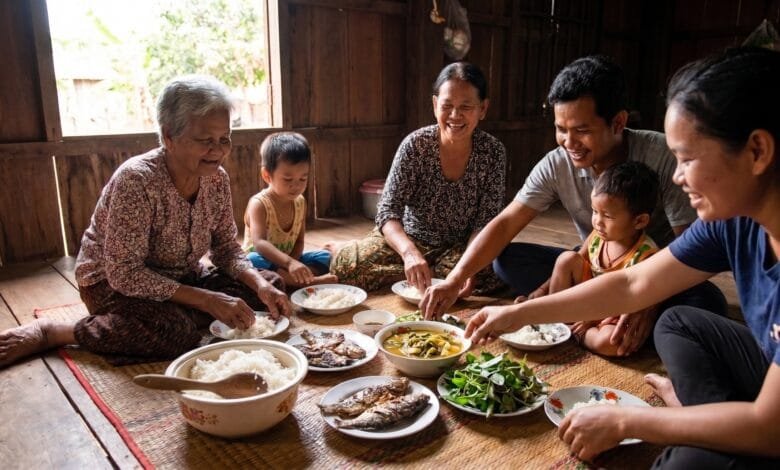
In a Cambodian home, a meal isn’t complete until the rice is served. Ask anyone if they’ve eaten, and they’ll ask: “Have you eaten rice yet?” This simple question reveals everything about how deeply rice is woven into Cambodian family life.
For Cambodians, rice is more than food. It is the thread that connects every meal, every celebration, and every generation. It is the taste of home, the foundation of hospitality, and the heart of Cambodian rice culture.
What Is Cambodian Rice Culture?
Cambodian rice culture is the set of traditions, practices, and beliefs that surround rice in Cambodian life. It encompasses everything from how rice is grown in the paddies to how it is served at the family table, from the festivals that celebrate the harvest to the daily rituals of cooking and sharing meals.
Rice has been the foundation of Cambodian life for centuries. Archaeological evidence shows that the inhabitants of Angkor cultivated and consumed rice as their staple food, and used harvests in the performance of rituals. Today, that same rice culture continues to shape how Cambodian families eat, celebrate, and connect.
Why Rice Matters in Cambodian Family Life
The significance of rice for Cambodians is so profound that many feel they haven’t eaten if a meal does not include rice. Rice is not a side dish—it is the meal. Everything else—the fish, the soup, the vegetables—accompanies the rice.
Rice is identity. In rural Cambodia, villagers consider rice cultivation an important dimension of who they are. Rice distinguishes farmers from city dwellers and connects people to the land. As one Cambodian rice farmer put it, “Our rice isn’t just the best in the world for eating; it’s an identity”.
Rice is family. The family meal revolves around rice. Mothers and grandmothers ensure there is always rice on the table. A study of Cambodian women’s food choices found that they feel lucky as long as they have rice. Rice is what mothers serve to their children, what husbands expect after a long day of work, and what brings everyone together at the end of the day.
Rice is survival. For many Cambodian families, rice is the foundation of food security. One rural woman shared, “We just eat what we have, as long as we have rice it is our luck”. Even when money is tight, rice provides sustenance. As another participant explained, “We sometimes eat salt and chilli with rice to fill our stomach”.
The Food Behind the Tradition
What do Cambodians eat with their rice? A typical Cambodian family meal features a central bowl of steamed white rice surrounded by several dishes. These might include:
- Grilled freshwater fish — caught from the Tonle Sap or Mekong
- Samlor — a nourishing soup with broth, vegetables, and sometimes meat
- Seasonal herbs and vegetables — fresh from the garden or market
Breakfast is often rice porridge or rice noodles, and traditional Khmer households eat rice at all three daily meals.
Cambodian rice itself is something special. The country produces world-renowned varieties like Phka Rumduol—often called Phka Malis or Cambodian jasmine rice. This premium fragrant rice has extra-long grains, a soft texture, and a distinctive natural aroma. Phka Rumduol has won the World’s Best Rice Award multiple times.
How the Tradition Works
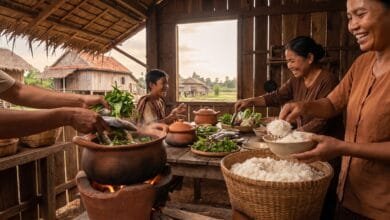
In a traditional Cambodian household, rice is prepared fresh for every meal. The rice is washed, then cooked in just the right amount of water—not too dry, not too sticky. The goal is perfectly steamed grains that are soft and fragrant.
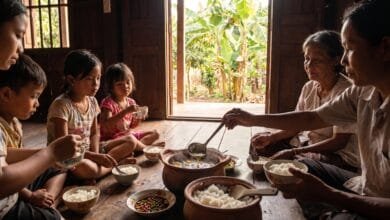
When the meal is served, everyone gathers around the table. Food is eaten family-style, with each person taking rice from the central bowl and adding dishes from the shared plates. A fork and spoon are the typical utensils—the spoon for scooping rice and the fork for pushing food onto the spoon.
Children learn from an early age that rice is sacred. They watch their mothers and grandmothers prepare it, and they learn to eat every grain—wasting rice is considered disrespectful.
Food, Family, and Community
Cambodian rice culture is deeply social. Rice brings people together in ways that go beyond nutrition.
At home, the family meal is a time for connection. Parents and children share stories about their day. Grandparents pass down wisdom. The meal is not rushed—it is savored.
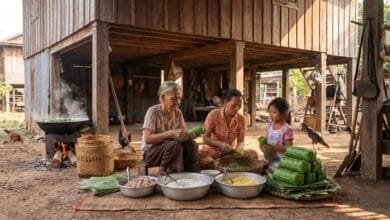
In the community, rice is shared. When a family prepares a special meal, neighbors may be invited. During festivals, entire communities come together to make rice-based foods. The practice of making num ansorm (sticky rice cakes) for Pchum Ben was once a community ritual that strengthened relationships among relatives and neighbors. “I loved the gatherings where everyone helped make rice cakes,” recalled one woman from Takeo Province.
For guests, rice is the first offering of hospitality. Offering food—and especially rice—is a fundamental expression of welcome in Cambodian culture.
Rice and Cambodian Traditions
Cambodian rice culture is inseparable from the country’s festivals and ceremonies.
Pchum Ben (Ancestors’ Day) — This 15-day religious festival is one of Cambodia’s most important observances. The name itself means “rice-ball gathering”. During the festival, families make sticky rice cakes called num ansorm and num kom as offerings to ancestors. The rice balls are thrown into the air or into empty fields, where it is believed they will feed the spirits of the dead. Farmers also scatter Ben rice in the paddy fields to ask for a fruitful harvest.
Khmer New Year — Rice cakes are also essential during the New Year celebrations. Families prepare special rice dishes and share them with relatives and neighbors.
Weddings — Rice plays a symbolic role in Khmer weddings. Guests shower the bride and groom with rice, saffron, and turmeric to bless them with prosperity. Rice cakes like num ansorm are indispensable components of traditional Khmer weddings.
The Royal Ploughing Ceremony — This ancient ceremony, known as Pithi Chrat Pheah Neang Korl, marks the beginning of the rice planting season. Royal oxen are offered plates of rice, corn, and beans, and their choices predict the coming harvest. The ceremony is a national public holiday and reflects the deep spiritual connection between Cambodians and rice.
Regional and Family Differences
While rice is universal in Cambodia, practices can vary. The rice varieties grown differ by region. In Battambang province, the award-winning Phka Rumduol jasmine rice is a point of local pride. In other areas, different indigenous varieties are cultivated.
Family traditions also vary. Some families still grow their own sticky rice for festival cakes, while others now buy ready-made rice from markets. As one woman from Kampong Speu noted, “Before, every family made rice cakes. Now, fewer than 10 percent of people do it”.
How History Shaped the Tradition
Rice cultivation has shaped Cambodian history for over a thousand years. The ancient Khmer kings built extensive irrigation systems to support rice farming. The annual “cycle of rice” determined much of the rhythm of village life.
In the traditional village of Svay in the early 1960s, the rice cycle began in May with the arrival of the rainy season. Villagers built fences and dikes around their paddies, saved rice from the previous harvest for seed, and worked cooperatively to transplant seedlings. Women pulled seedlings from nurseries and planted them in the flooded fields in an “even, graceful rhythm”.
This cooperative spirit—families working together, neighbors helping neighbors—was essential to rice culture. Even today, the memory of these communal efforts shapes how Cambodians think about rice and community.
How Cambodian Rice Culture Is Changing
Cambodian rice culture is evolving. Modern life is bringing changes to how rice is grown, prepared, and consumed.
In the fields, traditional manual methods are giving way to mechanization. Over the last three decades, many rice farmers have adopted broadcast direct seeding to address labor shortages. Mechanized planting can increase yields by 26% to 50% in some provinces.
In the kitchen, convenience foods are changing how families prepare rice. Fewer families have time to grow their own sticky rice or make traditional rice cakes at home. As one woman explained, “Busy work schedules mean fewer families have the time to prepare rice cakes at home”.
On the table, rice consumption is slowly declining as Cambodians eat more proteins and fats. Yet rice remains the center of most meals.
Some traditions are fading. The practice of growing and making sticky rice for Pchum Ben cakes is quietly disappearing across Cambodia. “I don’t want this tradition to disappear,” said one woman, “but life moves on, and some customs vanish with it”.
Yet other traditions are being preserved and adapted. Younger Cambodians are finding new ways to celebrate their rice heritage—from rice art to social media posts about traditional foods.
Why This Tradition Still Matters
Even as Cambodia modernizes, Cambodian rice culture remains essential. Here’s why:
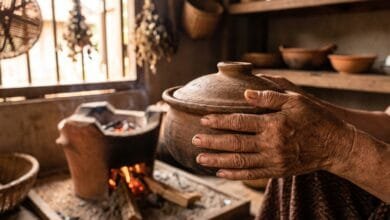
Rice connects generations. When a grandmother teaches her granddaughter how to cook rice, she is passing down more than a recipe. She is passing down identity, values, and belonging.
Rice anchors identity. For Cambodians at home and abroad, rice is the taste of home. It is what makes a meal Cambodian. It is what connects diaspora communities to their homeland.
Rice builds community. Whether it’s a family meal, a village harvest, or a festival celebration, rice brings people together. It creates the shared experiences that build strong communities.
Rice teaches values. The care required to grow and prepare rice teaches patience, respect for nature, and gratitude. The act of sharing rice teaches generosity and hospitality.
How Travelers Can Experience It Respectfully
Visitors to Cambodia can experience Cambodian rice culture in meaningful ways:
Eat like a local. Order a meal with rice as the centerpiece. Try bai sach chrouk (rice with pork) for breakfast or a traditional samlor with rice for dinner.
Visit a local market. Watch how Cambodians shop for rice—the different varieties, the way they inspect the grains, the relationships between vendors and customers.
Learn about rice farming. If you visit the countryside, take time to observe the rice paddies. The landscape of Cambodia is shaped by rice.
Participate respectfully. During festivals like Pchum Ben or Khmer New Year, observe how rice is used in ceremonies. Ask questions with genuine curiosity. Never mock or dismiss traditions you don’t fully understand.
Support local rice farmers. Buy Cambodian rice when you can. Phka Rumduol and other Cambodian varieties are world-class.
Frequently Asked Questions
1. Why is rice so important in Cambodian culture?
Rice is the foundation of Cambodian life. It is eaten at every meal, used in festivals and ceremonies, and is central to family identity and community life. For Cambodians, rice is not just food—it is who they are.
2. What is Cambodian rice culture?
Cambodian rice culture encompasses all the traditions, practices, and beliefs surrounding rice in Cambodian life—from farming and cooking to festivals and family meals.
3. What kind of rice do Cambodians eat?
Cambodians primarily eat white jasmine rice, especially premium varieties like Phka Rumduol (Cambodian jasmine rice). Sticky rice is also used for festival foods and desserts.
4. How do Cambodian families eat rice?
Rice is served at every meal, typically with several accompanying dishes like grilled fish, soup, and vegetables. Food is eaten family-style from shared plates.
5. What rice dishes are important during Cambodian festivals?
During Pchum Ben and Khmer New Year, families make sticky rice cakes like num ansorm (rice cakes with pork or banana) and num kom (pyramid-shaped rice cakes).
6. How is Cambodian rice culture changing?
Modernization is bringing changes—mechanized farming, store-bought rice cakes, and declining rice consumption. However, rice remains central to Cambodian identity and family life.
7. What makes Cambodian rice special?
Cambodian rice, especially Phka Rumduol, has won multiple World’s Best Rice awards. It is known for its extra-long grains, soft texture, and natural jasmine aroma.
8. Why do Cambodians say “Have you eaten rice?” instead of “Have you eaten?”
The Khmer phrase for eating is literally “to eat rice.” This shows how deeply rice is integrated into the language and culture—rice is so central that eating and eating rice are the same thing.
Conclusion
Cambodian rice culture is the story of a people and their connection to the land, to each other, and to tradition. From the rice paddies of the countryside to the family tables of Phnom Penh, rice is the thread that weaves through every aspect of Cambodian life.
For Cambodians, rice is more than sustenance. It is identity. It is family. It is home. It is the taste of a grandmother’s cooking, the warmth of a shared meal, the joy of a festival celebration.
Understanding Cambodian rice culture is understanding Cambodia itself. Because in Cambodia, you haven’t really eaten until you’ve had rice. And you haven’t really understood the culture until you understand what rice means to the people who grow it, cook it, and share it every single day.