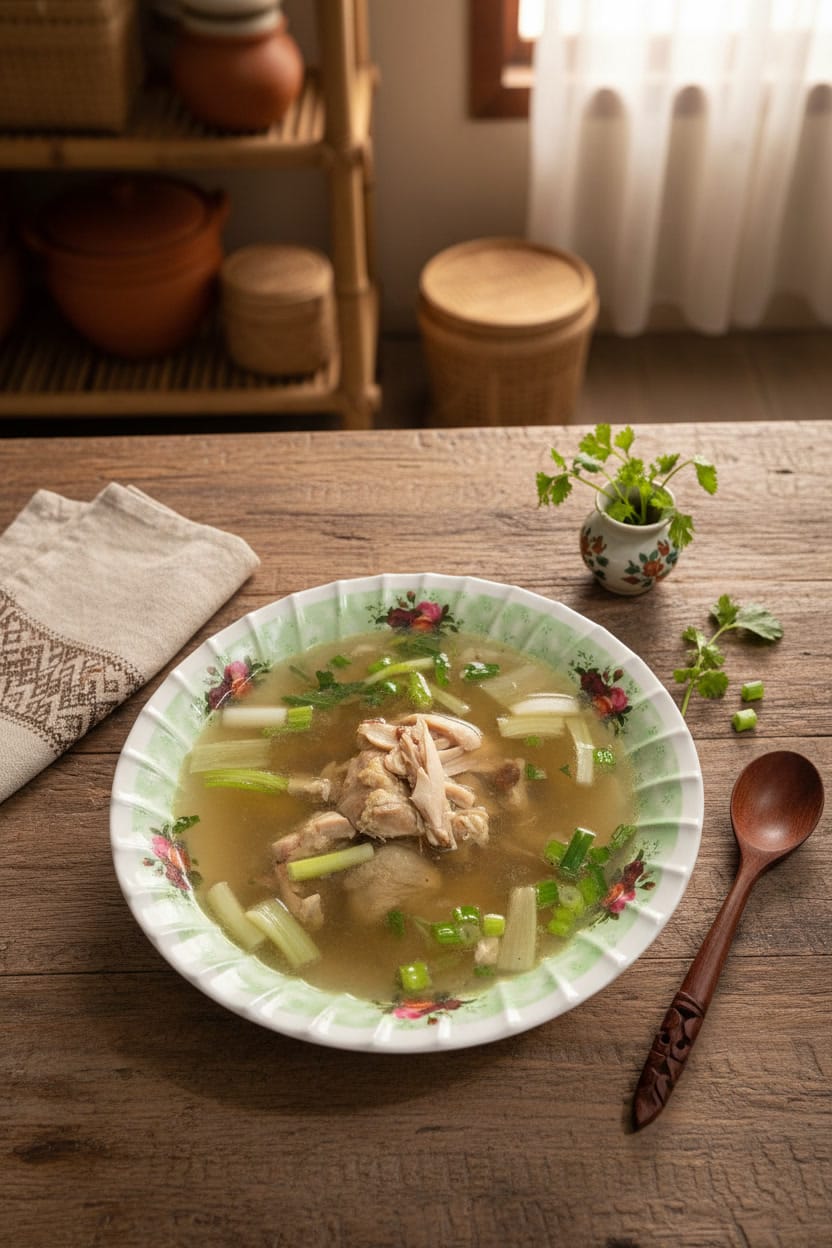
Pork Hocks and Cabbage Soup
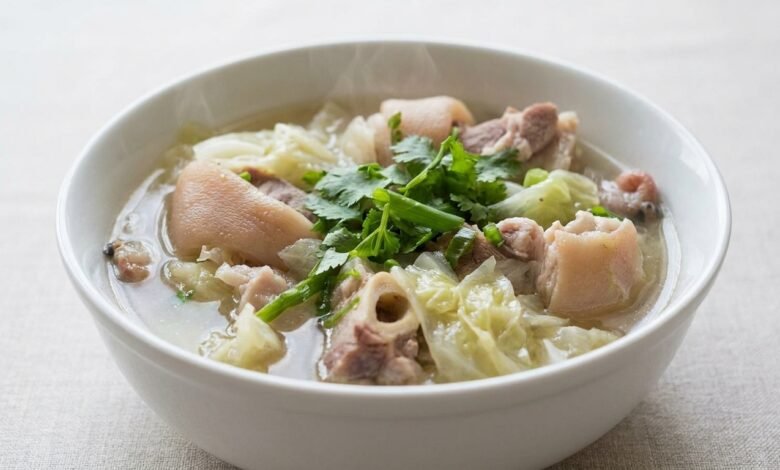
Some soups announce themselves with a long list of spices. This one does not. Pork hocks and cabbage simmer quietly in water with onion, fish sauce, and a little sugar until the broth turns gently savory and the meat pulls away from the bone. The cabbage softens just enough, keeping a hint of sweetness. It is the kind of soup that fills the kitchen with a soft, meaty smell and asks for nothing more than a bowl of rice or a piece of crusty bread. If you are new to Cambodian home cooking, this is a forgiving place to start.
What You Need
Pork hocks give the soup its body. Look for meaty hocks cut into pieces about 3 inches long. Cabbage is the main vegetable; a half head is plenty for this pot. Fish sauce provides most of the saltiness, sugar rounds the edges, and black pepper adds a quiet warmth. Fresh cilantro and green onion go in at the end, so the broth stays bright. For another broth-forward soup with cabbage, our oxtail cabbage soup follows a similar quiet path.
Equipment
- Soup pot: To simmer the pork hocks, onion, and water until the meat is tender.
- Chef’s knife: To slice the onion and cut the cabbage into 2-inch pieces.
- Cutting board: To prepare the onion and cabbage safely.
- Measuring spoons: To measure the fish sauce, sugar, salt, and black pepper.
- Wooden spoon: To stir the soup and check the tenderness of the pork and cabbage.
- Ladle: To serve the soup and broth into bowls.
How to Make Pork Hocks and Cabbage Soup
Step 1: Simmer the pork hocks
Put the pork hocks, sliced yellow onion, and 6 cups of water into a soup pot. Set the pot over medium heat and bring it to a gentle simmer. Cook until the pork hocks are tender. The time will depend on the size of the hocks and your pot, so check them by piercing the meat with a knife; it should slide in easily.
Step 2: Add the cabbage
While the pork cooks, wash and drain the cabbage, then cut it into pieces about 2 inches long. When the pork is tender, add the cabbage to the pot. Cook until the cabbage is as tender as you like it. If you want a little crispness left, pull the pot off the heat sooner.
Step 3: Season the broth
Stir in the fish sauce, sugar, salt, and black pepper. Taste the broth and adjust only if needed; the fish sauce is salty, so add the salt carefully. Let the soup simmer for another minute or two so the seasonings settle.
Step 4: Finish with herbs and serve
Turn off the heat. Top the soup with chopped fresh cilantro and green onion. Ladle it into bowls and serve hot with rice or crusty bread. For another pork hock soup with a different vegetable, try our daikon soup with pork hock.
Cooking Tips
- Skim the surface occasionally while the pork simmers. This keeps the broth clearer.
- If the broth reduces more than you like, add a splash of hot water.
- Pork should reach a safe internal temperature. According to the CDC, whole cuts of pork should be cooked to 145°F (63°C) and rested for 3 minutes before eating. In a simmering soup, the meat will usually exceed this, but it is a useful number to keep in mind.
How to Serve
Serve this soup hot with steamed jasmine rice, or with a piece of crusty bread for dipping. A small bowl of rice on the side is the usual Cambodian home meal. If you enjoy this style of cooking, browse more Cambodian soup recipes for quiet, broth-based dishes.
Frequently Asked Questions
Can I use a different cut of pork?
The recipe is built around pork hocks, which give the broth body and become tender with slow simmering. If you use another cut, the cooking time and broth richness will change, so adjust as needed.
How should I store leftovers?
Keep leftover soup in a covered container in the refrigerator for up to 3 days. Reheat gently on the stove, adding a little water if the broth has thickened.
Is this soup gluten-free?
The main ingredients are naturally gluten-free, but fish sauce brands can vary. Check the label of your fish sauce if you need a confirmed gluten-free result.
Final Thoughts
Pork hocks and cabbage soup is not a flashy dish. It is a pot of simple ingredients left to do their quiet work. The next time you want a warm, savory bowl that does not ask for much attention, start this soup in the afternoon and let the stove do the rest.
Pork Hocks and Cabbage Soup
4
servings30
minutes1
hour787
kcal1
hour30
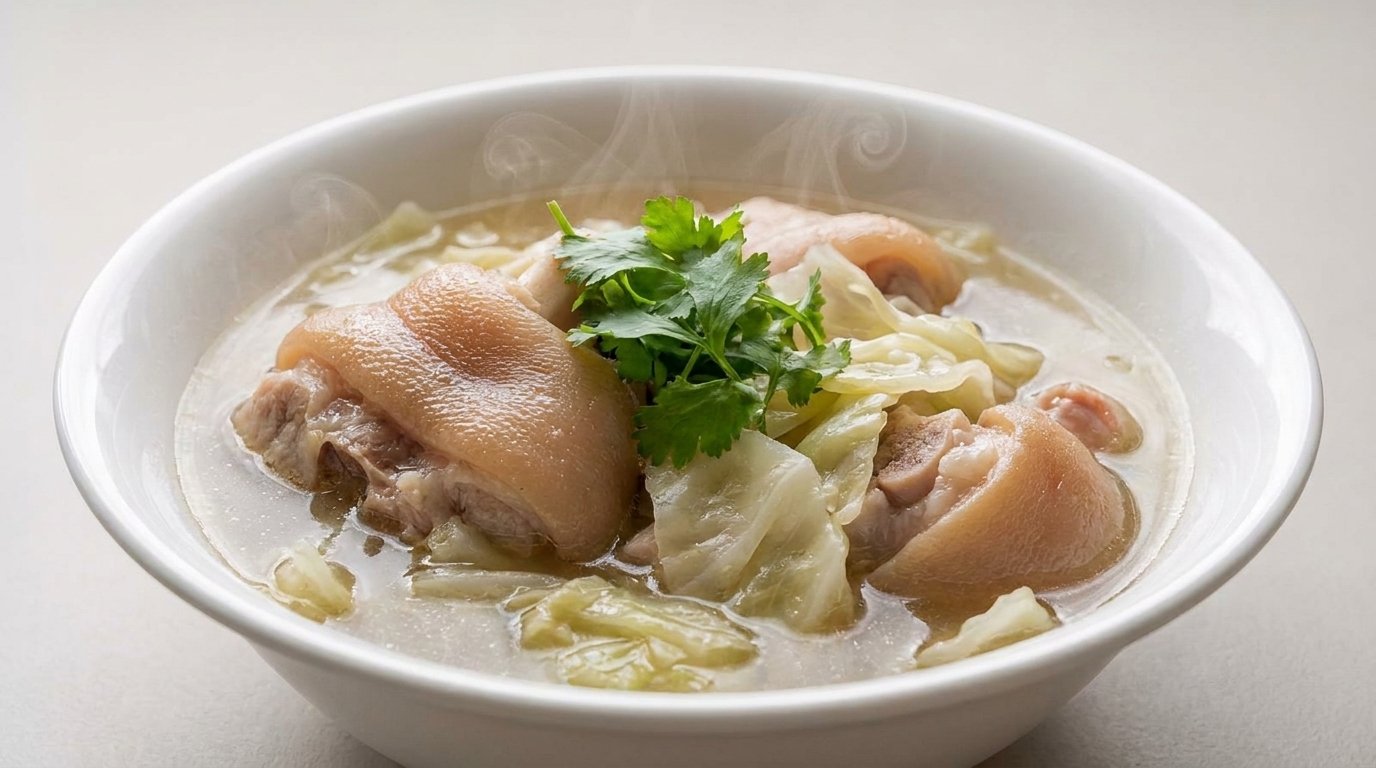
minutesPork hocks simmer with onion until tender, then cabbage is added and the broth is seasoned with fish sauce, sugar, salt, and black pepper. Finished with fresh cilantro and green onion, it is a quiet, comforting soup for rice or crusty bread.
Ingredients
2 lbs (900 gram) of pork hock, cut 3 inches in length
1/2 yellow onion, sliced
6 cups water
1/2 cabbage head, cut 2 inches in length, washed and drained
2 tablespoons fish sauce
1 tablespoon sugar
1/2 teaspoon salt
1/4 teaspoon black pepper
A handful chopped fresh cilantro and green onion
Directions
- Put pork hocks, yellow onion and water in a soup pot, cook till pork hocks tender.
- Add cabbage and cook till cabbage tender(crisp cabbage less cooking time.)
- Seasoning with fish sauce, sugar, salt and black pepper.
- Top with cilantro and green onion
- Serve hot with rice or hot crusty bread.
Recipe Video
Nutrition Facts
- Serving Size: 1 g
- Total number of serves: 4
- Calories: 787kcal
- Fat: 51.9g
- Saturated Fat: 19.2g
- Cholesterol: 245mg
- Sodium: 1599mg
- Potassium: 1067mg
- Carbohydrates: 11.3g
- Net Carbs: 8.2g
- Fiber: 3.1g
- Sugar: 7.5g
- Protein: 64.9g
- Vitamin A: 5.8mcg
- Vitamin C: 42.7mg
- Calcium: 109mg
- Iron: 4mg
- Vitamin E: 0.2mg
- Vitamin K: 87mcg
- Thiamin: 0.1mg
- Riboflavin: 0.1mg
- Niacin: 0.5mg
- Vitamin B6: 0.2mg
- Folate: 56.2mcg
- Pantothenic Acid: 0.3mg
- Phosphorus: 34mg
- Magnesium: 35mg
- Selenium: 1.3mcg
- Copper: 0.1mg
- Manganese: 0.2mg
Did you make this recipe?
Tag @cambodiarecipe on Instagram and hashtag it
Like this recipe?
Follow us @cambodiarecipe on Pinterest
Did you make this recipe?
Follow us on Facebook