Chanang Soup Ratanakiri: The Mysterious Black Soup of Cambodia’s Kreung People
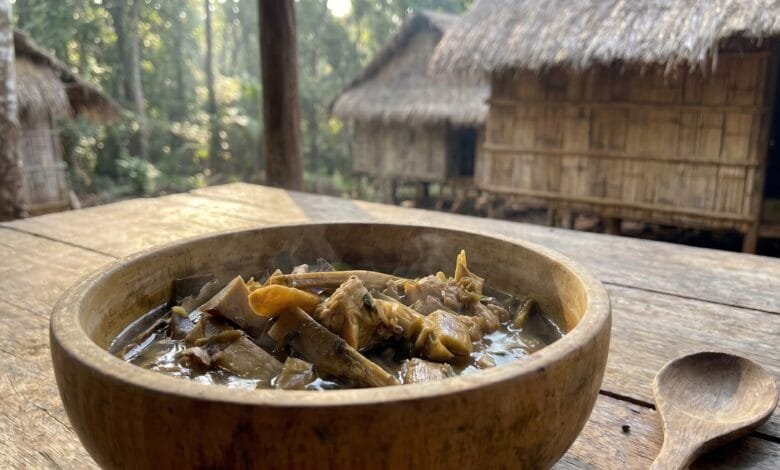
Deep in the highlands of northeastern Cambodia, a mysterious black soup called chanang soup Ratanakiri has been simmering in Kreung kitchens for generations—and it’s unlike anything else in Cambodian cuisine.
While most visitors to Cambodia are familiar with fish amok, beef lok lak, and the ubiquitous prahok, few have heard of chanang. This traditional soup of the Kreung indigenous people captivates with its dark, almost black appearance and its earthy, complex flavor. Unlike more popular Khmer dishes, chanang remains largely unknown to foreigners, allowing it to retain its authenticity.
But that’s beginning to change. As Ratanakiri opens up to tourism and indigenous cuisine gains recognition, chanang soup Ratanakiri is emerging as a powerful symbol of the province’s unique food identity.
Quick Regional Food Facts
| Detail | Information |
|---|---|
| Region | Northeastern Cambodia |
| Province | Ratanakiri |
| Main Food Identity | Indigenous highland cuisine (Kreung, Tampuan, Jarai peoples) |
| Key Ingredients | Ghost beans (Senna occidentalis), bamboo shoots, taro leaves, wild forest vegetables |
| Signature Foods | Chanang soup, Samlor Prong, mountain vegetables |
| Main Food Season | Rainy season (April–October) for foraging |
| Best Travel Season | November–March (dry season, comfortable temperatures) |
| Food Experiences | Banlung morning market, indigenous village homestays, Chanang Giant Pot festival |
What Is Chanang Soup Ratanakiri?
Chanang (Khmer: ចាណាង) is a traditional Cambodian soup eaten by the Kreung and other ethnic groups in Ratanakiri province. It’s made with beef or pork, noodles, bamboo shoots, baby corn, taro leaves, and a remarkable ingredient called ghost beans (Senna occidentalis)—the latter of which gives the soup its characteristic dark color.
The soup is prepared from the leaves of a local plant called “chhung,” and the resulting broth is dark, almost black. When accompanied by a beef stew and served in bamboo bowls, it offers a taste experience that is both earthy and original.
Chanang is much more than just a meal; it is a living story of the bond that unites the Kreung people with their land and traditions. Passed down from generation to generation, the recipe reflects the community’s intimate knowledge of its natural environment and the cultural importance of food in its social fabric.
The Landscape Behind the Food
To understand chanang soup Ratanakiri, you must first understand the land that produces it.
Ratanakiri Province is remotely situated in northeastern Cambodia, approximately 636 kilometers from Phnom Penh. It borders Vietnam to the east and features a dramatic landscape of basalt plateaus and mountains reaching up to 1,624 meters above sea level.
The province has a monsoonal climate, with a rainy season extending from April to October that accounts for 99% of the total annual precipitation. Average temperatures are lower than in other parts of Cambodia, making it a cool highland refuge.
The land is characterized by fertile red soil that is favorable for growing crops. But for the indigenous communities of Ratanakiri, the true bounty lies in the forest. The highland forests are home to a remarkable diversity of edible wild plants, ferns, mushrooms, and tubers that indigenous communities have harvested for centuries.
Approximately 83% of households in Ratanakiri rely on firewood and charcoal for fuel, with 81% of adults working in the agriculture sector, which is highly dependent on rain-fed farming. This is a place where people live close to the land—and their food reflects that connection.
The Ingredients That Define Chanang
What makes chanang soup Ratanakiri so distinctive? It comes down to a handful of remarkable ingredients, most of which are foraged from the forest.
Ghost Beans (Senna occidentalis)
The defining ingredient of chanang is the ghost bean (Khmer: សណ្តែកខ្មោច). This wild legume gives the soup its characteristic dark, almost black color. The beans are foraged from the forest during the rainy season and are a testament to the Kreung people’s deep knowledge of their environment.
Chhung Leaves
The soup is made from the leaves of a local plant called “chhung”. These leaves form the base of the broth, contributing an earthy flavor that complements the meat and other ingredients.
Bamboo Shoots and Taro Leaves
Bamboo shoots (ពន្លកឫស្សី) and taro leaves (ស្លឹកអាលូ) are common ingredients in Ratanakiri cooking. Both are foraged from the forest and add texture and nutrition to the soup.
Meat: Beef or Pork
Chanang is traditionally made with beef or pork, and in some cases buffalo meat. The meat is boiled for a long time to bring out its flavors, creating a rich, satisfying stew.
Noodles and Baby Corn
Noodles and baby corn round out the dish, making it a hearty meal that can feed a family.
How Chanang Is Prepared
Traditional chanang is an indigenous Kreung recipe, passed down by ancestors in Ratanakiri province. The preparation is slow and deliberate:
- Foraging — The chhung leaves and ghost beans are gathered from the forest.
- Broth-making — The leaves are boiled to create a dark, almost black broth.
- Stewing — Beef or pork is added and boiled for a long time to develop deep flavor.
- Adding ingredients — Bamboo shoots, baby corn, noodles, and taro leaves are incorporated.
- Serving — The soup is traditionally served in bamboo bowls.
The result is a soup with a “mysterious appearance and unique flavor profile”—earthy, rich, and deeply satisfying.
The Kreung People: Guardians of Chanang
Chanang belongs to the Kreung people, one of Ratanakiri’s largest indigenous groups. The Kreung comprise approximately 23% of the Khmer Loeu (indigenous highland) population in the province. They live in small, dispersed villages and practice swidden (shifting) agriculture.
For the Kreung, food is inseparable from spiritual and community life. Every stage of the agricultural cycle—from clearing land to planting to harvesting—is organized around regular ceremonies and feasting rituals to appease the spirits and bring a good harvest. There are at least seven ceremonies performed annually in regard to planting.
Rice offerings, village offerings, special weddings, and Kreung New Year are all occasions for ceremonial meals. Chanang is part of this tradition—a dish that connects the Kreung people to their ancestors, their land, and their community.
“Chanang is much more than just a meal; it is a living story of the bond that unites the Kreung people with their land and traditions.”
From Village Kitchens to the Giant Pot Festival
Chanang was once mainly cooked in homes, but it has become increasingly popular on restaurant menus, with customers asking for it with different meats such as beef, buffalo meat, or pork leg.
In 2025, Ratanakiri province hosted its first “Giant Pot of Chanang” event to promote Chanang soup, a traditional dish of the indigenous Kreung people. The event was held on June 30 and July 1 at the Elephant Family Complex on the banks of Boeng Kan Seng Lake in Banlung city. It was attended by the Minister of Tourism, the Provincial Governor, local officials, and indigenous communities.
The Giant Pot of Chanang allowed visitors to taste Chanang soup, which is considered the identity cuisine of the Kreung. Identity cuisine refers to food that represents the culture and background of its people.
Provincial Governor Nhem Sam Oeun said the event was a chance to promote tourism and highlight the province’s identity cuisine. Tourism Minister Huot Hak said the Giant Pot of Chanang event is a response to the government’s special program to promote investment in the four northeastern provinces from 2025 to 2028. This program prioritizes tourism development, particularly identity-based tourism that shows the region’s rich cultural, natural, and historical heritage.
Food Through the Seasons
The food of Ratanakiri follows the rhythms of the seasons.
Rainy Season (April–October)
This is the peak foraging season. The forest is abundant with bamboo shoots, wild vegetables, mushrooms, and—crucially—ghost beans. This is when chanang is at its most authentic, made with freshly foraged ingredients.
Dry Season (November–March)
The dry season brings the rice harvest (October–November) and comfortable temperatures for travel. Markets are busy with dried and smoked foods, and this is the best time for visitors to explore the region.
Ceremonial Seasons
The planting season (May–June) and harvest season (October–November) are marked by ceremonies and feasts—opportunities to experience indigenous food culture in its most traditional form.
Where Travelers Can Experience Chanang
Banlung Morning Market
The morning market in Banlung is the most interesting eating experience in Ratanakiri. Vendors from surrounding minority communities bring foraged forest ingredients, smoked meats, and other local specialties. The early morning market (5am–8am) is when minority vendors from surrounding villages arrive with forest produce.
Local Restaurants
Chanang has become increasingly popular on restaurant menus in Banlung and beyond. Visitors can find it at local eateries, often served with beef, pork, or buffalo meat.
The Giant Pot of Chanang Festival
If you’re visiting in late June or early July, look for the annual Giant Pot of Chanang event at Boeng Kan Seng Lake in Banlung. This food tourism event showcases the identity of Ratanakiri province through its indigenous soup.
Indigenous Village Homestays
For the most authentic experience, consider staying in an indigenous village. Some communities offer homestays where visitors can learn about traditional food preparation and taste chanang made the traditional way.
What to Eat and Look For in Ratanakiri
| Food | What It Tastes Like | Why It Matters | Where to Find It |
|---|---|---|---|
| Chanang soup | Earthy, rich, slightly bitter from ghost beans | Signature dish of Kreung people; uniquely Ratanakiri | Local restaurants, Banlung market, festivals |
| Mountain vegetables | Varies—earthy, bitter, fresh | Foraged from highland forests for centuries | Banlung morning market |
| Bamboo shoots | Crunchy, mild | Common foraged ingredient | Markets, local dishes |
| Smoked meats | Smoky, savory | Preserved by indigenous communities | Banlung market |
| Fried insects | Crunchy, nutty | Traditional high-protein snack | Banlung market—cricket, silkworm, giant water bug vendors |
| Bobor (rice porridge) | Comforting, mild | Popular local breakfast | Banlung market, local eateries |
A Food-Focused Way to Explore Ratanakiri
Morning (5am–8am): Banlung Morning Market
Start your day at the Banlung morning market. This is when minority vendors from surrounding villages arrive with forest produce. Look for mountain vegetables, smoked meats, and perhaps even ghost beans.
Late Morning: Explore the Landscape
Visit Yeak Laom volcanic lake, a stunning crater lake with crystal-clear water. The surrounding forest is where many of Ratanakiri’s ingredients are foraged.
Lunch: Try Chanang
Find a local restaurant in Banlung and order chanang soup. Ask for it with beef or pork—or buffalo if you’re feeling adventurous.
Afternoon: Visit a Waterfall
Ratanakiri has several impressive waterfalls accessible from Banlung, including Ka Chanh, Cha Ong, and Ka Tieng. These are the same forests where indigenous communities forage for ingredients.
Evening: Indigenous Cultural Experience
If possible, arrange a visit to an indigenous village or a homestay to learn about traditional food and culture.
Best Time to Visit
Best Travel Season: November–March
The dry season offers comfortable temperatures, dry trails, and good road conditions. Waterfalls are most spectacular from August to October (peak flow), but trails can be muddy.
Best Food Season: Rainy Season (April–October)
This is when the forest is most abundant with wild ingredients—including the ghost beans that give chanang its distinctive black color.
Festival Season: Late June–Early July
The Giant Pot of Chanang festival takes place around this time.
How to Get There
From Phnom Penh:
- Distance: Approximately 636 kilometers northeast of Phnom Penh
- By bus: Several bus companies operate overnight services to Banlung (approximately 10–12 hours)
- By flight: Domestic flights from Phnom Penh to Banlung are available (approximately 1 hour)
- By private car: 8–10 hours depending on road conditions
Road conditions: Roads can be very muddy during the rainy season (June–October). The dry season (November–March) offers the best driving conditions.
Responsible Food Travel
When exploring Ratanakiri’s food culture, please remember:
- Respect local communities — Indigenous villages are not tourist attractions; ask permission before entering
- Ask before photographing people — Always seek consent before taking photos of individuals
- Support local producers — Buy from market vendors and eat at locally-owned restaurants
- Don’t waste food — Take only what you can eat
- Respect food traditions — Indigenous food is cultural heritage, not entertainment
- Don’t forage without guidance — Foraging requires deep local knowledge; leave it to the experts
Frequently Asked Questions
What is Chanang soup?
Why is Chanang soup black?
The soup gets its dark, almost black color from ghost beans (Senna occidentalis), a wild legume that stains the broth
What do the Kreung people eat?
The Kreung people eat a diet based on swidden agriculture and forest foraging. Key foods include chanang soup, mountain vegetables, bamboo shoots, wild rice, and various forest products.
Where can I try Chanang soup in Ratanakiri?
What is the Giant Pot of Chanang festival?
Is Chanang soup healthy?
Chanang is made with nutrient-rich ingredients including bamboo shoots, taro leaves, and various forest vegetables. Tourism Minister Huot Hak noted that it is “delicious and provides good health”
What is the best time to visit Ratanakiri for food?
The rainy season (April–October) offers the most abundant foraging and the freshest ingredients, but the dry season (November–March) offers better travel conditions
Final Thoughts
Chanang soup Ratanakiri is more than just a dish—it’s a window into a way of life that has sustained the Kreung people for generations. It tells the story of a people who live close to the forest, who understand the seasons, who honor their ancestors through food.
For travelers willing to venture off the beaten path, chanang soup Ratanakiri offers more than just a meal—it’s a taste of a living culture, a connection to the forest, and a story that has been simmering for centuries.
As Cambodia’s northeastern provinces open up to tourism, dishes like chanang are gaining recognition beyond their indigenous roots, becoming culinary ambassadors for the Kreung people and symbols of Cambodia’s diverse ethnic heritage. The promotion of these indigenous specialties is essential to the preservation of culture and can offer a path toward economic empowerment through responsible tourism.
So the next time you find yourself in Ratanakiri, look for the dark soup in the bamboo bowl. Take a spoonful. And taste the story of the Kreung people.