Khmer Chicken Spring Roll: Crispy, Golden, and Savory
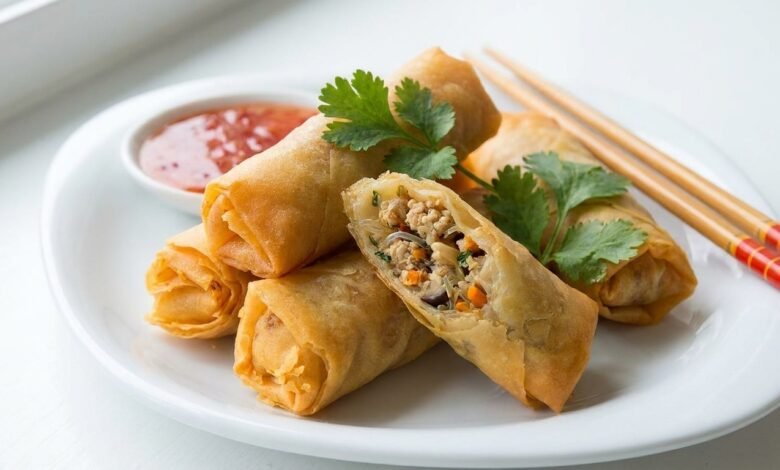
A good fried spring roll should crackle when you bite into it. Inside, the filling stays moist and savory, with the gentle sweetness of cabbage and carrot and the deep umami of fish sauce and soy sauce. This Khmer chicken spring roll brings that contrast to your own kitchen.
The filling comes together in one bowl, and the rolling goes faster once you get the rhythm. They are best served hot, with a dipping sauce on the side and a little lettuce or fresh herbs to wrap around each bite. It is a practical appetizer for a family meal or a small gathering.
What You Need
The filling uses everyday ingredients: ground chicken (or turkey), yellow onion, garlic, cabbage, and carrot. Fish sauce, soy sauce, sugar, and black pepper season the mixture. You will also need spring roll shells and egg white to seal the rolls.
A neutral vegetable oil is used for deep-frying. Keep the filling cold while you work, and keep the unused shells covered so they do not dry out.
Equipment
- Large mixing bowl: To combine the ground meat, vegetables, and seasonings into an even filling.
- Chef’s knife: To mince the garlic and chop the onion.
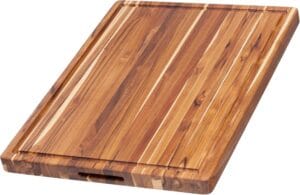
- Cutting board: To safely chop the onion and garlic and to hold each shell flat while you roll.
- Box grater or sharp knife: To shred the cabbage and carrot into fine pieces that cook evenly inside the roll.
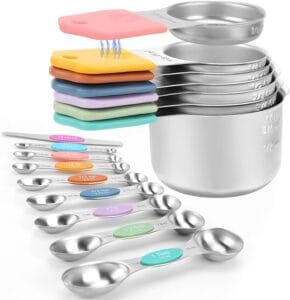
- Measuring spoons: To measure the fish sauce, soy sauce, sugar, and black pepper.
- Small bowl: To hold the egg white used for sealing the edges of the shells.
- Large skillet or wok: To heat the oil and deep-fry the rolls until golden.
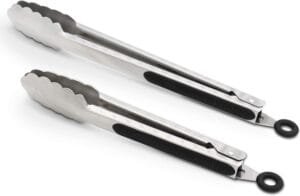
- Slotted spoon or tongs: To lift the rolls out of the hot oil safely.
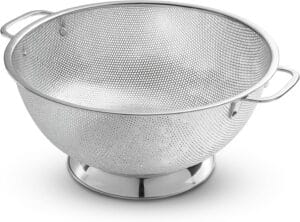
- Colander: To rest the fried rolls upright so excess oil can drain away.
- Paper towels: To line the colander and absorb surface oil from the finished rolls.
How to Make Khmer Chicken Spring Roll
Step 1: Mix the Filling
In a large bowl, combine the ground chicken or turkey, chopped onion, minced garlic, shredded cabbage, and shredded carrot. Add the fish sauce, soy sauce, sugar, and black pepper. Mix well until everything is evenly distributed, then set the filling aside.
Step 2: Separate the Spring Roll Shells
Gently pull each shell away from the stack so it separates from the others. Keep the shells you are not using covered with a clean towel or plastic wrap, because they dry out quickly and become difficult to roll.
Step 3: Fill and Roll Each Spring Roll
Lay one shell flat on a cutting board or plate. Spoon some of the meat filling onto about one-third of the shell. Fold the sides inward and roll the shell tightly around the filling, then seal the open end with a little egg white. Continue until you run out of filling.
If you are new to rolling spring rolls, the back of the spring roll pastry package often has illustrated instructions that show the folding pattern.
Step 4: Heat the Oil
Pour the vegetable oil into a large skillet or wok. Heat it over medium heat. The oil is ready when a small piece of spring roll shell sizzles gently at the surface.
Step 5: Deep-Fry Until Golden
Carefully place a few spring rolls into the hot oil. Do not overcrowd the pan, because the temperature will drop and the rolls may turn greasy. Fry until the shells are golden brown and crisp, turning them as needed so they color evenly.
Step 6: Drain and Serve
Remove the fried spring rolls with a slotted spoon or tongs. Rest them upright in a colander lined with paper towels so the excess oil can drain away. Serve them while they are still hot and crisp.
Cooking Tips
Keep the filling cold until you are ready to roll. A cold filling is easier to handle and helps the rolls hold their shape before frying.
Do not overfill the shells. Too much filling can split the wrapper during frying and let oil seep inside.
Maintain a steady medium heat. If the oil is too hot, the shell browns before the chicken filling is fully cooked.
Use a food thermometer to check the filling of a test roll. Ground poultry should reach a safe internal temperature of 165°F (74°C), as recommended by the USDA Food Safety and Inspection Service.
How to Serve
Serve the spring rolls hot with a dipping sauce. A simple Cambodian-style dipping sauce made with fish sauce, lime juice, sugar, garlic, and chili is a natural partner. You can also offer lettuce leaves and fresh herbs such as mint or cilantro for wrapping.
For a larger meal, pair the rolls with steamed jasmine rice and a light soup. They also work well as a finger food on a shared table. If you want another spring roll option for the same spread, our Khmer vegetarian spring roll uses tofu and vegetables in a similarly crisp shell.
Frequently Asked Questions
Can I use ground turkey instead of chicken?
Yes. The supplied recipe notes that ground turkey or fresh ground chicken both work. The texture and seasoning are similar, so either choice produces a juicy filling.
How do I keep the spring roll shells from drying out?
Keep the stack covered with a clean, damp towel or plastic wrap while you roll. Only pull out one shell at a time, and work fairly quickly. Dry shells crack easily and are harder to seal.
Can I make these spring rolls ahead of time?
You can roll the spring rolls in advance and keep them covered in the refrigerator for a short time before frying. Fry them while they are still cold, and cook them thoroughly so the filling reaches a safe temperature.
What is the best oil temperature for deep-frying?
The recipe uses medium heat, and the oil is ready when a piece of shell sizzles gently. If you use a kitchen thermometer, aim for a moderate frying temperature so the shell turns golden at the same pace the filling cooks through.
Final Thoughts
These Khmer chicken spring rolls are at their best when the shell is freshly fried and the filling is still hot and juicy. Roll a batch, keep the oil at a steady medium heat, and serve them right away with a sharp, salty-sweet dipping sauce. The contrast between the crisp wrapper and the savory chicken filling is what makes them worth making at home.
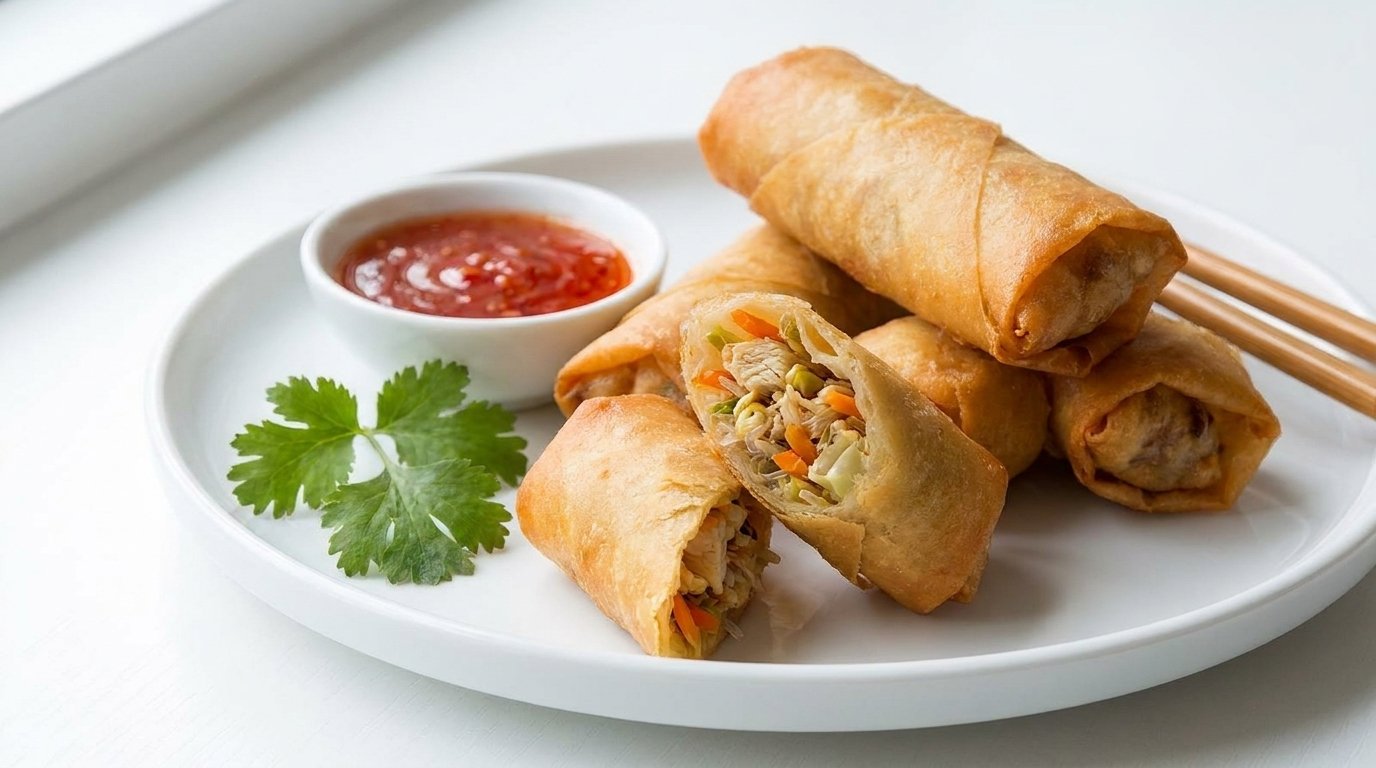
Khmer Chicken Spring Roll
25
servings30
minutes20
minutes168
kcal50
minutesThese Khmer-style chicken spring rolls are simple to assemble and fry to a golden crunch. The filling is juicy and savory, with a gentle sweetness from the vegetables. Serve them hot with a dipping sauce.
Ingredients
½ lb (225 g) ground chicken or ground turkey
1 cup chopped yellow onion
3 cloves garlic, minced
2 cups shredded cabbage
1 cup shredded carrot
1 tbsp fish sauce
1 tbsp soy sauce
1 tbsp sugar
½ tsp black pepper
1 package spring roll shells (about 25 pieces)
1 egg white, for sealing
6 cups vegetable oil, for frying
Directions
- In a large bowl, mix the ground meat, onion, garlic, cabbage, and carrot. Add the fish sauce, soy sauce, sugar, and black pepper. Mix well and set aside.
- Gently separate the spring roll shells. Keep the unused shells covered.
- Lay one shell flat. Place filling on one-third of the shell. Fold the sides in and roll tightly. Seal the end with egg white. Repeat until the filling is used up.
- Heat the oil in a large skillet or wok over medium heat.
- Deep-fry the rolls until golden brown, turning as needed.
- Remove the rolls and rest them upright in a colander lined with paper towels to drain.
Equipment
 Cutting boardCheck product details
 GraterCheck product details

 Large bowlCheck product details
 Measuring Spoons & CupsCheck product details
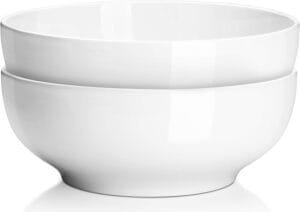
 Mixing BowlsCheck product details
 StrainerCheck product details






Recipe Notes
- If you are new to rolling spring rolls, follow the illustrated instructions on the back of the spring roll pastry package.
Nutrition Facts
- Serving Size: 2 g
- Total number of serves: 25
- Calories: 168kcal
- Fat: 11.5g
- Saturated Fat: 1.9g
- Cholesterol: 9mg
- Sodium: 212mg
- Potassium: 105mg
- Carbohydrates: 12.5g
- Net Carbs: 11.8g
- Fiber: 0.7g
- Sugar: 1.2g
- Protein: 3.8g
- Vitamin A: 43.2mcg
- Vitamin C: 2.9mg
- Calcium: 16mg
- Iron: 1mg
- Vitamin E: 0.9mg
- Vitamin K: 24.3mcg
- Thiamin: 0.1mg
- Riboflavin: 0.1mg
- Niacin: 1.6mg
- Vitamin B6: 0.1mg
- Folate: 20.7mcg
- Pantothenic Acid: 0.1mg
- Phosphorus: 37mg
- Magnesium: 9mg
- Selenium: 6.4mcg
- Manganese: 0.2mg
Did you make this recipe?
Tag @cambodiarecipe on Instagram and hashtag it
Like this recipe?
Follow us @cambodiarecipe on Pinterest
Did you make this recipe?
Follow us on Facebook