Cambodian Food Culture: How Khmer People Eat
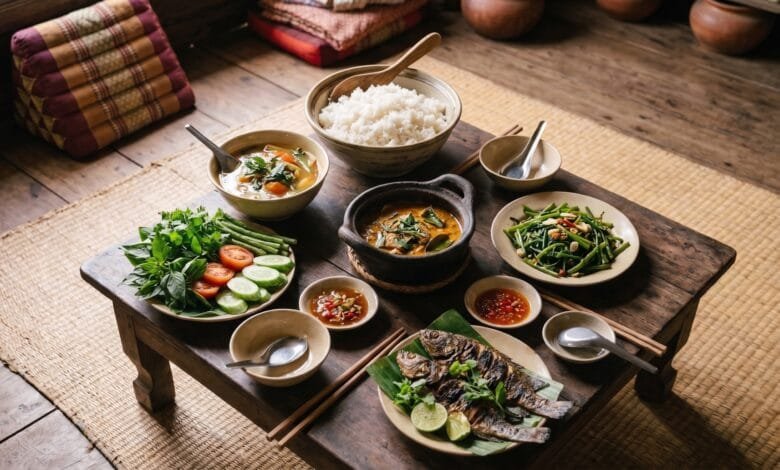
Ask a Cambodian if they have eaten, and you might hear: “I haven’t had rice yet.” In the Khmer language, to eat is nam bai—which literally translates to “eat rice.” This single phrase reveals everything about Cambodian food culture. Rice is not just food; it is the center of life, the heart of every meal, and the measure of whether one has truly eaten.
For Cambodians, a meal without rice is not really a meal at all. Understanding how Khmer people eat means understanding a food culture built around rice, family, shared dishes, and a delicate balance of flavors that has evolved over nearly two thousand years.
What Is Cambodian Food Culture?
Cambodian food culture—or Khmer food culture—is the way people in Cambodia grow, prepare, share, and eat food in their daily lives. It is not just about recipes or ingredients. It is about how meals are structured, how families gather, what customs are observed, and how food connects to identity, geography, and history.
At its core, Cambodian food culture revolves around a simple but profound principle: rice is the center of the meal, and everything else is an accompaniment. In Cambodian society, cooked rice—called bay in Khmer—is the central element in food culture. Bay is also referred to as preah me, which literally means “mother god”. This name reflects the deep reverence Cambodians have for rice as the sustainer of life.
The words for breakfast, lunch, and dinner in Khmer all begin with bay: bay preak (breakfast), bay thngai trang (lunch), and bay lgeach (dinner). Food itself—mhob in Khmer—is understood as the elements that accompany cooked rice. This linguistic detail shows how deeply rice is woven into the fabric of Cambodian life.
Why Is Rice So Important in Cambodian Food Culture?
Rice is the staple food of Cambodia. Cambodians eat rice at least twice a day, and for many, rice appears at every meal. It is consumed in many forms: steamed white rice with nearly every meal, sticky rice in desserts or with grilled meats, and rice noodles in breakfast dishes like nom banh chok and kuy teav.
The importance of rice goes beyond nutrition. For Cambodians, rice is so essential that they feel they haven’t eaten if a meal does not include rice. This is not an exaggeration—it is a fundamental truth of Cambodian food culture. Rice provides the neutral canvas upon which the flavors of accompanying dishes are painted. Without rice, the meal is incomplete.
Cambodia produces many rice varieties, from the fragrant jasmine-scented malis rice to countless types of wild, brown, and sticky rice. The country’s vast rice paddies—which turn emerald green during the rainy season—are not just agricultural land; they are the source of national identity.
What Does a Typical Cambodian Meal Look Like?
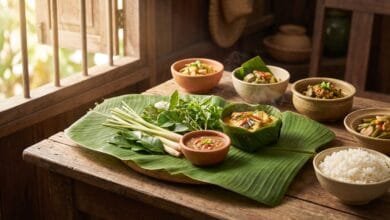
A typical Cambodian meal is built around rice and served with multiple dishes. Traditionally, Cambodians eat their meals with at least three or four dishes. A meal will usually include a soup—called samlor—served alongside the main courses.
The meal structure typically includes:
| Component | Description |
|---|---|
| Rice | Steamed jasmine rice, the foundation of every meal |
| Soup (samlor) | A clear or rich broth, often with fish, vegetables, and herbs |
| Main dishes | Stir-fries, curries, grilled fish or meat, or salads |
| Dipping sauces | Fish sauce, prahok-based dips, or chili condiments |
| Fresh vegetables and herbs | Served raw or lightly blanched, to balance flavors |
Each of the individual dishes will be sweet, sour, salty, or bitter—and sometimes a single dish combines all these flavors in harmony. Chili is usually left for each person to add individually, so everyone can adjust the heat to their preference.
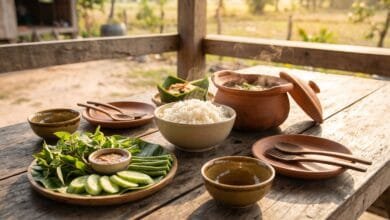
Meals are served family-style, with dishes placed in the center of the table for everyone to share. This communal way of eating reflects the importance of family and togetherness in Cambodian culture. Everyone helps themselves, taking small portions of each dish to eat with their rice.
How Do Cambodians Eat? Utensils and Etiquette
One of the first things visitors notice about Cambodian food culture is the absence of knives at the table. Cambodians generally eat with a spoon and fork. The fork is used to push food onto the spoon, which is held in the right hand. It is considered impolite to put the fork directly into your mouth.
For soup, Cambodians use a spoon for the liquid and chopsticks to pick out meat and noodles. Chopsticks are rarely used for other dishes.
Other dining customs include:
- Sharing food: Dishes are placed in the center of the table for everyone to share.
- Cutlery hygiene: Cutlery that has been in your mouth should not be placed into communal dishes.
- Condiments: Shared condiments like chili jam, pickled green chilies, sugar, garlic flakes, fish sauce, and soy sauce are usually available.
- Noise: Slurping and other eating noises are acceptable—they show enjoyment of the meal.
- Bones and tissues: Bones and used tissues are often placed on the floor or in a bin under the table, not on the eating surface.
- Toothpicks: Picking teeth after eating is acceptable, but it is polite to cover your mouth with one hand.
Historically, some Cambodians also ate with their fingers, using the right hand to form rice into small balls. While less common today, this traditional practice is still seen in some rural areas.
A Day of Eating in Cambodia
Cambodian meal times typically start early. Here is what a typical day of eating looks like in Cambodia:
Breakfast (bay preak) — 6:00 to 8:00 AM
Breakfast in Cambodia is hearty and comforting. Common breakfast foods include:
- Babor — Rice porridge, often topped with dried fish, preserved egg, and pickled vegetables
- Kuy teav — Rice noodle soup with pork or beef broth, garnished with herbs, bean sprouts, and lime
- Nom banh chok — Known as “Khmer noodles,” cold rice noodles topped with green fish curry and raw vegetables
- French-style baguettes — A legacy of French colonial influence, served with condensed milk, pâté, or eggs
Lunch (bay thngai trang) — 11:00 AM to 1:00 PM
Lunch is often a lighter meal. Many Cambodians eat a simple meal of rice with a soup or a stir-fry, often from street vendors or local eateries.
Dinner (bay lgeach) — 6:00 PM onward
Dinner is the main meal of the day for most Cambodians. This is when families gather around the table. The evening meal typically includes rice, a soup, and several shared dishes—often grilled fish, a curry, stir-fried vegetables, and dipping sauces.
Snacks
Cambodians also enjoy snacks throughout the day, including fresh fruit (banana, papaya, mango, jackfruit, pineapple), street snacks, and bubble tea.
The Flavors of Cambodian Food Culture
Cambodian cuisine is known for its balanced use of flavors. A typical meal will include dishes that are sweet, sour, salty, and bitter—and sometimes all four flavors appear in a single dish.
- Sweet — From palm sugar, coconut milk, and tropical fruits
- Sour — From tamarind, lime, and sour fruits
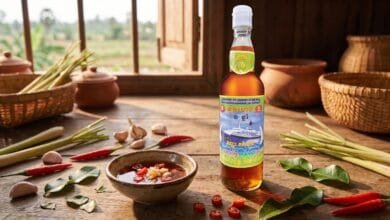
- Salty — From fish sauce, prahok, and salt
- Bitter — From bitter greens and certain herbs
- Umami — From fermented fish products like prahok
This balance of flavors is not accidental. It reflects a culinary philosophy that values harmony and contrast within a meal. Unlike some neighboring cuisines that emphasize spiciness, Cambodian food is only mildly spicy, with chili offered as a personal addition rather than a fundamental component.
Key Ingredients in Cambodian Food Culture
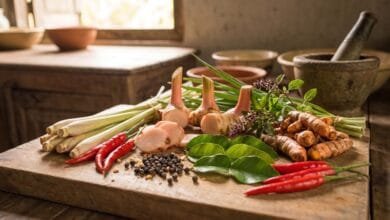
Several ingredients are essential to Cambodian cooking and eating:
Prahok deserves special attention. This pungent fermented fish paste is used in almost every kind of dish Cambodians cook daily. During the dry season, prahok—rich in protein and iron—has played an important role in providing nutrition and ensuring food security. For many Cambodians, prahok is not just an ingredient; it is the soul of their cuisine.
Regional Variations in How Cambodians Eat
Cambodian food culture varies by region, reflecting differences in geography, available ingredients, and local traditions.
- Tonlé Sap region — Fish is abundant, so meals feature more freshwater fish dishes, fermented fish, and soups.
- Coastal areas (Kampot, Kep) — Seafood, crabs, and Kampot pepper feature prominently.
- Battambang province — Known for its rice production and distinctive fermented fish sauces.
- Phnom Penh — Urban eating includes more diverse influences, street food, and restaurant dining.
- Rural areas — Meals are simpler, often based on what is available from the garden and local market.
It is important to remember that recipes and food traditions vary from family to family, province to province, and generation to generation. There is no single “authentic” way that all Cambodians eat.
Festival Foods and Special Occasions
Cambodian food culture is especially rich during festivals and celebrations.
Khmer New Year — Celebrated in April, this is one of the most important festivals. Traditional foods include nom banh chok (Khmer noodles) and various rice cakes.
Pchum Ben — A 15-day Buddhist festival in September when Cambodians honor their ancestors. Traditional food offerings include:
- Num ansom — Sticky rice cake with pork, wrapped in banana leaves
- Num kom — Small pyramid-shaped sticky rice cakes
- Rice balls — Thrown as offerings to wandering spirits
Weddings — Cambodian weddings feature elaborate feasts with multiple courses, including soups, curries, grilled meats, and desserts.
How to Experience Cambodian Food Culture
In Cambodia:
To truly experience Cambodian food culture, visit local markets in the morning when they are busiest. Eat at street food stalls where locals gather. Accept an invitation to a Cambodian home if you are fortunate enough to receive one—this is where food culture comes alive.
When eating out, remember that meals are usually served family-style. Order a few dishes to share, and always include rice. Don’t be afraid to use your spoon and fork the Cambodian way—fork in the left hand to push, spoon in the right to eat.
At home:
You can experience Cambodian food culture at home by cooking a Cambodian meal and eating it the Khmer way: rice at the center, several shared dishes around it, and everyone eating together. Use a spoon and fork. Include a soup. Balance sweet, sour, salty, and bitter flavors.
What Makes Cambodian Food Culture Unique?
What makes Cambodian food culture unique is not any single dish or ingredient. It is the system of eating—rice at the center, multiple shared dishes, balanced flavors, and meals as family occasions.
It is the reverence for rice—expressed in language, daily practice, and cultural identity.
It is the use of prahok—an ingredient that many outsiders find challenging but that Cambodians consider the soul of their cuisine.
It is the balance of flavors—not overwhelming heat, but harmony.
And it is the resilience of the cuisine itself. Despite the upheavals of the 20th century, Cambodian food culture has survived and is now experiencing a revival.
Frequently Asked Questions
What is Cambodian food culture?
Cambodian food culture is the way Khmer people grow, prepare, share, and eat food. It centers on rice, family-style dining, balanced flavors, and traditions passed through generations.
What do Cambodians eat every day?
Cambodians eat rice with every meal, accompanied by soup, stir-fries, grilled fish or meat, fresh vegetables, and dipping sauces. Breakfast often includes rice porridge or noodle soup.
Why is rice so important in Cambodia?
Rice is the staple food and cultural symbol of Cambodia. The Khmer word for eating literally means “eat rice,” and Cambodians feel they haven’t eaten if a meal lacks rice.
How do Cambodians eat their meals?
Cambodians eat with a spoon and fork—fork in the left hand to push food onto the spoon held in the right hand. Meals are served family-style with shared dishes.
Is Cambodian food spicy?
Cambodian food is only mildly spicy. Chili is usually offered on the side for each person to add according to their preference.
What is prahok?
Prahok is fermented fish paste, a signature ingredient in Cambodian cooking. It is used in many dishes and is considered the soul of Khmer cuisine.
What should I try first in Cambodia?
Start with nom banh chok (Khmer noodles) for breakfast, samlor machu (sour soup) for lunch, and fish amok (steamed fish curry) for dinner. Always eat with rice.
Do Cambodians use chopsticks?
Chopsticks are used mainly for noodle soups. For most meals, Cambodians use a spoon and fork.
Conclusion
Cambodian food culture is a living tradition built around rice, family, and shared meals. It is a culture where food is never eaten alone—it is shared. Where rice is never just a side dish—it is the meal itself. Where flavors are balanced not to overpower but to harmonize.
To understand how Khmer people eat is to understand something essential about Cambodia itself: a country of resilience, generosity, and deep connection to the land and water that sustain it. Whether you are sitting on the floor of a rural kitchen or at a table in Phnom Penh, the rhythm is the same—rice, shared dishes, family, and the simple joy of eating together.
Want to try cooking Cambodian food at home? Explore our recipes and discover the flavors of Khmer cuisine for yourself.