Shrimp and Tiny Green Eggplant: A Rustic Cambodian Stir-Fry
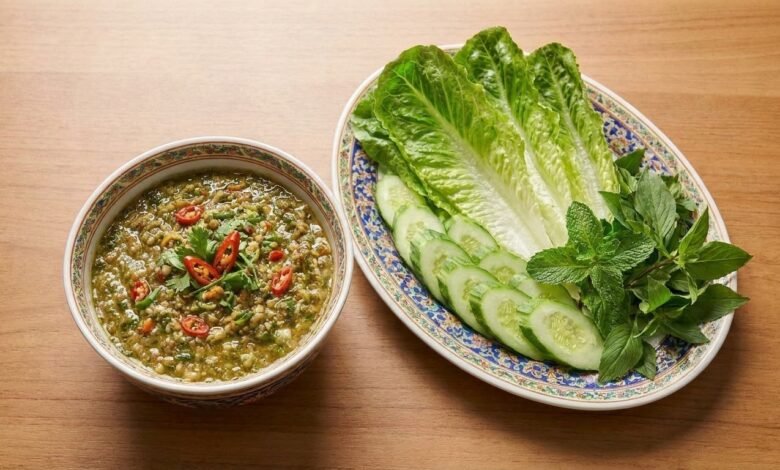
Tiny green eggplants are one of Cambodia’s quiet kitchen treasures. They look like little green pearls and turn soft and smoky when roasted, which makes them perfect for soaking up the savory flavors of shrimp and prahok.
This dish is simple home cooking at its best. The eggplant is roasted until the skin blisters, then pounded and simmered with ground shrimp, lemongrass, garlic, and a spoonful of fermented fish paste. The result is a deep, savory mixture that begs for a plate of hot rice.
What You Need
The star of this recipe is the tiny green eggplant, often sold as Thai eggplant in Asian markets. They are about the size of a large marble and have a mild, slightly bitter flavor that mellows when cooked. If you cannot find them, regular Thai eggplants cut into small wedges will work, but the texture will be a little different.
Prahok is the other key ingredient. This Cambodian fermented fish paste adds a salty, umami depth that fish sauce alone cannot match. If you are new to prahok, it has a strong aroma, but it mellows once cooked. You can read more about it in this guide to prahok, Cambodia’s fermented fish paste. Tiny green eggplants also star in this Cambodian curry pork riblets recipe, where they soak up a coconut broth.
Equipment
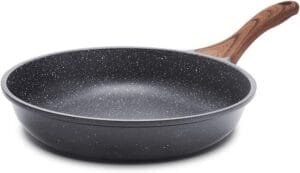
- Skillet: To roast the tiny green eggplants until the skins are lightly browned and the flesh softens.
- Mortar and pestle: To pound the roasted eggplants into a coarse, jammy texture.
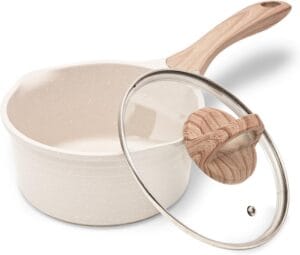
- Saucepan: To cook the shrimp and aromatics and simmer the eggplant mixture.
- Chef’s knife: To mince the garlic and chop the chili pepper.
- Cutting board: To prepare the garlic and chili safely.
- Measuring spoons: To measure the fish sauce, sugar, and prahok.
- Measuring cup: To measure the water.
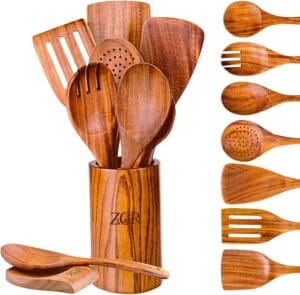
- Wooden spoon: To stir the ingredients as they cook.
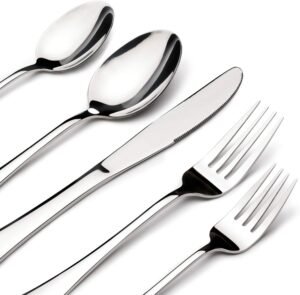
- Serving spoon: To transfer the finished dish to a serving bowl.
How to Make Shrimp and Tiny Green Eggplant
Step 1: Roast the Eggplants
Heat a skillet over medium heat. Add the tiny green eggplants and roast them, turning occasionally, until the skins are lightly browned and the eggplants have softened. This should take about 8 to 10 minutes, depending on their size. Remove them from the skillet and let them cool slightly.
Step 2: Pound the Roasted Eggplants
Place the roasted eggplants in a mortar. Use the pestle to pound them into a coarse, chunky paste. You do not need a smooth puree—some texture is good. Set the pounded eggplant aside.
Step 3: Prepare the Aromatics and Shrimp
Peel and mince the garlic. Chop the chili pepper, if you are using it. If your shrimp are not already peeled and deveined, do that now, then roughly chop or grind them with a knife or a small food processor. Always handle raw shrimp safely; the FDA has a useful guide to selecting and serving seafood safely.
Step 4: Stir-Fry the Aromatics and Shrimp
Place the saucepan over medium heat and add the vegetable oil. When the oil is hot, add the garlic, lemongrass, and chili pepper. Stir for about 30 seconds, until fragrant. Add the ground shrimp and stir well, breaking it up as it cooks. Cook until the shrimp turns pink and opaque.
Step 5: Season and Simmer
Season the shrimp mixture with the fish sauce and sugar. Stir well. Add the water, the prahok, and the pounded eggplant. Stir everything together and bring the mixture to a simmer. Let it bubble gently for about 5 minutes, until the sauce thickens slightly and the flavors come together. Taste and adjust the seasoning if needed.
Step 6: Serve
Spoon the hot shrimp and eggplant mixture into a serving bowl. Serve with steamed rice, fresh or cooked vegetables, and slices of lime on the side.
Cooking Tips
- Roast the eggplants until they are completely soft. This helps them break down into the sauce and gives the dish a richer texture.
- Prahok is very salty, so taste the dish before adding more fish sauce. You may not need much extra salt.
- If you prefer a milder dish, remove the seeds from the chili pepper before chopping, or leave the chili out entirely.
How to Serve
This dish is traditionally served as part of a Cambodian family meal, alongside steamed rice and a plate of raw or blanched vegetables. Cucumber, long beans, and cabbage are all good choices. A squeeze of fresh lime juice brightens the rich, savory flavors.
Frequently Asked Questions
What is prahok, and can I substitute it?
Prahok is a fermented fish paste that is central to Cambodian cooking. It has a strong, pungent flavor and a salty, savory taste. If you cannot find it, you can substitute fermented shrimp paste (kapi) or extra fish sauce, but the flavor will be different. For a closer match, look for prahok in the refrigerated section of Asian grocery stores.
Can I use regular eggplant instead of tiny green eggplant?
Yes, you can. Thai eggplants are the closest substitute. Cut them into small wedges and roast them the same way. Large globe eggplants will also work, but they contain more water, so the final dish may be softer.
Is this dish spicy?
The chili pepper is optional. With 6 chopped hot chilies, the dish will have a noticeable kick. If you prefer less heat, use fewer chilies or remove the seeds. The recipe is mild to medium without the chili.
Final Thoughts
Shrimp and tiny green eggplant is the kind of dish that shows how Cambodian cooking builds big flavor from simple ingredients. The smoky eggplant, savory shrimp, and funky prahok come together into something deeply satisfying. Serve it with plenty of rice, and do not skip the lime—it wakes up every bite. For more quick and savory ideas, browse our collection of Cambodian stir-fry recipes.
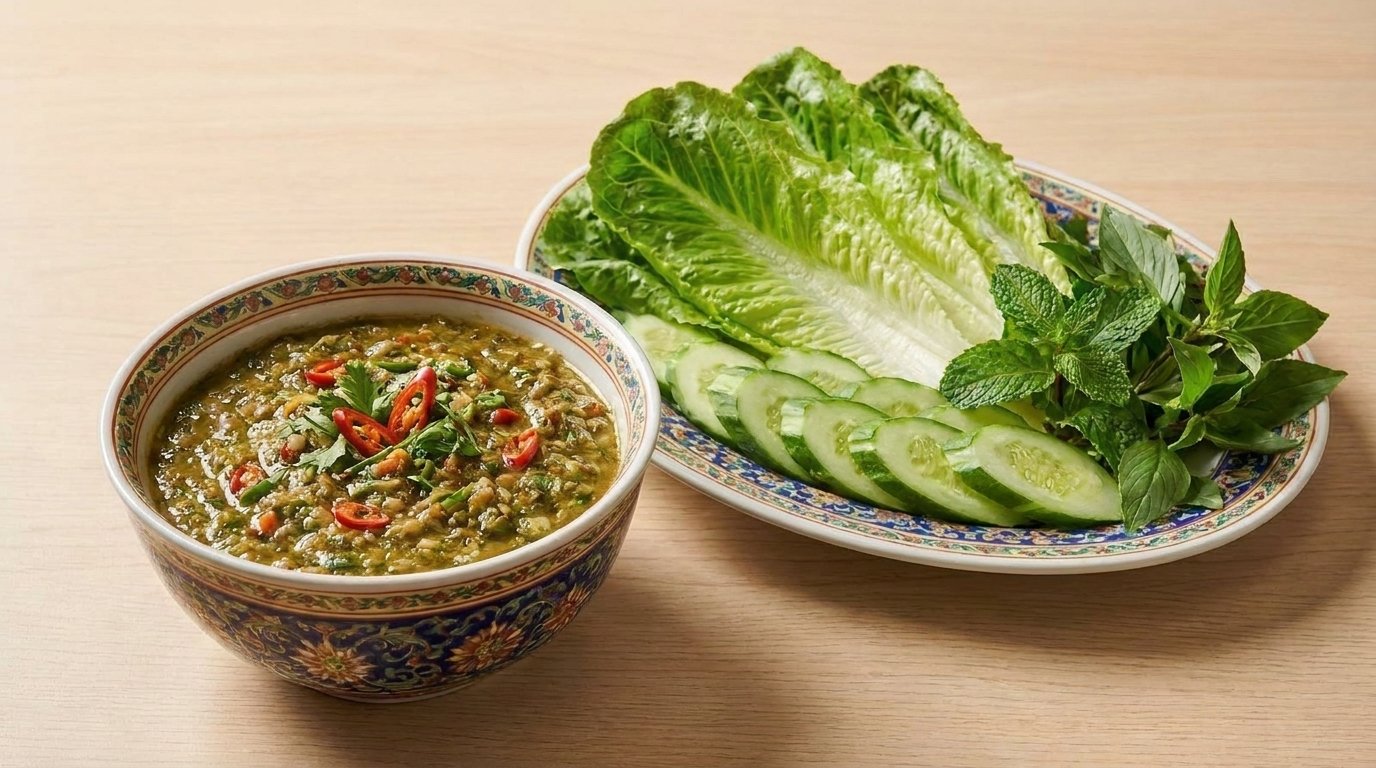
Shrimp and Tiny Green Egg Plant
4
servings10
minutes20
minutes183
kcal30
minutesA rustic Khmer dish where smoky roasted eggplant meets savory ground shrimp and funky fermented fish paste. Serve with steamed rice and fresh vegetables.
Ingredients
1 lb (450 gram) of tiny green egg plants , removed eggplants from vines, rinsed and drained
2 tablespoons vegetable oil
4 cloves garlic, minced
1/4 cup fresh or frozen minced lemon grass
6 chopped hot chili pepper or to your taste(option)
1/2 lb (225 gram) of shrimp, peeled, de-veins and grounded
1 tablespoon fish sauce
1 teaspoon sugar
1 cup water
1 tablespoon creamy style pickle fish *pahok*
1 fresh lime, sliced
Directions
- Roasted tiny green eggplants in hot skillet till the skin turns lightly brown. Using mortar and pestle to pounded roasted eggplant, set a side.
- Pre-heat a small sauce-pan.
- When sauce-pan is hot. add oil, garlic, lemon grass, chili pepper and shrimp, stirs well.
- Seasoning with fish sauce and sugar, stirs well.
- Add water, pickle fish and pounded eggplant, stirs and simmering till sauce bubbling.
- Serve hot or warm with rice along with raw or cooked vegetables, and sliced lime.
Equipment
 Chef’s KnifeCheck product details
 Measuring Spoons & CupsCheck product details
 SkilletCheck product details
 Small potCheck product details
 Spoon and Folk SetCheck product details
- Wooden SpoonCheck product details
Recipe Video
Nutrition Facts
- Serving Size: 4 g
- Total number of serves: 4
- Calories: 183kcal
- Fat: 7.7g
- Saturated Fat: 1.2g
- Cholesterol: 91mg
- Sodium: 462mg
- Potassium: 700mg
- Carbohydrates: 17.6g
- Net Carbs: 12.6g
- Fiber: 5g
- Sugar: 9.1g
- Protein: 14.3g
- Vitamin A: 34.2mcg
- Vitamin C: 105.5mg
- Calcium: 75mg
- Iron: 2mg
- Vitamin E: 1.4mg
- Vitamin K: 26.7mcg
- Thiamin: 0.1mg
- Riboflavin: 0.1mg
- Niacin: 1.8mg
- Vitamin B6: 0.5mg
- Folate: 47.4mcg
- Pantothenic Acid: 0.5mg
- Phosphorus: 189mg
- Magnesium: 64mg
- Zinc: 1mg
- Selenium: 1.6mcg
- Copper: 0.4mg
- Manganese: 0.7mg
Did you make this recipe?
Tag @cambodiarecipe on Instagram and hashtag it
Like this recipe?
Follow us @cambodiarecipe on Pinterest
Did you make this recipe?
Follow us on Facebook